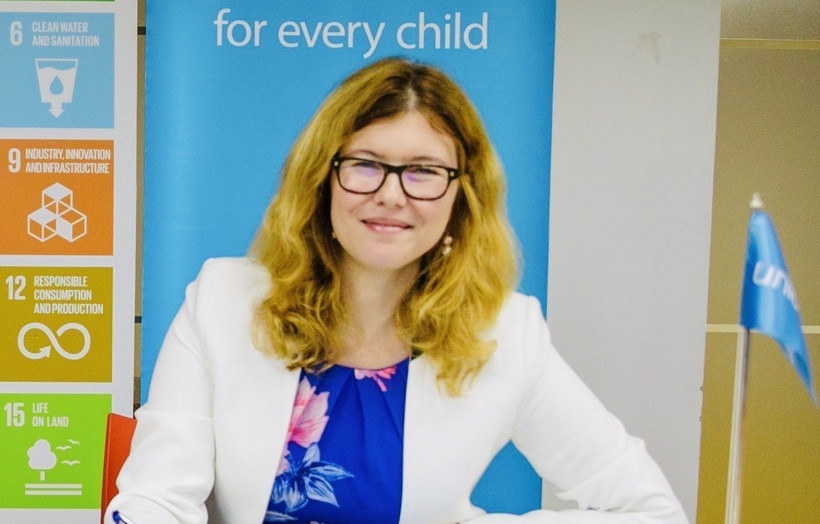
Hanoi (VNA) – Vietnam is taking bold steps to prepare its young generation for a digital future, and UNICEF is proud to be a long-standing partner in this journey, said UNICEF Representative in the country Silvia Danailov.
She made the comment during an interview granted to the Vietnam News Agency ahead of a series of activities to commemorate the 50th anniversary of Vietnam – UNICEF cooperation and the 35th anniversary of Vietnam’s ratification of the Convention on the Rights of the Child.
The following is the full interview.
Reporter: Madam Representative, over the past 50 years of Vietnam–UNICEF cooperation and 35 years since Vietnam ratified the Convention on the Rights of the Child, what key milestones have been achieved in protecting, caring for, and promoting the development of Vietnamese children? How would you assess the changes in the lives of Vietnamese children over the last half-century?
UNICEF Representative Silvia Danailov: Vietnam’s ratification of the Convention on the Rights of the Child in 1990 was a historic milestone—not only for the country but for the region. Vietnam was the first in Asia and the second in the world to take this bold step, signaling a visionary commitment to children’s rights and well-being.
Over the past 35 years, we’ve seen transformative progress. The under-five mortality rate has dropped dramatically. This is a powerful indicator of improved access to healthcare and maternal services. The prevalence of stunting among children under five has been reduced by more than half, reflecting better nutrition and early childhood care. Access to clean water and sanitation has also seen a remarkable increase. These improvements represent real, tangible improvements in the daily lives of millions of children.
Beyond these achievements, Vietnam has strengthened its legal and policy frameworks to protect children. The 2016 Law on Children, amendments to the Education Law and Labour Code, and the Law on Justice for Minors reflect a strong institutional commitment. The establishment of Family and Juvenile Courts, adoption of the Decree on Social Work, and creation of the National Committee for Children have further embedded child protection into justice and social systems.
The creation of the National Committee for Children and the implementation of National Action Plans for children have also helped ensure that child rights are not just aspirational, but operational across sectors.
In short, the lives of Vietnamese children today are healthier, safer, and full of greater opportunities than ever before. This progress is a testament to Vietnam’s leadership and the power of partnership.
Reporter: To mark this anniversary, what activities will UNICEF and the Government of Vietnam organise? What are the main messages or goals UNICEF hopes to convey through this series of events?
UNICEF Representative Silvia Danailov: To mark five decades of progress for children’s rights and to reflect on today’s challenges, UNICEF Vietnam and its partners have come together for a series of meaningful events.
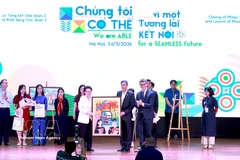
At the heart of the celebration is a special ceremony honouring 50 years of partnership between Vietnam and UNICEF and 35 years since Vietnam ratified the Convention on the Rights of the Child. The event will bring together high-level leaders from the Government, UNICEF, the UN Committee on the Rights of the Child, and more than 200 participants—including children, government officials, diplomats, international organisations, social groups, and experts who have played a vital role in advancing child rights in Vietnam.
Building on this momentum, UNICEF will join forces with the Institute for Economics, Society and Environment of the Ho Chi Minh National Academy of Politics to host a dialogue to review achievements, identify priorities, and shape the Children’s Agenda for the future—ensuring that Vietnam continues to invest in high-quality human resources for sustainable development.
As part of the anniversary events, UNICEF will host a Dialogue on Artificial Intelligence and Child Rights, designed to integrate the principles of the UN Convention on the Rights of the Child—such as non-discrimination, participation, and the best interests of the child—into Vietnam’s emerging AI legal framework.
To celebrate the journey visually, UNICEF will launch a photo exhibition in Hanoi and Ho Chi Minh City, accompanied by a commemorative photo book. This collection is a tribute to the promise that every child—regardless of ethnicity, gender, ability, or income—has the right to survive, grow, and thrive. It serves as a powerful reminder of what has been achieved and what lies ahead.
Through these events, UNICEF seeks to send a clear message: to honour the longstanding partnership between Vietnam and UNICEF, to highlight key accomplishments and current challenges for child rights, and to reaffirm Vietnam’s unwavering commitment to protecting and promoting the rights of every child in the context of rapid socio-economic development.
This celebration is especially meaningful because it brings together generations of UNICEF colleagues and partners. Former representatives and international staff have returned to Vietnam to join the ceremony—including one who opened the UNICEF office in Hanoi in 1975. It is not only a moment to honour achievements but also a heartfelt reunion, reconnecting those who helped shape UNICEF’s legacy in Vietnam and reminding us that progress for children is built on decades of dedication and partnership.
Reporter: Throughout the cooperation process, what does UNICEF consider Vietnam’s greatest strength in its child-related policies? In addition, which areas does Vietnam need to continue prioritising in order to achieve sustainable child development targets?
UNICEF Representative Silvia Danailov: Vietnam’s greatest strength in child-related policies is its strong alignment with the Convention on the Rights of the Child, which it ratified 35 years ago. The country has made significant progress, including the 2016 Law on Children, amendments to the Law on Education, ratification of the Convention on the Rights of Persons with Disabilities, Law on Justice and Minors and adoption of the National Action Programme for Children (2021–2030). These steps reflect a clear commitment to children’s rights.
To translate these policies into real impact, Vietnam needs to strengthen policy coordination, regularly monitor implementation across ministries, and ensure adequate public investment for quality programmes and services.
Looking ahead, five priority areas stand out:
On digital transformation – expand access and digital literacy for all girls and boys while ensuring online safety through updated laws and child-friendly tools.
Relating to climate resilience – it is important to invest in climate-proof services, child focused disaster risk reduction and support children and young people to engage on environmental protection and climate action.
With demographic shifts taking place and a declining child population, it is essential to invest in the most vulnerable — children with disabilities, ethnic minorities, and those affected by migration, in particular in their learning, skills and competencies, as well as equitable access to health, nutrition and social protection.
Investment in protection and social services to prevent and respond to physical, mental or online violence, strengthened systems and capacities to protect the most vulnerable girls and boys.
Finally, enabling children and young people to fully participate and engage in their communities and decisions that impact their lives.
A child born in Vietnam today should grow up in a society where health care is universal, education is inclusive and transformational, and opportunities are equal regardless of birthplace, gender, status and ethnicity. Achieving this vision asap and by 2045 — when Vietnam aspires to be a high-income nation — requires bold action now. Investing in children is not only the right thing to do; it is the smartest investment for a resilient, innovative, and inclusive future.
Reporter: What are UNICEF’s expectations for today’s generation of Vietnamese adolescents—those growing up in the digital age? How will UNICEF accompany and protect them against emerging risks while also creating conditions for their holistic development?
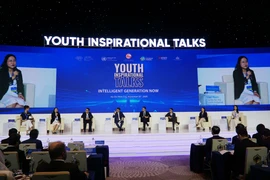
UNICEF Representative Silvia Danailov: Vietnam is taking bold steps to prepare its young generation for a digital future, and UNICEF is proud to be a long-standing partner in this journey.
Together with the Ministry of Education and Training, we are helping strengthen digital and AI competencies for teachers, students, and education managers. This includes developing the National AI Strategy for Education, digital competency frameworks, and skill-building programmes that equip adolescents for the jobs and challenges of tomorrow.
We are also piloting innovative tools in classrooms—such as gamified learning platforms and AI-powered assistive technologies for children with disabilities—to make learning more personalised, engaging, and inclusive.We always advocate for digital transformation that is inclusive, ethical, and accessible to every child, especially the most marginalised.
At the same time, digital progress must go hand-in-hand with digital safety. As children spend more time online, they face risks such as cyberbullying and exploitation. UNICEF works with schools to teach digital literacy and online protection skills, supports parents in fostering trust and open communication, and partners with policymakers to strengthen laws that safeguard all children under 18 in the digital space.
Preparing adolescents for a digital age means more than teaching technology—it means empowering them to use it safely, confidently, and responsibly. UNICEF is committed to bridging the digital divide and ensuring every child has the skills, protection, and opportunities to thrive in an AI-driven world.
Reporter: What is the most important message UNICEF wishes to send to the Government, partners, and the whole of Vietnamese society on this anniversary?
UNICEF Representative Silvia Danailov: UNICEF has been a proud partner of Vietnam for 50 years—through war, recovery, and transformation—and we remain by the side of the government and people of Vietnam. As we mark 35 years since Vietnam ratified the Convention on the Rights of the Child, we reaffirm our commitment to stand with all girls and boys in this new era.
We also ask everyone of you:
Will you stand with children?
Will you speak up when a child is left behind?
Will you make sure no girl or boy is invisible—not in policy, not in practice”
As when we stand with children, we stand for Vietnam’s present and future. Together, we can make the next 50 years even more remarkable./.
VNA