Vietnam urged to reform legal framework, boost strategic technology for global competitiveness

Investment in strategic technologies is not only about economic growth but also about ensuring national security, safeguarding digital sovereignty, and elevating Vietnam’s international profile. In an era of fierce technological competition, bold policies and careful prioritisation will enable Vietnam to secure key positions in global value chains.

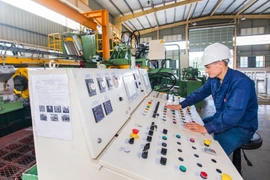
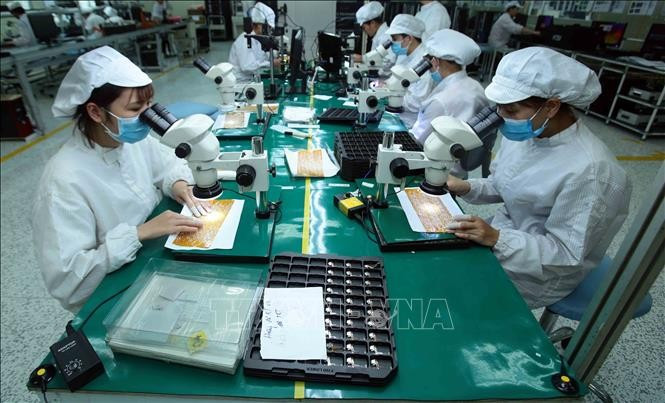
Production of electronic components at 4P Co., Ltd. in Hai Phong city, (Photo: VNA)

Hanoi, September 21 (VNA) – As global competition intensifies, science, technology, and innovation are increasingly seen as critical drivers of growth. Experts agree that Vietnam must pursue institutional breakthroughs such as removing investment barriers, creating a flexible legal framework, and prioritising strategic technologies to enhance its national standing.

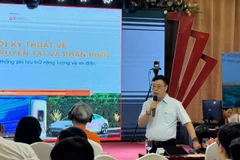
According to Dr. Hoang Kim Khuyen from the Institute of State and Law under the Vietnam Academy of Social Sciences, improving institutions to attract investment is a prerequisite for science, technology, and innovation to become engines of sustainable development. While the private sector has emerged as a key contributor to economic growth in recent years, its role in research and development (R&D) remains modest.

Major corporations such as Viettel, FPT, Vingroup, and VinBigData have boldly invested in research projects, yet few private firms maintain long-term commitments to science and technology. Institutional and policy shortcomings are a major reason. Laws relating to science, technology, intellectual property, and investment often lack consistency and overlap, creating practical hurdles.

Financial tools designed to spur innovation have also fallen short. Enterprises' science and technology development funds exist under the law, but their use remains limited. Between 2015 and 2023, enterprises contributed more than 35 trillion VND (1.3 billion USD) to such funds, yet only about 60% was spent. The rest was left idle due to vague regulations, bureaucratic procedures, and risks.

Dr. Khuyen noted that current incentives on tax, credit, and land for R&D are insufficient. For small- and medium-sized enterprises (SMEs), which make up more than 95% of Vietnamese firms, barriers are even higher due to limited resources and a lack of information. This has left the private sector, expected to be the main driver of innovation, largely on the sidelines.

To address these challenges, she recommended legal reforms to ensure coherence, transparency, and predictability, while reducing administrative burdens. Laws on science and technology and intellectual property should be revised to be more open and business-friendly. Transparent mechanisms are also needed to prevent vested interests in resource allocation.

She further called for improved financial mechanisms, including clearer and more practical tax incentives, easier access to credit and land, and support schemes such as loan guarantees or interest subsidies for SMEs investing in R&D. In parallel, the government should foster a national innovation ecosystem with start-up centres, technology incubators, high-tech parks, and stronger links between research institutes, universities, and businesses.

Legal innovation and strategic technology development

Nguyen Thu Dung, also from the Institute of State and Law, highlighted the need for new legal approaches in the digital age, where technology often outpaces legislation. She pointed to the “sandbox” model, where companies can test new technologies under state supervision, as an effective tool. Expanding sandboxes beyond fintech to areas such as artificial intelligence (AI), blockchain, biotechnology, and clean energy would, she argued, turn institutions into a competitive advantage.

Echoing this view, Dr. Ha Huy Ngoc of the Vietnam Institute of Economics stressed that Vietnam must identify and concentrate resources on strategic technologies. He proposed national programmes on semiconductors and new materials, the establishment of a national AI research hub, strengthening biotechnology for health care and agriculture, and scaling up clean energy.

To achieve these goals, Vietnam should adopt policies to attract talent, grant greater autonomy to research institutes and universities, and establish a transparent national strategic technology fund to support large-scale projects.

According to Dr. Ngoc, investment in strategic technologies is not only about economic growth but also about ensuring national security, safeguarding digital sovereignty, and elevating Vietnam’s international profile. In an era of fierce technological competition, bold policies and careful prioritisation will enable Vietnam to secure key positions in global value chains, he noted.

By combining legal reforms with focused investment in core technologies, experts say, Vietnam can unlock science, technology, and innovation as powerful internal drivers of growth. This vision aligns with Resolution 57-NQ/TW, which identifies innovation as the foundation for Vietnam to achieve its goal of becoming a high-income, developed nation by 2045./.

VNA

See more

Phu Quoc becomes Vietnam’s first destination to feature an urban LRT system (Photo: Sun Group)

Sun Group to launch series of landmark projects across Vietnam

By simultaneously launching a series of large-scale and strategically important projects, Sun Group continues to reaffirm its position as one of Vietnam’s leading tourism developers, while standing as a clear example of the role played by the private sector in national construction and development.

Over 250 enterprises join the Vietnam International Gifts and Housewares Expo 2025 (Photo: VNA)

Int’l gifts, housewares expo draws over 250 enterprises

Vietnam International Gifts and Housewares Expo 2025 (IGHE 2025) features a comprehensive range of household goods, gifts and decorative products, positioning itself as a must-see destination for buyers from Vietnam and overseas.

Individuals should proactively monitor their credit data to detect signs of identity theft in a timely manner. (Photo: baodautu.vn)

Early warning: A crucial defence against identity theft, credit fraud

ID365 aims to help users monitor and control any changes related to their personal identification information. It serves as an "early warning" system, empowering individuals to proactively safeguard their identities and assets, while also strengthening the defences of the entire financial and banking system against increasingly sophisticated fraud risks.

Workers sew export garments at Maxport Vietnam Co.Ltd (Photo: VNA)

Garment industry diversifies markets to weather global volatility

The sector is striving to generate 46 billion USD in export revenue this year. Although the figure falls short of the 48 billion USD target, it still represents a 5.6% year-on-year increase, helping Vietnam maintain its position among the world’s top three textile and garment producers.

Illustrative image (Photo: VinSpeed)

Vingroup’s VinSpeed inks high-speed rail deal with Siemens Mobility

Under the pact, Siemens Mobility, a supplier of high-speed rail technologies and solutions, will design, supply and integrate trainsets and key railway subsystems, including signaling, communications and power supply. It will also cooperate in maintenance for supplied equipment and transfer technology to support VinSpeed’s rail projects.

Reference exchange rate rises (Photo: VNA)

Reference exchange rate going up

The State Bank of Vietnam set the daily reference exchange rate at 25,151 VND/USD on December 18, up 5 VND from the previous day.

Vice Chairman of the People’s Committee of Quang Ninh province Nguyen Van Cong chairs the meeting regarding sustainable marine aquaculture development for 2026 (Photo: baoquangninh.vn)

Quang Ninh eyes sustainable marine aquaculture development

Speaking at a December 17 meeting regarding sustainable marine aquaculture development for 2026, Vice Chairman of the People’s Committee of Quang Ninh province Nguyen Van Cong urged the provincial Department of Agriculture and Environment to urgently finalise the draft plan, which will serve as a basis for focusing on the development of marine aquaculture in the coming period; and take the lead in coordinating with localities to review and adjust the planning of marine aquaculture areas, with an emphasis on encouraging the efficient use of marine areas suitable for aquaculture, in line with environmental impact assessments.

Mirela Janice Eidt, head of the Office of Brazilian Ministry of Agriculture and Livestock (MAPA), speaks at the event (Photo: Vietnamese Embassy in Brazil)

Vietnam, Brazil enhance smart agriculture ties

Amid escalating global pressures, including climate change, resource scarcity and tougher standards on food safety, traceability and low-carbon production, smart agriculture and sustainable value chains are no longer optional but inevitable. With both Vietnam and Brazil prioritising this development path, they see strong potential for deeper long-term strategic collaboration.

Contractors paving asphalt along the 61.7km Quy Nhơn–Chí Thạnh Expressway, crossing Gia Lai and Đắk Lắk provinces.(Photo: VNA)

Vietnam targets 5,000km of expressway by 2030

According to the Ministry of Construction, Vietnam brought just 89km of expressways into operation between 2001 and 2010, followed by 1,163km in the 2011–20 period. By contrast, the length of expressways invested in since 2021 alone is equivalent to the combined total of the previous decade.

Thousands of perfumes and cosmetic products of unknown origin are seized by Hanoi's authorities (Photo: VNA)

Vietnam cracks down on 23,000 market violations in 2025

The Ministry of Industry and Trade's Domestic Markets Department reported that market management forces conducted 27,540 inspections throughout 2025, detecting violations worth nearly 290 billion VND – a 31.8% decrease from 2024.

The upcoming Made-in-Vietnam fair in Hanoi from December 18-22 will feature product display areas, business networking spaces, and food courts. Illustrative photo: VNA)

Vietnam Brand Week to promote e-commerce, Made-in-Vietnam products

Co-organised by the Vietnam E-Commerce and Digital Economy Agency and the Hanoi Department of Industry and Trade, the event series includes a supply-demand connectivity conference to promote the consumption of Vietnamese and local products on e-commerce and digital platforms, alongside a Made-in-Vietnam fair.