Vietnamese banks tighten coordination to curb digital financial fraud

The upcoming signing of the United Nations Convention against Cybercrime in Hanoi, known as the Hanoi Convention, on October 25–26, highlights Vietnam’s active role in building a secure and transparent digital environment, including for the banking sector.

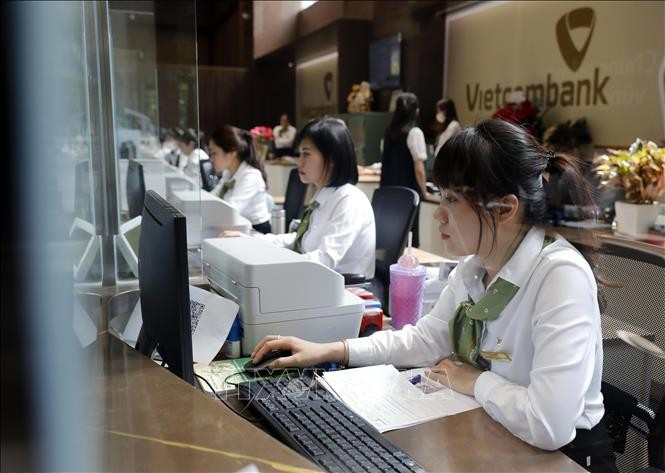
Illustrative photo (Photo: VNA)

Hanoi (VNA) – Following a recent data breach at the National Credit Information Centre (CIC) and a surge in online scams, Vietnamese banks are stepping up cross-sector collaboration to protect financial data.

The upcoming signing of the United Nations Convention against Cybercrime in Hanoi, known as the Hanoi Convention, on October 25–26, highlights Vietnam’s active role in building a secure and transparent digital environment, including for the banking sector.

The CIC incident, involving data of 52 million individuals and over 1.2 million businesses, served as a wake-up call about data breach risks. With 87% of adults holding bank accounts and nearly 90% of transactions conducted digitally, even a small system vulnerability could trigger widespread market disruption.

Vu Ngoc Son, Head of the Research, Consulting, Technology Development, and International Cooperation Department at the National Cybersecurity Association, identified five key factors driving attacks on financial institutions: technical loopholes, human error, supply-chain vulnerabilities, regulatory differences, and insufficient cybersecurity investment. Fraud tactics are increasingly sophisticated, ranging from impersonating authorities or banks to fake investments and mobile device hijacking.

According to the Department of Cyber Security and High-Tech Crime Prevention under the Ministry of Public Security, Vietnam recorded over 100,000 cybercrime cases in 2024, including 29,000 ransomware attacks, causing an estimated 12 trillion VND (456 million USD) in online losses. These figures underscore that banks face mounting pressure as frontline defenders.

In response, the State Bank of Vietnam issued Official Letter 7936/NHNN-CNTT, directing credit institutions and foreign bank branches to strictly comply with regulations on information security and data protection, holding unit heads legally responsible for any cybersecurity breaches.

The SBV is working with the Ministry of Public Security to build a database of suspicious accounts and trial a real-time scam alert system in customer apps. Commercial banks have invested in technology infrastructure, biometric authentication, transaction encryption, and AI monitoring systems.

Experts stress, however, that isolated efforts are insufficient without a unified coordination framework.

To address this, the Vietnam Banks Association (VNBA) introduced a Handbook on coordination to support handling of risks related to suspected fraud, forgery and scams.

Nguyen Quoc Hung, Vice Chairman and General Secretary of the Vietnam Banks Association (VNBA), said the handbook aims to create a unified coordination mechanism among banks, allowing suspicious transactions to be automatically traced and promptly frozen.

The Bank for Investment and Development of Vietnam proposed a standard rule that suspected fraudulent funds should not be returned, even if the account holder requests closure, to ensure consistent handling and transparency. The Vietnam Bank for Industry and Trade suggested linking bank data with the Ministry of Public Security to speed up tracing of fraudulent accounts and extend monitoring to e-wallets.

Hoang Ngoc Bach from the Department of Cyber Security and High-Tech Crime Prevention said the handbook is a historic first, creating a unified bank-investigator procedure, and emphasised the need for rapid response and data sharing immediately after a fraud report.

Given cross-border cybercrime, domestic measures must accompany international cooperation. The Hanoi Convention, the UN’s first global cybercrime legal instrument, enables data and evidence sharing while aligning Vietnam’s laws with international standards.

Beyond security, it also offers opportunities to attract foreign investment in cybersecurity, a key pillar of national digital transformation.

Together, the Hanoi Convention, the VNBA handbook, and banks’ technological and human resource investments form a threefold framework that strengthens Vietnam’s financial security against high-tech crime./.


VNA

See more

Illustrative image (Photo: VNA)

Australia announces import conditions for Vietnamese pomelos

Australia’s formal publication provides an important legal basis, marking the completion of the review, assessment and agreement on technical requirements for fresh Vietnamese pomelos. This represents a significant step forward in market access, creating favourable conditions for relevant agencies, localities and businesses to prepare for export activities in the coming time.

Containers of fresh Vietnamese durian for export are subject to a full-chain traceability system. (Photo: VNA)

First “green lane” durian shipment exported to China

​Under the “green lane” process, quality control begins at the cultivation stage, including soil sampling and monitoring, and continues through harvesting and processing, with traceability labels attached to trees and applied to fruit at the time of picking. It also allows plant quarantine procedures and the issuance of certificates of origin (C/O) directly in the localities where the orchards are located.

Delegates at the Vietnam Expo 2026 (Photo: VNA)

Vietnam pushes for deeper auto supply chain ties with RoK

The RoK stood as Vietnam’s largest foreign investor with more than 95.2 billion USD in registered capital as of February 2026, or about 18% of all foreign cash flowing in, with thousands of active projects. In January-February alone, the RoK led the pack with nearly 2 billion USD in pledges, grabbing a whopping 32.7% of total registered capital and showing no signs of slowing down.

More than 600 tourism firms, 15 countries and territories, and 34 provinces and cities are promoting destinations and introducing tourism products at the fair (Photo: VNA)

Digital transformation key to elevating Vietnam’s tourism: official

Speaking at the opening of the Vietnam International Travel Mart (VITM) 2026 in Hanoi on April 10, Deputy Minister of Culture, Sports and Tourism Ho An Phong noted that despite challenges in 2025, Vietnam largely fulfilled its socio-economic development goals. Tourism remained a bright spot, recording 21.5 million foreign arrivals and 135.5 million domestic visitors, with total revenue exceeding 1 quadrillion VND (37.9 billion USD).

A drone sprays fertiliser over rice fields. (Photo: VNA)

Low-altitude economy emerges as new growth driver for Vietnam

The UAV technology is particularly effective in addressing challenges faced by ground infrastructure, especially in densely populated urban areas and remote regions. Smart aerial devices also enable real-time data collection, improving governance, decision-making and digital transformation across industries.

Passengers at Cat Bi Airport in Hai Phong city (Photo: VNA)

Aviation sector ensures fuel supply for April 30–May 1 peak

Aviation fuel suppliers are actively negotiating and diversifying supply sources both domestically and internationally, while strengthening coordination, storage and distribution capacity to meet immediate demand. These efforts aim to support airlines in optimising operations and maintaining stable flight schedules.

A session at the Vietnam–Australia Green Transition Forum 2026. (Photo: VNA)

Green transition offers opportunities for stronger Vietnam–Australia cooperation

Under the theme "Accelerating decarbonisation in agriculture and manufacturing – Unlocking trade and investment opportunities", the forum gathered nearly 200 researchers, experts and businesses involved in policy development, investment, research and innovation. Participants exchanged insights and explored ways to translate the cooperation potential between Vietnam and Australia into practical business opportunities.