Vietnamese Deputy PM attends 22nd China - ASEAN Expo in Guangxi

Vietnam is ready to deepen economic cooperation with the Association of Southeast Asian Nations (ASEAN), China and other partners, embracing a strategy of “harmonised interests and shared risks” as it leverages its fast-growing economy and market of over 100 million people.

Deputy Prime Minister Mai Van Chinh speaks at the opening ceremony. (Photo: VNA)

Guangxi (VNA) – Vietnam is ready to deepen economic cooperation with the Association of Southeast Asian Nations (ASEAN), China and other partners, embracing a strategy of “harmonised interests and shared risks” as it leverages its fast-growing economy and market of over 100 million people, said Deputy Prime Minister Mai Van Chinh.

Chinh called for joint efforts to build a peaceful, stable and business-friendly environment that supports sustainable development and contributes to regional and global prosperity at the opening of the 22nd China–ASEAN Expo (CAEXPO) and the China–ASEAN Business and Investment Summit (CABIS) held on September 17 in Nanning, Guangxi, China.

This year’s CAEXPO and CABIS take place as ASEAN and China are preparing to formally sign the Protocol to Upgrade the China–ASEAN Free Trade Area (ACFTA) 3.0 later this year. Chinh expressed his confidence that the events would be a resounding success, injecting fresh momentum into bilateral cooperation and boosting trade and economic growth across the region.

He stressed that ASEAN–China trade cooperation has grown impressively over the past three decades, underpinned by strong political relations. China has been ASEAN’s largest trading partner since 2009 while ASEAN has been China’s largest trading partner since 2020. China remains a leading foreign investor in many ASEAN member states.

Over its 21 editions, CAEXPO and CABIS have made significant contributions to these achievements, becoming a symbol of economic, trade and investment cooperation between China and ASEAN.

ASEAN nations, including Vietnam, continue to recognise China’s important role in promoting regional cooperation and shared prosperity. Vietnam is now China’s fourth-largest trading partner and Chinese FDI in Vietnam has surged in recent years, ranking first in terms of new project numbers.
he.jpg
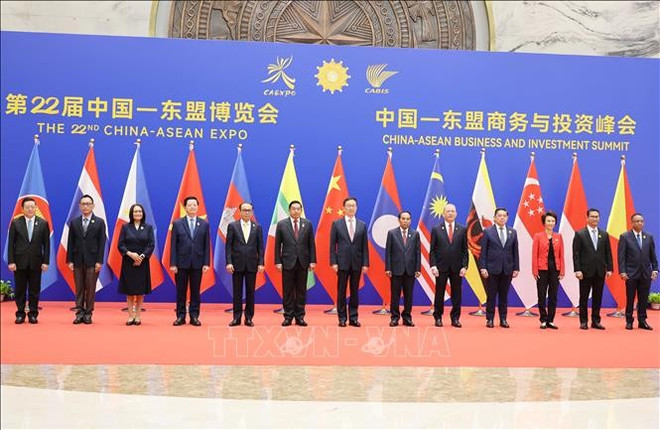
Deputy PM Mai Van Chinh (fourth from left) and delegates at the opening ceremony. (Photo: VNA)

Strategic connectivity projects, particularly in rail and road transport, are being accelerated, paving the way for smoother trade flows and people-to-people exchanges between the two countries and between ASEAN and China as a whole.

Amid global and regional economic challenges and rising trade barriers, it is crucial to strengthen trust, uphold the spirit of cooperation, resolve issues based on rules and ensure that the interests of all parties are balanced, the Deputy PM stressed.

He put forward three key proposals for future cooperation. First, he suggested further opening markets and facilitating trade. ASEAN and China should actively expedite procedures for signing and ratifying ACFTA 3.0 this year, align domestic legal frameworks with the new commitments and help businesses fully leverage the agreement’s benefits. This would boost bilateral trade, attract more investment into the region and foster shared prosperity.

Second, Chinh underscored enhancing strategic connectivity. He called for deeper infrastructure links, especially rail and road, to facilitate intra-regional trade and extend ASEAN’s and China’s reach to Central Asia and Europe.

According to the official, Vietnam is accelerating the construction of railway and highway routes linking with China, Laos and Cambodia to complete a multimodal transport network that better connects ASEAN with China and the Eurasian continent.

Third, he highlighted promoting science and technology cooperation. ASEAN and China should expand investment and cooperation in frontier fields such as digital economy, green economy, science and technology and innovation; foster quality human resources; and seize opportunities from the Fourth Industrial Revolution, including artificial intelligence.

The Deputy PM also spotlighted Vietnam’s pride in being an active contributor to the success of the previous 21 editions of CAEXPO and CABIS.

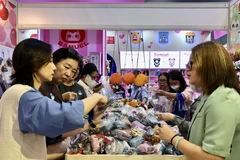
This year, Vietnam is once again one of the largest participants, with nearly 200 booths showcasing a wide range of quality products in sectors where Vietnam has strong complementarities with China and ASEAN markets, including agricultural products, processed food, consumer goods, homeware, furniture and handicrafts.

The 22nd CAEXPO runs from September 17-21, bringing together more than 3,200 businesses from 60 countries. The exhibition covers over 160,000 sq.m, with one third of the space reserved for international pavilions showcasing the latest outcomes of cooperation between ASEAN countries and China.

This year’s expo is held under the theme “Digital intelligence drives development – Innovation shapes the future – Seizing new opportunities from ACFTA 3.0 to build a community with a shared future”.

The same day, Chinh attended a roundtable between the Vietnamese Government and CEOs of Chinese companies on the sidelines of the 22nd CAEXPO and CABIS.

Praising China’s dynamic and diverse corporate ecosystem in sci-tech and innovation as a driver of economic growth, he described the roundtable as a platform for Vietnamese and Chinese enterprises to pinpoint cooperation priorities and pitch innovative projects.

The Vietnamese Party and Government attach special importance to sci-tech, innovation and digital transformation, he said, pointing to the Politburo’s Resolution No. 57 on breakthroughs in sci-tech, innovation and national digital transformation issued in 2024, the Law on Science, Technology and Innovation and the Law on Digital Technology Industry. These documents lay a comprehensive legal foundation to attract quality investment and nurture tech-driven enterprises, he said.

The Vietnamese Government is committed to creating a transparent, open and level playing field for foreign investors, including those from China, in line with international practices as the country enters a new development phase, he said.

Chinese business representatives lauded Vietnam’s market potential but urged more flexible multi-currency payment mechanisms and exchange-rate support for projects. They also advocated for increased investment in infrastructure, such as railway and port connectivity, alongside a more transparent and open investment environment, and simplified administrative procedures to ease collaboration and investment in Vietnam./.
VNA

See more

The dialogue and business networking forum between CPTPP senior officials and business leaders is held in Ho Chi Minh City on July 22, as part of the 2026 CPTPP Senior Officials' Meeting (SOM3) hosted by Vietnam. (Photo: VNA)

Public-private dialogue unlocks CPTPP potential

The CPTPP has evolved beyond tariff reductions into a broad framework covering goods, services, investment and digital trade. Its success, however, ultimately depends on businesses' ability to turn commitments into new investment, stronger supply chains and innovative business models.

Tourists on Nha Trang beach in Khanh Hoa province (Photo: VNA)

Promoting integrated governance to advance sea-based economy

Khanh Hoa has positioned itself as the renewable energy industrial and service hub for the south-central and southern regions. Its economic development strategy identifies four key growth drivers, all built on the foundation of the marine economy.

An overview of the seminar entitled "Opportunities and challenges for market development in Turkish market" (Photo: Ministry of Industry and Trade)

Türkiye offers export potential for Vietnamese food producers: seminar

Türkiye’s target of lifting total exports of goods and services to more than 400 billion USD in 2026 could create additional opportunities for Vietnamese agricultural products, food and beverages, said Ta Manh Cuong, director of the Trade and Investment Promotion Support Centre.

SSC Vice Chairman Bui Hoang Hai speaks at the opening of the programme on July 21. (Photo: VNA)

Vietnam boosts crypto market oversight capabilities

Diederik Van Wersch, Chainalysis' ASEAN Regional Director, noted that Vietnam has a high level of crypto asset adoption, offering significant opportunities for innovation while creating greater demands for oversight and risk management.

Vietnam Railways has introduced a range of tourism, heritage and dedicated train services, attracting growing numbers of passengers. (Photo: VNA)

Railways reinvent themselves with tourism, heritage trains

One of the most notable successes is the premium Hoa Phuong Do (Flamboyant Flower) train operating between Hanoi and Hai Phong city. Since entering service in May 2025, the train has completed nearly 3,000 trips and carried around 1.33 million passengers.

Representatives of relevant parties witness the arrival of the shipment. (Photo: VNA)

First Czech pork shipment officially enters Vietnamese market

A Czech diplomat described the arrival of the first container as the successful outcome of a long and complex market-opening process involving years of negotiations, regulatory approvals and close cooperation between Czech and Vietnamese authorities.

A view of financial buildings in downtown Ho Chi Minh City along the Saigon River. (Photo: VNA)

HSBC: Vietnam’s growth, macroeconomic stability to face tougher test in H2

In a recently released report, Vu Binh Minh, CFA, Associate Director, FX Trading, Markets and Securities Services at HSBC Vietnam, said Vietnam’s economy has built a relatively favourable position in the first six months of the year with GDP expanding 8.18% – the highest first-half growth rate in recent years – as key growth drivers have operated in tandem.

Ha Tay Shoes has secured numerous export orders from the US and European markets. (Photo: VNA)

CPTPP strengthens free trade, expands global economic connectivity

Since taking effect, the CPTPP has significantly expanded Vietnam's access to major markets across North America, the EU, and the Asia-Pacific, contributing to strong export growth in key sectors such as textiles and garments, footwear, and agricultural, forestry and fishery products. The agreement has also encouraged greater investment into Vietnam by promoting regional production networks and clearer rules of origin.

Tan Mingming, Deputy Director of the Foreign Affairs Office of the Dezhou Municipal People’s Government. (Photo: VNA)

Chinese firms put Vietnam on expansion radar

Tan Mingming, Deputy Director of the Foreign Affairs Office of the Dezhou Municipal People’s Government, told Vietnam News Agency reporters that the city has spent years deliberately tightening its links with the Association of Southeast Asian Nations (ASEAN), with Vietnam seen as a key partner.

A perspective of the Viettel Military Industry and Telecoms Group's high-tech semiconductor chip manufacturing plant at Hoa Lac Hi-Tech Park. (Photo: Viettel)

Hanoi builds momentum as Vietnam's semiconductor hub

As Hanoi continues to strengthen its semiconductor ecosystem, the city is creating a new growth driver for both the capital and the country, enhancing Vietnam's technological capabilities and paving the way for deeper integration into the global semiconductor value chain.

Clams are processed for export at the factory of Thanh Hoa Seafood Import-Export JSC in Thanh Hoa province. (Photo: VNA)

Vietnam steps up export to achieve 550-billion-USD target

Against a backdrop of persistent uncertainty in global commerce, the Government is implementing a broad range of measures to strengthen export growth during the remainder of the year. These include expanding overseas markets through economic diplomacy, maximising the benefits of free trade agreements (FTAs), streamlining administrative procedures, reducing logistics costs, improving access to credit and helping businesses overcome trade barriers. Authorities are also encouraging deeper processing, official cross-border exports and greater market diversification to improve the competitiveness of Vietnamese products.