Both Iranian and Vietnamese music share ancient roots and distinctive vocal techniques shaped by local traditions. Improvisation plays a key role in both, revealing a deep and little-known cultural connection between the two nations.
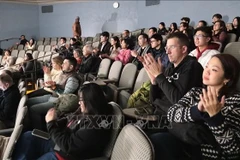
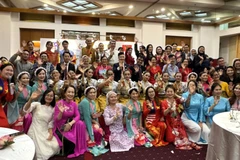
To foster cultural exchange and mutual understanding, representatives from Iran and Vietnam held a traditional music performance titled “Journey from the Land of the Phoenix to the Country of the Dragon and Fairy Descendants” on October 9.
The event was jointly organised by the Embassy of the Islamic Republic of Iran in Vietnam and the Hanoi College of Commerce and Tourism.
Representing Iran was Sar Afshan, a renowned ensemble that has represented the country in several regional music events.
The band consists of five talented musicians: Reza Hosseinzadeh, leader and Tombak drummer; Iman Rostamian, vocalist and player of the violin and Kamancheh; Roozbeh Akbarian, performer of the Tar and Oud; Fatemeh Abdollahi, Qanun player; and Fatemeh Sharifi, Daf drummer.
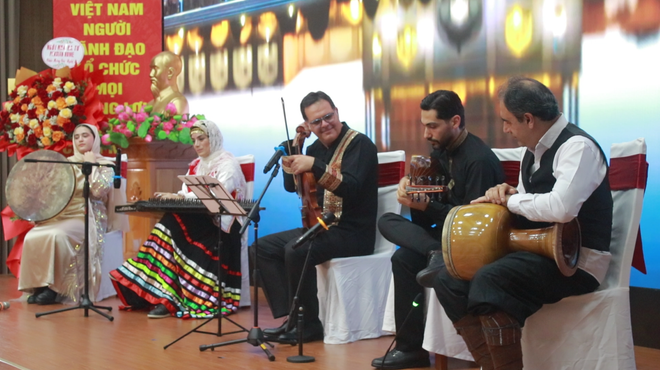
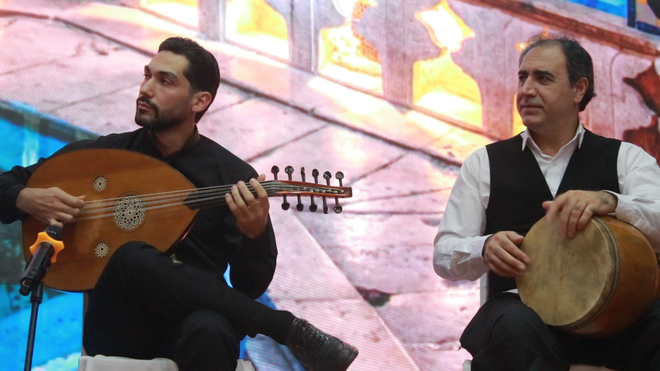
Through the artists’ skilled performances, the audience was immersed in the mesmerising rhythms and melodies of Persian music. The Qanun, reminiscent of Vietnam’s Vietnamese hammered dulcimer (zither), drew particular interest from the crowd.
According to Ali Mohammadi, Chargé d’Affaires of the Embassy of the Islamic Republic of Iran in Vietnam, Iranian music has historically interacted with and influenced Vietnamese music through trade and cultural exchanges with China and India.
“The connection between the two nations’ traditional music can be symbolised by the legendary Persian phoenix, Simorgh — a mythical bird that journeys across vast lands from West Asia to East Asia, visiting the homeland of the Dragon and Fairy descendants,” said Mohammadi.
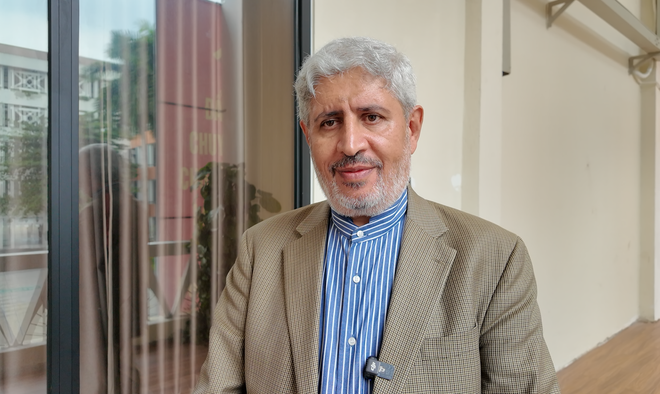
Dr. Trinh Thi Thu Ha, Rector of the Hanoi College of Commerce and Tourism, noted that the relationship between Vietnam and Iran has long been warm and is expanding beyond culture to diplomacy, education, and other fields.
“The Iranian traditional music programme is not just a performance but a meeting of hearts — a harmony of long-standing cultural values. It also highlights the power of art in spreading humanistic spirit and solidarity,” she said.
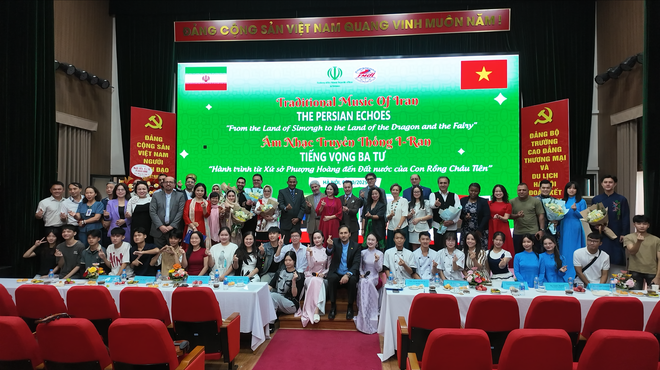
"I believe the programme has left a lasting impression on the audience, especially the students — who are being inspired to become global citizens with understanding and openness through every experience", she added.
In response, Vietnamese representatives performed several songs for their Iranian friends, including “The Song in Pac Bo Forest” by composer Nguyen Tai Tue, “The Wind Returns to the Lowlands”, and the Quan ho folk song “Tuong phung tuong ngo” (“Reunion”).
The Vietnamese side expressed the hope that more cultural exchange activities would be held in the future, deepening mutual understanding and friendship between Vietnam and its international partners./.