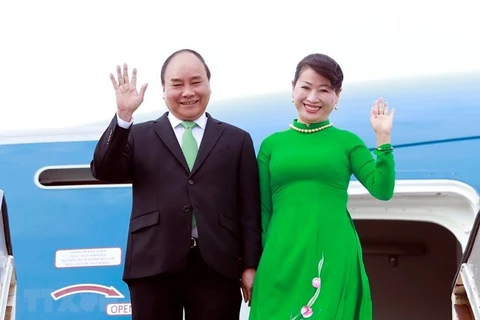
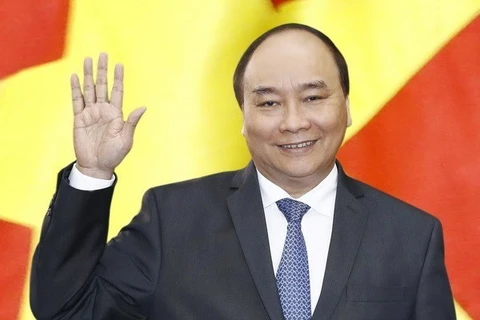
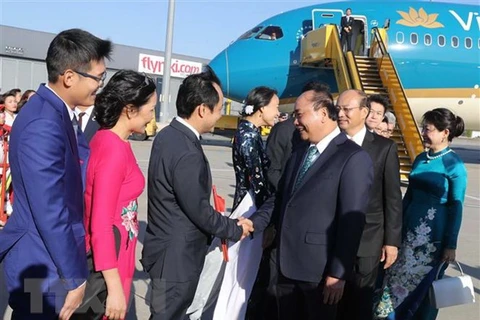
Hanoi (VNA) – Prime Minister Nguyen Xuan Phuc is on a tour to Europe from October 14 – 21 during which he will attend the 12th Asia-Europe Meeting (ASEM) Summit (ASEM 12) in Brussels, Belgium, that will focus its discussion on the theme “Europe and Asia: Global Partners for Global Challenges.”
Vietnam’s dynamic and responsible participation in ASEM over its two-decade-long membership has reflected the country’s foreign policy of proactive international integration.
The country has left significant imprints in the ASEM’s history since its founding in 1996 with the successful hosting of the fifth ASEM Summit in 2004 and five ministers’ meetings, which were the 3rd ASEM Economic Ministers’ Meeting in 2001, 1st ASEM ICT Ministerial Meeting in 2006, the 9th ASEM Foreign Ministers’ Meeting in 2009, the 2nd ASEM Education Ministers’ Meeting in 2009, and the 4th ASEM Labour and Employment Ministers’ Conference in 2012.
It has joined other members in initiating ASEM expansion at the fifth ASEM Summit and the 9th ASEM Foreign Ministers’ Meeting; and in adopting a number of important documents and decisions defining new orientations for the future of ASEM, including the Hanoi Declaration on Closer ASEM Economic Partnership, the ASEM Declaration on Dialogue among Cultures and Civilisations, and the Hanoi Recommendation for ASEM Working Methods (2004).
Vietnam has also proposed 24 initiatives and co-sponsored 27 others within the ASEM framework in culture, healthcare, transport, energy security, food security, green growth, social welfare, inclusive growth, digital economy and more.
Vietnam is one of the pioneers in launching and maintaining ASEM’s first cooperation mechanism on water management, with a focus on sub-region cooperation among countries in the Mekong and Danube river basins.
It has also held some key positions in ASEM, for example, the Coordinator in the 1999-2000 and 2001-2002 tenures and Deputy Executive Director of the Asia-Europe Foundation from 2008-2012.
The nation is now a member of five ASEM Working Groups on water management, climate change response, vocational training, education, human resource development and technological connectivity.
In June this year, Vietnam hosted the “ASEM Conference on Climate Action to Achieving the Sustainable Development Goals – Ways Forward” in the Mekong Delta City of Can Tho. It is an initiative of Vietnam approved at the 13th ASEM Ministerial Meeting last November in Myanmar that won support and sponsorship from various countries, including Australia, Denmark, Myanmar, Finland, the Netherlands and Italy.
The country will organise the ASEM Conference on Lifelong Learning and the 2030 Agenda for Sustainable Development in Hanoi this November to contribute to the Incheon Declaration “Education 2030: Towards inclusive and equitable quality education and lifelong learning for all” and the Asia-Europe (ASEM) Education Process. The main goal of the event is to foster ASEM cooperation in achieving the UN’s 2030 Agenda for Sustainable Development, especially Goal 4 - Quality Education, by promoting regional cooperation and sharing best practices on lifelong learning.
The ASEM was established as a forum of informal dialogue in 1996 as an initiative by Singapore and France with the support of 26 leaders of Asian and European countries, especially those from ASEAN. Its 53 members include 51 countries and 2 regional organisations – the ASEAN Secretariat and the European Commission.
Its goals are to create a new comprehensive partnership between Asia and Europe for stronger growth, to enhance mutual understanding between the peoples of the two continents and to establish close dialogues between equal partners.
After five expansions, the forum has grown from 26 to 53 members – 21 Asian and 30 European countries. They include four permanent members of the UN Security Council, 12 G20 nations, and four BRICS countries.
It represents over 60 percent of the world's population, more than 55 percent of the global trade, 65 percent of the global GDP and 75 percent of global tourism. –VNA
Vietnam’s dynamic and responsible participation in ASEM over its two-decade-long membership has reflected the country’s foreign policy of proactive international integration.
The country has left significant imprints in the ASEM’s history since its founding in 1996 with the successful hosting of the fifth ASEM Summit in 2004 and five ministers’ meetings, which were the 3rd ASEM Economic Ministers’ Meeting in 2001, 1st ASEM ICT Ministerial Meeting in 2006, the 9th ASEM Foreign Ministers’ Meeting in 2009, the 2nd ASEM Education Ministers’ Meeting in 2009, and the 4th ASEM Labour and Employment Ministers’ Conference in 2012.
It has joined other members in initiating ASEM expansion at the fifth ASEM Summit and the 9th ASEM Foreign Ministers’ Meeting; and in adopting a number of important documents and decisions defining new orientations for the future of ASEM, including the Hanoi Declaration on Closer ASEM Economic Partnership, the ASEM Declaration on Dialogue among Cultures and Civilisations, and the Hanoi Recommendation for ASEM Working Methods (2004).
Vietnam has also proposed 24 initiatives and co-sponsored 27 others within the ASEM framework in culture, healthcare, transport, energy security, food security, green growth, social welfare, inclusive growth, digital economy and more.
Vietnam is one of the pioneers in launching and maintaining ASEM’s first cooperation mechanism on water management, with a focus on sub-region cooperation among countries in the Mekong and Danube river basins.
It has also held some key positions in ASEM, for example, the Coordinator in the 1999-2000 and 2001-2002 tenures and Deputy Executive Director of the Asia-Europe Foundation from 2008-2012.
The nation is now a member of five ASEM Working Groups on water management, climate change response, vocational training, education, human resource development and technological connectivity.
In June this year, Vietnam hosted the “ASEM Conference on Climate Action to Achieving the Sustainable Development Goals – Ways Forward” in the Mekong Delta City of Can Tho. It is an initiative of Vietnam approved at the 13th ASEM Ministerial Meeting last November in Myanmar that won support and sponsorship from various countries, including Australia, Denmark, Myanmar, Finland, the Netherlands and Italy.
The country will organise the ASEM Conference on Lifelong Learning and the 2030 Agenda for Sustainable Development in Hanoi this November to contribute to the Incheon Declaration “Education 2030: Towards inclusive and equitable quality education and lifelong learning for all” and the Asia-Europe (ASEM) Education Process. The main goal of the event is to foster ASEM cooperation in achieving the UN’s 2030 Agenda for Sustainable Development, especially Goal 4 - Quality Education, by promoting regional cooperation and sharing best practices on lifelong learning.
The ASEM was established as a forum of informal dialogue in 1996 as an initiative by Singapore and France with the support of 26 leaders of Asian and European countries, especially those from ASEAN. Its 53 members include 51 countries and 2 regional organisations – the ASEAN Secretariat and the European Commission.
Its goals are to create a new comprehensive partnership between Asia and Europe for stronger growth, to enhance mutual understanding between the peoples of the two continents and to establish close dialogues between equal partners.
After five expansions, the forum has grown from 26 to 53 members – 21 Asian and 30 European countries. They include four permanent members of the UN Security Council, 12 G20 nations, and four BRICS countries.
It represents over 60 percent of the world's population, more than 55 percent of the global trade, 65 percent of the global GDP and 75 percent of global tourism. –VNA
VNA