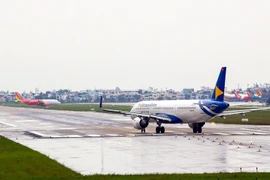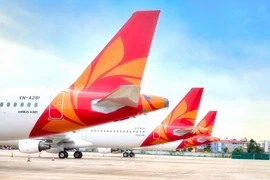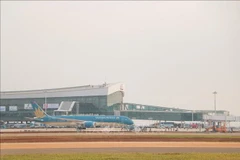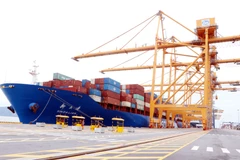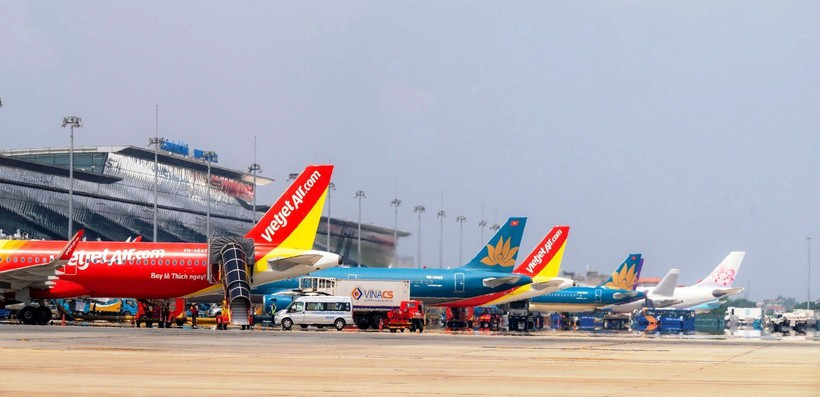
Hanoi (VNA) – Vietnam’s aviation industry is on track for a strong recovery, with double-digit growth in both passenger and cargo volumes expected in 2025 thanks to rising travel demand and the reopening and expansion of international air routes.
To sustain this momentum into 2026, industry authorities said favourable tax, fee and credit policies for airlines - alongside more flexible visa regulations to stimulate tourism - will be essential.
Double-digit growth signals robust rebound
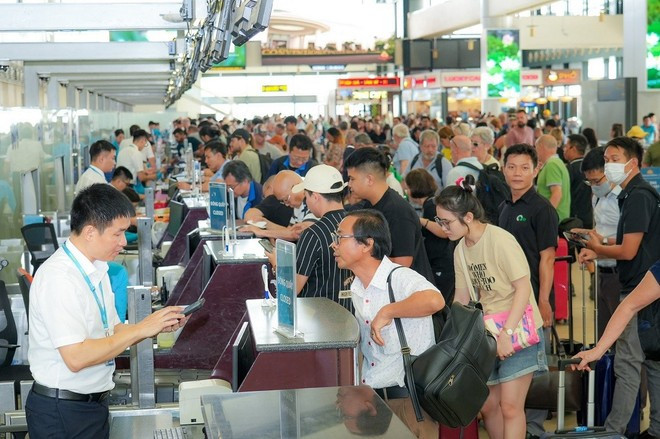
According to the Civil Aviation Authority of Vietnam (CAAV), the aviation industry transported 69.3 million passengers and 1.2 million tonnes of cargo in the first 11 months of 2025, up 10.8% and 18.5% respectively, compared with the same period of 2024.
Domestic carriers transported 30.9 million passengers and 186,800 tonnes of cargo, while international airlines transported 38.4 million passengers and 1.1 million tonnes, representing significant year-on-year gains.
For 2025 as a whole, the CAAV forecasts the market will reach 84 million passengers and 1.4 million tonnes of cargo, marking annual growth of 11.4% and 18%.
CAAV Director Uong Viet Dung attributed the strong performance to surging air-travel demand and effective cooperation mechanisms with international aviation partners, which have supported airlines in expanding operations. He noted that the sector maintained a spotless safety record throughout the first 11 months of 2025, with continuous safety oversight and clearer safety reporting culture.
The CAAV’s aviation safety risk assessment council also met regularly to identify potential risks such as shortages of PW1100 engines for Airbus A320/321neo aircraft to global supply-chain disruptions and lithium battery transport risks so that timely directives were issued to enhance safety standards.
Accelerating airport planning
The CAAV has submitted airport planning proposals for Cam Ranh, Van Don, Tuy Hoa and Buon Ma Thuot to the Ministry of Construction, while updating plans for Lai Chau, Na San, Phu Bai and Can Tho airports. Adjustments have also been approved for Mang Den and Van Phong airports.
In preparation for the opening of Long Thanh International Airport, the CAAV is finalising the operational split between Long Thanh and Tan Son Nhat and working with relevant agencies on technical flight preparations scheduled for December 19.
The agency is also coordinating to review airspace design and flight procedures for major infrastructure projects, including the proposed Gia Binh Airport and expansion plans for Phu Quoc, Vinh and Phu Cat airports.
Policies needed to fuel growth in 2026
With the National Assembly targeting GDP growth of at least 10% in 2026, the aviation sector is positioned to be a major growth driver. The implementation of the revised Law on Civil Aviation and new regulatory frameworks is expected to provide further support.
Strategic infrastructure projects including the opening of Long Thanh and accelerated development of Gia Binh and Phu Quoc airports will help boost capacity and service quality. However, the CAAV warned that geopolitical tensions, trade fluctuations, fuel price volatility and exchange-rate risks could pose challenges to airlines in the year ahead.
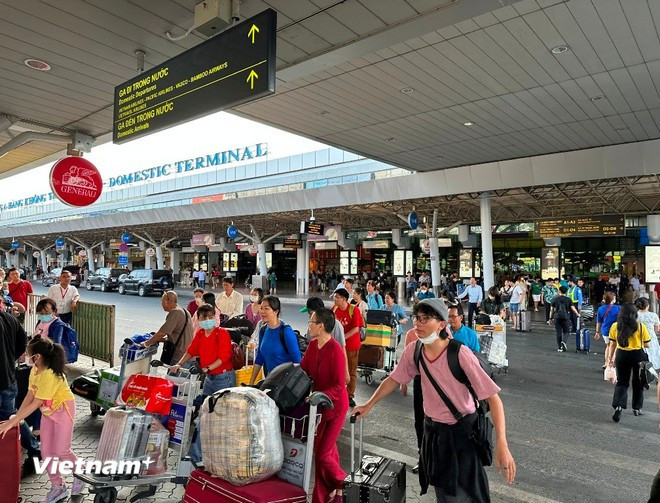
For 2026, the CAAV targets transporting 95 million passengers and 1.6 million tonnes of cargo, up 13% and 15% compared with 2025.
To build a strong foundation for long-term growth, the CAAV has recommended the Ministry of Construction and other authorities to invest in expanding major international airports to ease overload and reduce logistics costs. It also proposed tax, fee and credit incentives for airlines to support restructuring and sustainable recovery, as well as further liberalisation of visa and entry policies to drive tourism demand./.