Vietnam’s property prices to remain stable next year

In 2026, the outlook is expected to improve further, and analysts do not foresee a return of widespread price surges. Dr Can Van Luc, Chief Economist at BIDV, said the market is moving from a phase of “technical recovery” to “structural stabilisation”.

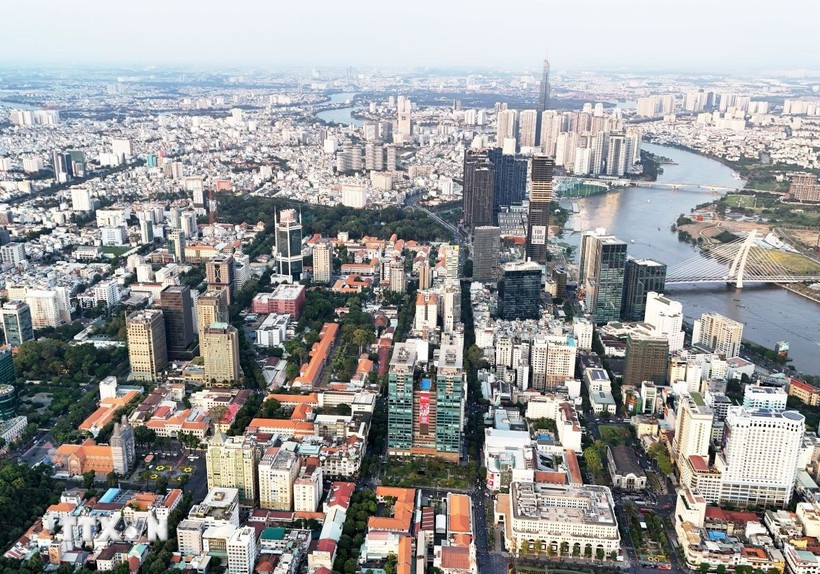
Illustrative image (Photo: VNA)

Hanoi (VNA) – Many analysts believe that 2026 will not bring the kind of major “waves” of speculative house pricing previously seen in Vietnam’s property market. Instead, the sector is expected to operate increasingly on the basis of real value, genuine demand and the true capacity of developers.

The shift comes on the heels of an overheated market, during which high financial leverage, rapid price increases and speculative investment kept prices high. But these conditions are starting to ease of late.

Experts say the 2022–2024 period marked the strongest phase of market restructuring in more than a decade. Numerous developers exited the market, many projects stalled and prices in several segments were forced to adjust closer to real value. Signs of recovery began to emerge in 2025, although still cautious and clearly differentiated.

In 2026, the outlook is expected to improve further, and analysts do not foresee a return of widespread price surges. Dr Can Van Luc, Chief Economist at BIDV, said the market is moving from a phase of “technical recovery” to “structural stabilisation”.

“The next cycle will not see strong waves like those in 2016–2018 or 2020–2021,” he said, adding that growth will be slower but more sustainable, with opportunities concentrated in products with real demand, clear legal status and practical usability.

Improved macroeconomic stability is viewed as a key factor supporting this transition. Lending rates, having risen sharply in the previous period, have eased to more manageable levels, reducing financial pressure on both developers and homebuyers. Meanwhile, real estate credit policy is now applied more selectively rather than uniformly.

A major turning point will be the implementation of revised laws on land and property business from 2025–2026. According to Le Hoang Chau, Chairman of the Ho Chi Minh City Real Estate Association, the legal framework will act as a natural filter for the market. Tighter and more transparent rules will leave little room for speculative or short-term projects. Development may slow, he said, but the market will become safer and more sustainable.

Public investment will remain a long-term growth driver but is unlikely to trigger short-term speculation. Major infrastructure projects such as the North–South Expressway, Ring Roads 3 and 4, Long Thanh International Airport and new metro lines are expected to support regional development rather than fuel rapid land-price escalation, Chau noted.

Opportunities shift towards real demand

With speculative waves receding, opportunities in 2026 are expected to centre on segments serving genuine demand, such as mid-income housing, well-planned urban areas, industrial property and assets generating stable cash flows.

Industrial real estate is forecast to remain a key growth pillar, supported by continued foreign investment. Analysts note rising demand for industrial land, ready-built factories and modern logistics space, with growing emphasis on green standards and operational efficiency.

Individual investors are also expected to return, favouring stable-income assets and lower leverage. Developers, meanwhile, will face higher requirements in financial strength and corporate governance.

Experts caution that while the outlook is positive, 2026 will not be a “promised land” for all. Opportunities will favour well-prepared enterprises, strong locations and realistic strategies. Overall, the market is expected to enter a more stable phase in which real value replaces speculative expectations, with rewards flowing to patient and informed clients./.

VNA

See more

A view of the Hoa Lac Hi-tech Park in Hanoi (Photo: VNA)

Hanoi seeks to boost investment, business in hi-tech parks, IZs

In 2025, Hanoi’s high-tech parks and IZs posted strong performance, with estimated revenue of 12.14 billion USD, contributing about 19.12% to the city’s GRDP, while budget contributions reached 450 million USD and export turnover amounted to 7.42 billion USD.

Sun PhuQuoc Airways launches its first flights on November 1, 2025. (Photo: Sun Group)

The aviation ecosystem game: Can Sun Group Win?

These are among the most notable assessments made by the Centre for Aviation (CAPA) – the world’s leading aviation data and analytics platform – when evaluating the development prospects of Phu Quoc in the coming years.

A nuclear reactor at the DaLat Nuclear Research Institute (Photo: VNA)

New decree sets roadmap for nuclear infrastructure and workforce development

The decree also covers simulation systems and databases for radiation safety, nuclear safety and nuclear security; specialised computational software for safety assessment; monitoring and command-and-control systems for responding to radiation and nuclear incidents; as well as design documentation, technical manuals, prototype products and other related facilities and equipment.

Hanoi's market surveillance team 2 inspects a shop in Hong Ha ward on July 14. (Photo: VNA)

Growing e-commerce market sees tougher fight against counterfeits

The local e-commerce market has surpassed 30 billion USD this year, recording growth of 25% and accounting for two-thirds of the value of the digital economy. However, this rapid growth has also brought about serious consequences, particularly the widespread proliferation of counterfeit and imitation goods and trade fraud.

The interest rate policy has been adjusted in line with market movements to ensure system liquidity and reduce capital costs. (Photo: VNA)

Banking sector anchors macroeconomic stability, setting stage for new growth cycle

Throughout 2025, the State Bank of Vietnam (SBV) has reaffirmed its role as the central regulatory authority in managing monetary policy, stabilising the financial market, and maintaining macroeconomic balance. Closely monitoring international and domestic economic trends, the SBV steered the monetary policy proactively while closely coordinating with the fiscal policy to achieve the dual objective of controlling inflation and supporting growth.

Professor Reena Marwah from the University of Delhi, and Secretary-General of the Association of Asia Scholars. (Photo: VNA)

Vietnam – A rising star in Asia: Indian professor

Vietnam’s projected GDP growth of around 8% in 2025 shows that its economy is on an impressive growth trajectory, driven by multiple reinforcing engines, said Professor Reena Marwah from the University of Delhi, and Secretary-General of the Association of Asia Scholars (AAS).

Harvesting jackfruit (Photo: VNA)

China to allow import of Vietnamese fresh jackfruits from June 1, 2026

To ensure smooth customs clearance, all orchards and packing facilities participating in exports must be registered and approved by competent authorities of both countries. The list of approved entities granted export codes will be published and regularly updated on the GACC website.