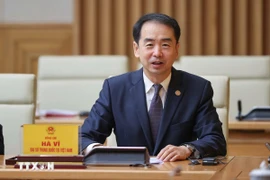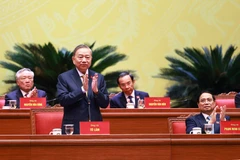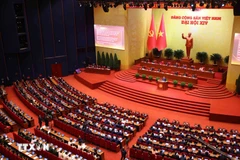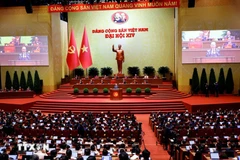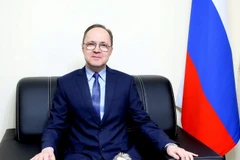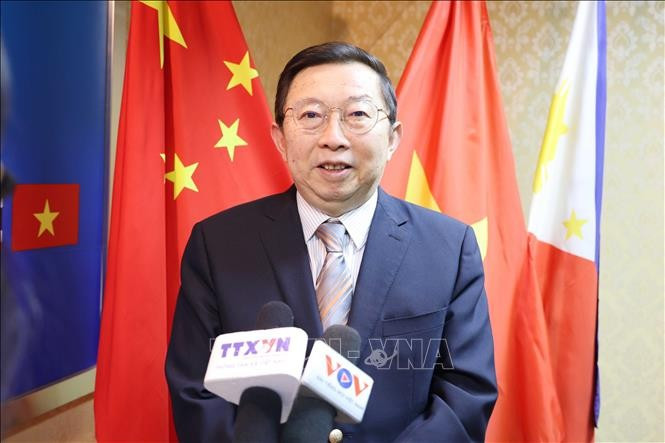
Hanoi (VNA) – The 14th National Congress of the Communist Party of Vietnam is a pivotal event marking the country’s entry into a new era – the era of national development, and represents a milestone of historic significance, assessed Xu Ningning, Chairman of China’s RCEP (Regional Comprehensive Economic Partnership) Industry Cooperation Committee.
As the starting point of this new phase, the Congress is expected to clarify Vietnam’s future development blueprint and set the strategic direction for achieving long-term goals: becoming a developing country with modern industry and upper-middle income by 2030 and a high-income developed nation by 2045. From a practical perspective, Xu noted that the Congress will help build national consensus, address structural challenges in development, and further consolidate the momentum of economic recovery. From an international standpoint, the development roadmap and cooperation orientations outlined at the Congress will strengthen international investors’ confidence in the country, facilitate deeper integration into regional industrial and supply chains, and lay a solid foundation for expanding cooperation and enhancing regional influence within the framework of the RCEP.
Commenting on the goals set out at the 14th Congress, he emphasised that the most impressive aspect is Vietnam’s long-term vision of becoming an upper-middle-income developing country by 2030 and a high-income developed country by 2045. He noted that these goals are grounded in the country’s current development foundations, demonstrate strong confidence in the future, and reflect its firm determination to achieve long-term prosperity through structural reforms.
From a strategic perspective, he added, these goals will drive Vietnam to make sustained efforts in key areas such as industrial upgrading, technological innovation, and infrastructure development. These priorities align closely with the main directions of cooperation under the RCEP, helping maximise the benefits of regional openness, and contributing to not only generating lasting momentum for its development but also injecting new vitality into regional economic cooperation.
In addition, the foreign policy of independence, self-reliance, comprehensiveness, diversification, and proactive, effective international integration, articulated at the 14th Congress, represents both continuity and a significant advance over four decades of diplomatic thinking. This orientation is well suited to Vietnam’s aspiration for deeper integration into the global economy, Xu assessed.
Assessing the role of the CPV in national construction, defence, and development, Xu affirmed that the Party’s leadership is the fundamental guarantee of Vietnam’s historic progress. Under the Party’s leadership, the country has got rid of poverty and backwardness, achieved major breakthroughs in international integration, and, over four decades of renewal, transformed from a country under blockade and embargo into a middle-income economy ranked among the world’s top 40. The living standards of more than 100 million people have improved markedly, clearly demonstrating the Party’s leadership capacity and strong cohesion.
Entering the new era, he noted, the Party’s leadership should focus on strategic guidance and the concentration of resources. This includes deepening reforms, accelerating the transition toward digital and green economy, maintaining policy stability to bolster foreign investor confidence, promoting regional cooperation mechanisms such as the RCEP to turn geographical advantages into development drivers, and ensuring coordinated development across sectors to safeguard the country’s overall progress amid an increasingly complex global environment./.
VNA