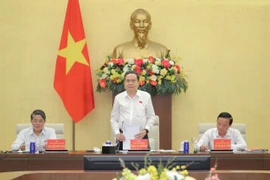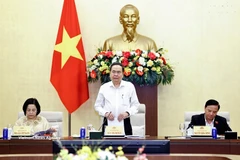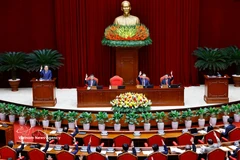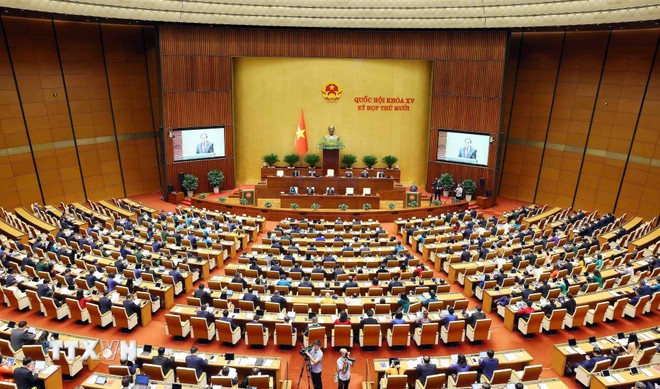
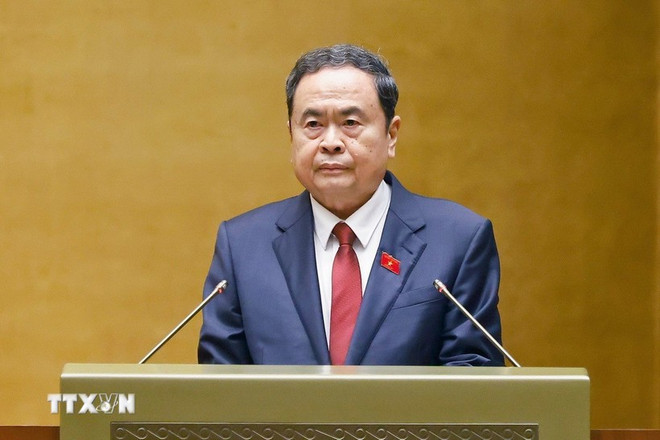
Hanoi (VNA) – At the opening of the 10th session of the 15th National Assembly (NA) on October 20, NA Chairman Tran Thanh Man presented a draft report reviewing the legislature’s performance during its 2021–2026 tenure.
A tenure of bold reform and innovation
Chairman Man noted that the 15th National Assembly operated in an exceptionally challenging context marked by the global pandemic, climate change, and unpredictable geopolitical and economic developments. Despite these headwinds, the NA firmly upheld its role as the highest state power organ and the body representing the will and aspirations of the people.
The 15th NA has demonstrated mettle, intellect, innovation, transparency, and effectiveness, performing well its constitutional, legislative, and supervision functions, while also excelling in parliamentary diplomacy, he said.
Specifically, the legislature has strongly promoted its role in perfecting institutions and laws. The amendment and supplement of a number of articles of the 2013 Constitution has promptly institutionalised the Party's major policies, especially on the arrangement of the state apparatus in the direction of "streamlining, effectiveness, efficiency, closeness to the people, and closeness to reality".
The legislative work underwent major reforms in both mindset and process. The NA actively prepared and adopted policies with people and businesses at the centre, focusing on removing bottlenecks and unleashing production potential. For the first time, the Politburo approved the NA’s five-year legislative programme, setting long-term directions to ensure consistency and feasibility in the legal system.
The review of existing legal documents helped remove overlaps and outdated provisions, improving coherence across sectors.
Supervision activities were enhanced with greater focus and depth, addressing issues of public concern such as socio-economic management, citizen complaints, and environmental protection. The NA launched the first-ever supervision forum, contributing to strengthening the rule of law, improving public accountability, and increasing the effectiveness of State institutions.
The legislature also made strategic decisions on major issues of the country, closely coordinating with the Government and relevant agencies to ensure rapid and sustainable socio-economic development, better social welfare, education, and healthcare, while implementing institutional reforms in the State apparatus.
The NA's external activities have been promoted on both bilateral and multilateral levels, implemented at many levels, achieved many good results, created a strong impression, contributing to raising the level of Vietnam's external activities along with the general successes of the Party's foreign affairs and State diplomacy.
The 15th NA held a record 19 sessions, including nine extraordinary meetings to promptly address urgent matters. It also took the lead in reorganising its structure to match the new two-tier local administration model being implemented nationwide from July 1, 2025 — a move praised by the Party Central Committee and Party General Secretary To Lam.
In addition, the NA strongly promoted the application of science, technology, and digital innovation, using artificial intelligence, digital infrastructure, and specialised platforms to modernise its operations and enhance transparency and efficiency. These efforts mark the initial steps toward building a fully “digital parliament” in Vietnam.
Preparations have also been made for the upcoming 80th anniversary of Vietnam’s first general election, with commemorative activities highlighting the NA’s historic journey and its contributions to national development.
Towards a more proactive and digital legislature
While recognising achievements, Chairman Man also pointed out existing limitations, including gaps between legislative reforms and the realities of integration and emerging socio-economic issues. He emphasised the need for stronger oversight in addressing public concerns and ensuring timely implementation of the NA's resolutions.
Looking ahead, he said the 16th National Assembly will take office at a crucial turning point for Vietnam, as the country advances into a new phase of development. The legislature must therefore “turn institutional reform into a competitive advantage and a driver for growth.”
The NA is expected to continue innovating across its three key functions — lawmaking, supervision, and making decisions on important matters of the country. Legislative activities must lead the way in promoting innovation, digital economy, renewable energy, green growth, and environmental protection, while ensuring national security and social progress.
Supervision should focus on critical areas such as land and resource management, environmental protection, anti-corruption, waste prevention, and safeguarding citizens’ rights. Policies must be grounded in reality, informed by public feedback, and responsive to emerging issues.
All decisions on the nation's important issues must place the interests of the nation and people above all else, ensuring fairness, transparency, and resistance to group interests or external influence, the top legislator said.
The NA will also intensify coordination with the Government, the Vietnam Fatherland Front, the judiciary, and other State agencies to ensure effective preparations of legislative agendas and policy proposals.
In the coming years, the NA aims to deepen digital transformation across all its activities, establishing an AI-assisted, data-driven working model, and continuing the “digital literacy for all” initiative among deputies and staff to strengthen public engagement and transparency./.