2026 to test Vietnam’s economic resilience: experts

Dr. Le Duy Binh, Director of Economica Vietnam, predicted that Vietnam’s growth in 2026 would outpace that of 2025, provided macroeconomic policies remain flexible and risks related to monetary policy, inflation, and public debt are well managed.

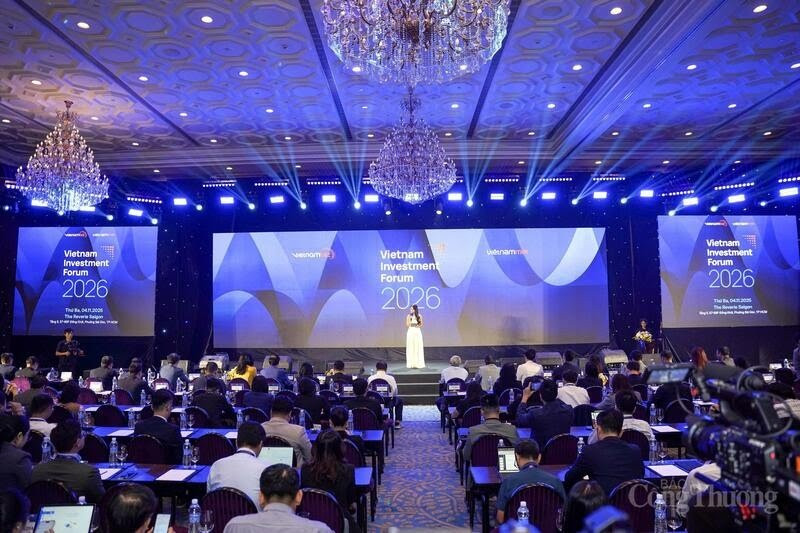
An overview of the Vietnam Investment Forum 2026 (VIF 2026) (Source: congthuong.vn)

HCM City (VNA) – As 2025 draws to a close, Vietnam’s economy is entering a pivotal stage in its 2026-2030 development cycle, with growing confidence and readiness to accelerate growth. Despite global uncertainties, economists believe that Vietnam possesses strong internal foundations to sustain robust momentum into 2026.

These insights were shared at the Vietnam Investment Forum 2026 (VIF 2026), co-organised by VietnamBiz and Viet Nam Moi in Ho Chi Minh City on November 4.

Bright prospects from domestic strength, macroeconomic stability

For 2026, the Government has set an ambitious target of double-digit GDP growth, highlighting the 10% milestone as a marker of recovery and renewed momentum. To achieve this, a series of major policy decisions are being introduced to strengthen internal capacity and remove institutional bottlenecks.

According to Dr. Phan Duc Hieu, standing member of the National Assembly’s Economic and Financial Committee, the volume of policies passed by the legislature has grown “exponentially” in less than two years. At the 7th session in early 2024, the legislative body approved 13 major decisions, whereas the ongoing 10th session is expected to deliberate on as many as 50 bills and three regulatory resolutions, alongside key infrastructure initiatives such as expressways, railways, and airports.

Dr. Hieu said this surge reflects a “new spirit of action” within the National Assembly, which has shifted from a rigid annual plan of 10-12 laws to a more flexible, demand-driven approach.

Dr. Le Duy Binh, Director of Economica Vietnam, predicted that Vietnam’s growth in 2026 would outpace that of 2025, provided macroeconomic policies remain flexible and risks related to monetary policy, inflation, and public debt are well managed.

He stressed that the experience of the past five years demonstrates Vietnam’s resilience: despite multiple global shocks, the economy maintained average annual growth of 6.5-7%, with some years exceeding 8%.

Improved endogenous capacity, political and social stability, strong domestic consumer confidence, and growing international credibility of Vietnamese businesses are the pillars supporting sustained growth in 2026, he said.

Based on Vietnam’s 8.2% GDP growth in Q3 2025, Sacha Dray, Senior Economist at the World Bank, assessed that Vietnam continues to display remarkable adaptability amid global trade fluctuations and rising tariff risks. Government support measures have eased economic uncertainty, normalised trade flows, and spurred exports. He projected that Vietnam’s export sector will see a clear recovery in the coming period, contributing positively to 2026 growth.

From a business perspective, Dang Van Thanh, Chairman of TTC Group, described 2026 as marking “a new race track” for Vietnam’s economy, with entrepreneurs at the centre of growth. He pointed to Politburo Resolution No. 68-NQ/TW on private sector development and National Assembly Resolution No. 198/2025/QH15 on special mechanisms for the private economy as “crucial accelerators” reflecting the State’s strong partnership with the business community toward sustainable growth.

Policy focus shifting toward stimulating domestic demand

Despite positive growth prospects, experts emphasised that Vietnam should shift its policy focus from supply-side to demand-side measures to ensure sustainable growth in the coming years.

According to Thanh, current policies primarily support the supply side through public investment and business incentives while lacking strong tools to stimulate domestic consumption. He proposed that the Government encourage private spending by reducing personal income tax or introducing time-limited consumption vouchers instead of direct cash transfers.

“This would enhance the circulation of money while boosting consumer demand,” he said, noting that domestic consumption remains the slowest-recovering pillar of the economy. He projected GDP growth of 8-10% in 2026, driven by public investment, a strengthened private sector, and a rebound in household spending.

Emphasiing the critical role of public investment during this transition, Dr. Le Duy Binh argued that government capital is essential to expand economic space and meet infrastructure needs. However, he warned that excessive reliance on public spending could crowd out private investment.

Dr. Le Anh Tuan, CEO of Dragon Capital, observed that inflation risk remains low given that consumer demand has not fully recovered. However, he noted that exchange rate stability remains a sensitive issue amid ongoing dollarisation. If the exchange rate is kept steady, he said, monetary policy in 2026 should continue a moderately accommodative stance, creating favourable conditions for businesses to expand production, investment, and job creation./.

VNA

See more

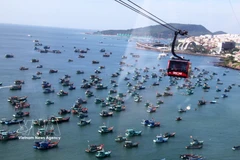
The world’s longest over-sea cable car to Hon Thom Island in the Phu Quoc special zone, An Giang province. (Photo: VNA)

An Giang steps up tourism development ahead of APEC 2027

Tourism in the province has recorded strong growth, affirming its position as one of the region’s leading destinations. Phu Quoc Island continues to attract the majority of international travellers, receiving more than 817,660 visitors, accounting for over 98.5% of total foreign arrivals to the province.

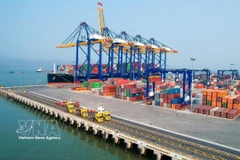
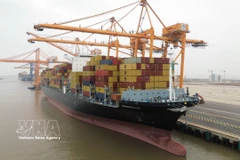
Import-export activities at Lach Huyen international port in Hai Phong (Photo: VNA)

Reducing risks, removing logistics bottlenecks amid Middle East volatility

According to Truong Xuan Trung, Trade Counsellor of Vietnam in the UAE, the Middle East serves not only as a consumption market but also as a key global transhipment hub, meaning instability in the region creates ripple effects across intercontinental transport networks. Shipping route adjustments and airspace restrictions have lengthened transit times, increased costs and disrupted delivery schedules, with some Vietnamese shipments forced to reroute or seek alternative markets.

Cargo is handled at container terminals No. 3 and No. 4 of Hai Phong International Gateway Port. (Photo: VNA)

Businesses seek “survival momentum” amid global geopolitical turbulence

This is an urgent move as the challenges of 2026 differ markedly from previous ones, shaped by overlapping external shocks ranging from geopolitical tensions disrupting supply chains to surging logistics and raw material costs, exchange-rate pressures, and increasingly complex tariff barriers in global markets.

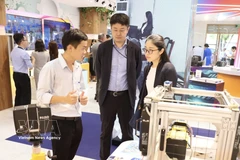
At the 2025 trade connectivity week for mechanical, electrical and digital industries. (Photo: VNA)

Ho Chi Minh City gives boost to supporting industry firms

Supporting industry firms in Ho Chi Minh City are scrambling to embed themselves more deeply into both global and domestic supply chains, backed by a suite of local incentives that are speeding up their tech upgrades and market access.

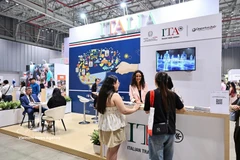
Italy's national pavilion at the ongoing Food & Hospitality Vietnam 2026 exhibition at Ho Chi Minh City's Saigon Exhibition and Convention Centre (SECC) draws visitors for hands-on experiences. (Photo: IVNA)

Italian food firms eye opportunities in Vietnam

Italy’s exports of food and beverages to Vietnam reached 105.1 million EUR in 2025, up 4% year-on-year, positioning the country among the leading EU suppliers to the Vietnamese market.

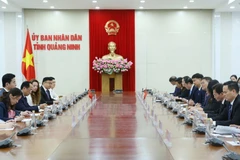
An overview of the working session (Photo: baoquangninh.vn)

Quang Ninh promotes all-round cooperation with Guangxi Zhuang Autonomous Region

Quang Ninh encourages Guangxi enterprises to invest in high-tech marine aquaculture and expand aquatic product exports in China. At the same time, the province aims to develop livestock farming in line with international standards and attract investment in deep-processing plants for agricultural products such as cinnamon, star anise and tea, linked with traceability systems at border gates.

Illustrative image (Source: VNA)

Vietnam becomes fastest growing market for Norwegian salmon in Southeast Asia

The Norwegian Seafood Council (NSC) reported at the “Norwegian seafood industry in Vietnam market 2026” event held in Ho Chi Minh City on March 25 that fresh Norwegian salmon exports to Vietnam jumped 16% in volume in the first two months of 2026 compared with a year earlier, while frozen salmon shipments surged about 37%.

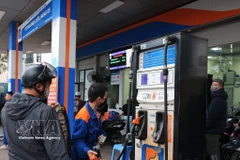
At a petrol station (Photo: VNA)

Energy giants work hard to roll out E10 RON95 sale ahead of schedule

Petrolimex and PVOIL, are in a strong position to accelerate the transition toward cleaner fuels. These companies have been actively preparing infrastructure, upgrading blending systems, and coordinating supply chains to ensure the availability of E10 RON95 across their nationwide retail systems.

Deputy Prime Minister Nguyen Chi Dung visits Bosch Industrial in Stuttgart, Germany. (Photo: VNA)

Vietnam, Germany boost innovation, startup ecosystem connectivity

Deputy PM Nguyen Chi Dung highly valued CfE’s reputation and pioneering role in building Germany’s innovation-driven startup ecosystem, and called for stronger cooperation with NIC to support Vietnamese universities, research institutes and organisations in training and scientific research.

The FTA Index 2024 provides a panorama of the FTA implementation outcomes across the country. (Photo: VNA)

ASEAN opens new export momentum for Vietnam

As competition in ASEAN is intensifying, Vietnamese enterprises are advised to strengthen distribution networks, enhance product innovation and closely monitor policy changes and trade-defence measures in importing markets to sustain and expand their market share.