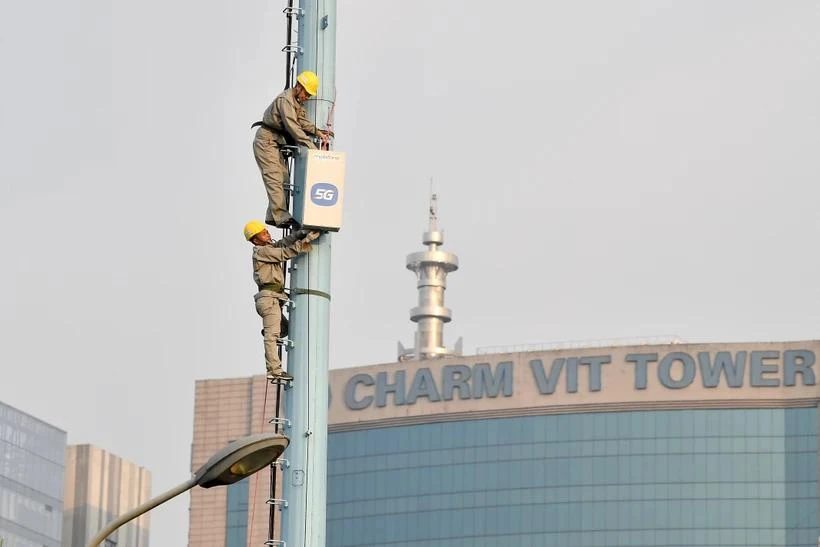
Hanoi (VNA) - The practical application of 5G in the world as well as in Vietnam shows that this technology will be the main driving force for digital transformation and economic development in the future.
According to a report by the Global Telecommunication Association (GSMA), 5G will bring more than 930 billion USD to the global economy by 2030. Its benefits will focus on a number of key industries such as industrial production (36%), public administration (15%), services (10%), information and communications technology (9%), and finance (8%).
In fact, each country has its own way of promoting and facilitating the application of 5G technology. The US has invested 1.5 billion USD to promote 5G development and provide tax support for units that develop standards.
The UK has invested 40 million GBP (51 million USD) in 5G technology for manufacturing. In Europe, there have also been 5G pilot projects, typically the smartPORT at the Port of Hamburg (Germany).
In Asia, the Republic of Korea currently provides a 2-3% tax support for 5G development. It also implements 5G pilot projects and invests in smart port clusters.
China is one of the most "enthusiastic" countries in deploying 5G. The country has planned "Sailing 2021 - 2023" to orient 5G development for vertical industries such as manufacturing and seaports.
Provincial-level localities in China have also issued specific policies such as infrastructure construction subsidies, public-private partnership, administrative troubleshooting, and organization of emulation movements to promote 5G deployment.
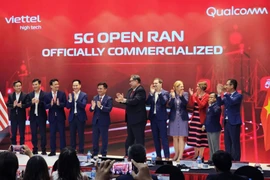
In Vietnam, 2024 marks an important milestone in 5G deployment with the successful auction of B1 (2.500 – 2.600 MHz), C2 (3.700 – 3.800 MHz) and C3 (3.800 – 3.900 MHz) bands for network operators. Immediately after this event, a network operator of Vietnam has commercialized and officially provided 5G services.
Speaking at Internet Day 2024 in Hanoi on November 27, Ngo Manh Hung, Director of 5G2B Solutions at the Viettel Business Solutions Corporation said that the needs of businesses when applying new technology are to increase productivity, minimise risks, and optimise production costs.
Applying new connection technologies such as 5G will help Vietnam catch up with the world in areas like industrial production and seaports.
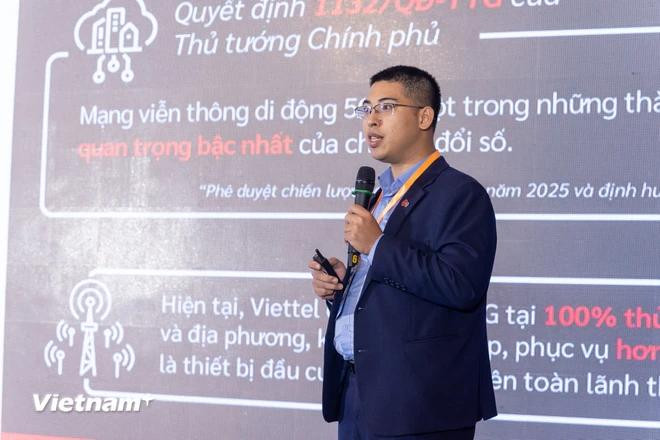
According to this expert, the number of IoT (Internet of Things) connections needed in a factory or seaport is huge. Therefore, these are places where 5G technology can be deployed soon.
“With a large number of connections in a wide coverage area, current connection technologies such as WiFi or wired connections are difficult to create advantages in optimizing costs, increasing productivity, and reducing risks. 5G technology will be the catalyst for the smooth and effective deployment of IoT connections,” said Hung.
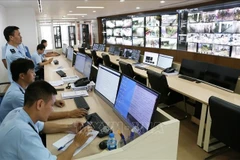
In factories and seaports, 5G technology can be applied to connect smart camera systems to monitor workers' behavior, connect sensor systems for continuous monitoring, thereby performing planned equipment maintenance.
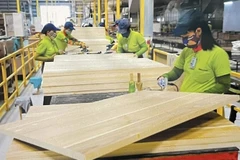
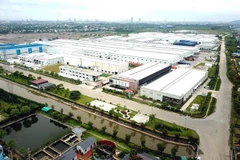
Pegatron in Hai Phong city is the first smart factory in Vietnam to be automated based on 5G mobile service connection with the advantages of high speed, low latency, and support for multiple connections.
Pegatron factory in Vietnam has applied 5G in production line monitoring, product quality inspection, AR/VR application for factory operations, self-driving vehicles for transporting goods or security cameras.
Thanks to 5G, the factory has cut product quality control personnel by 50%, material and installation costs by 50% in connection deployment, and travel and training costs by 30%.
According to Nguyen Tuan Huy, head of the Digital Transformation Department of MobiFone, in China there are currently tens of thousands of 5G use cases. Of these, the most common are smart factory use cases (about 17,6%). Use cases for games, entertainment, and healthcare currently account for more than 9%.
He said that the 5G application in smart mines is one of China's unique use cases. Miners often work dozens of meters underground, where WiFi cannot reach.
Miners can use a dedicated 5G-enabled tablet to avoid getting lost, find their way, and do their work. 5G technology can also play a role in connecting hundreds of self-driving cars operating 24/7 in smart mines.
5G can also be applied in the entertainment field, immersive travel (livestreaming via virtual reality glasses), distance learning, drone control in agriculture, supporting doctors in performing remote surgeries, and deploying private 5G networks in smart factories. This technology will act as a catalyst for implementing digital transformation projects, thus promoting the development of the entire economy./.