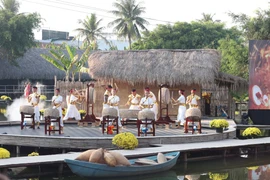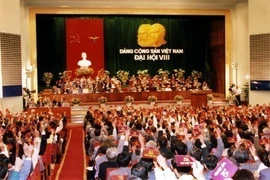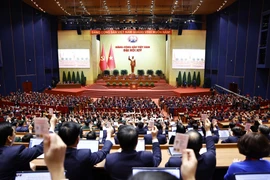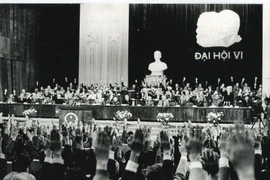
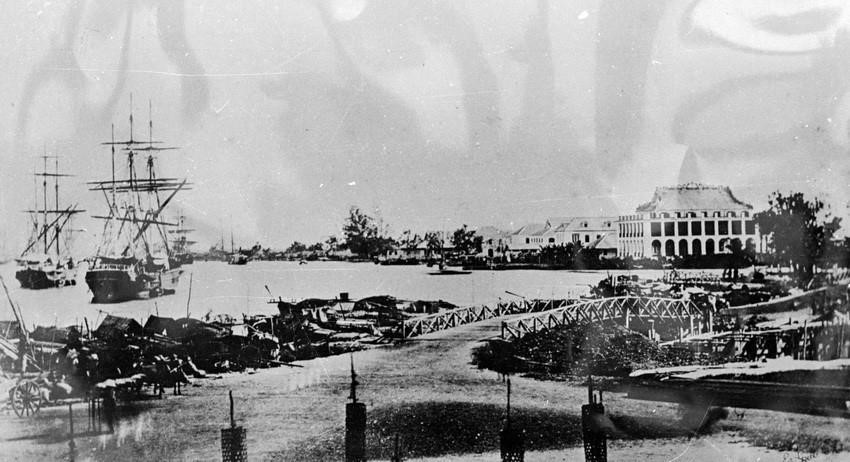
Born into a time of national loss and hardship, young Nguyen Tat Thanh - later known as Nguyen Ai Quoc and President Ho Chi Minh - early grasped the plight of the country and the suffering of the people. He resolved to find a new path to drive out French colonialists and save the nation. In the photo: Nha Rong Wharf, where Nguyen Tat Thanh departed in 1911 to seek a path for national salvation. (Photo: VNA)
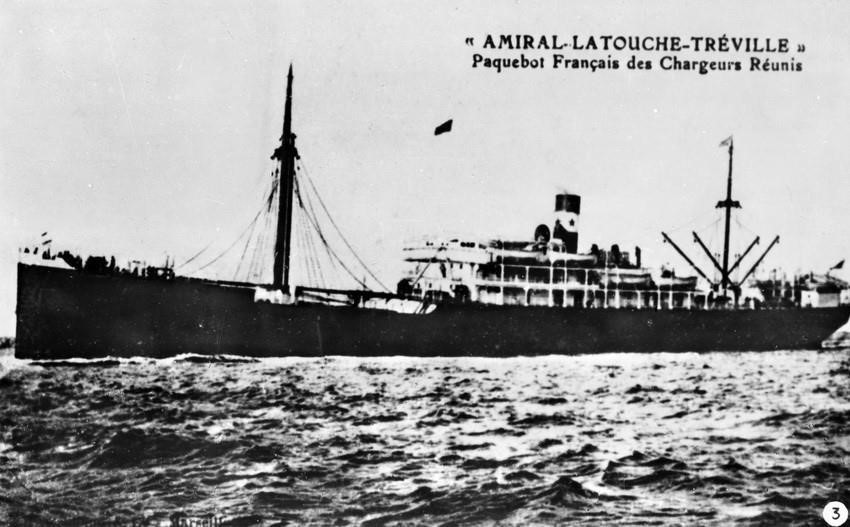
Born into a time of national loss and hardship, young Nguyen Tat Thanh early grasped the plight of the country and the suffering of the people. He resolved to find a new path to drive out French colonialists and save the nation. In the photo: The Latouche Treville ship that carried Nguyen Tat Thanh from Nha Rong Wharf on June 5, 1911, on his journey to seek a path for national salvation. (Photo: VNA)
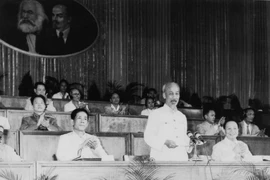
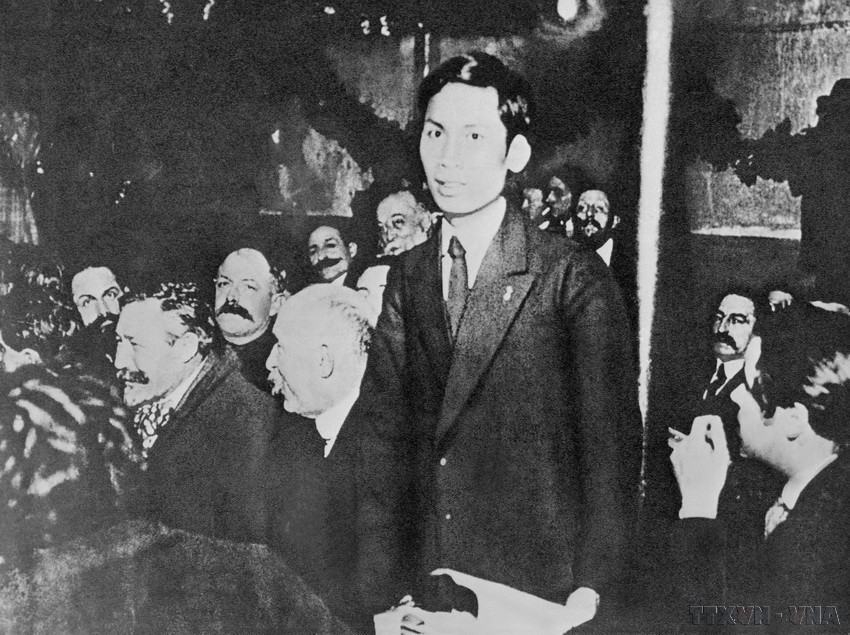
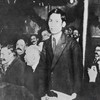
Comrade Nguyen Ai Quoc (President Ho Chi Minh) addresses the founding congress of the French Communist Party in Tours. He was the first Vietnamese to become a communist and is regarded as one of the party’s founders (December 1920). (Photo: VNA)
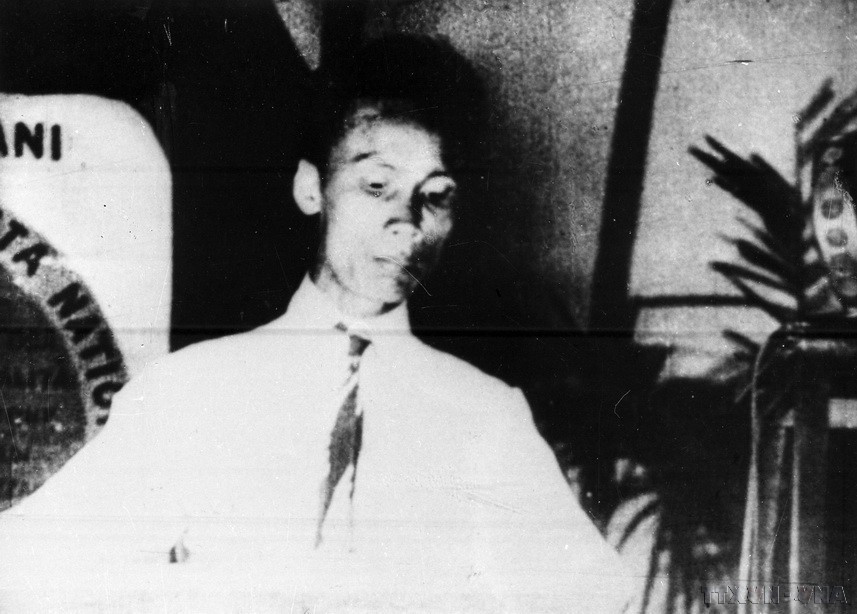
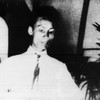
Driven by deep patriotism, Nguyen Tat Thanh travelled across five continents and four oceans to learn how France and other countries achieved independence and freedom, before “returning to help his compatriots”. Thirty years later, he returned, shaping the destiny and future of the nation. In the photo: Nguyen Ai Quoc speaks at the Fifth Congress of the Communist International in Moscow, 1924. (Photo: VNA)
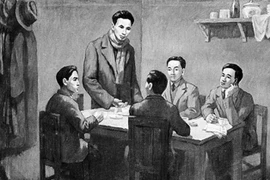
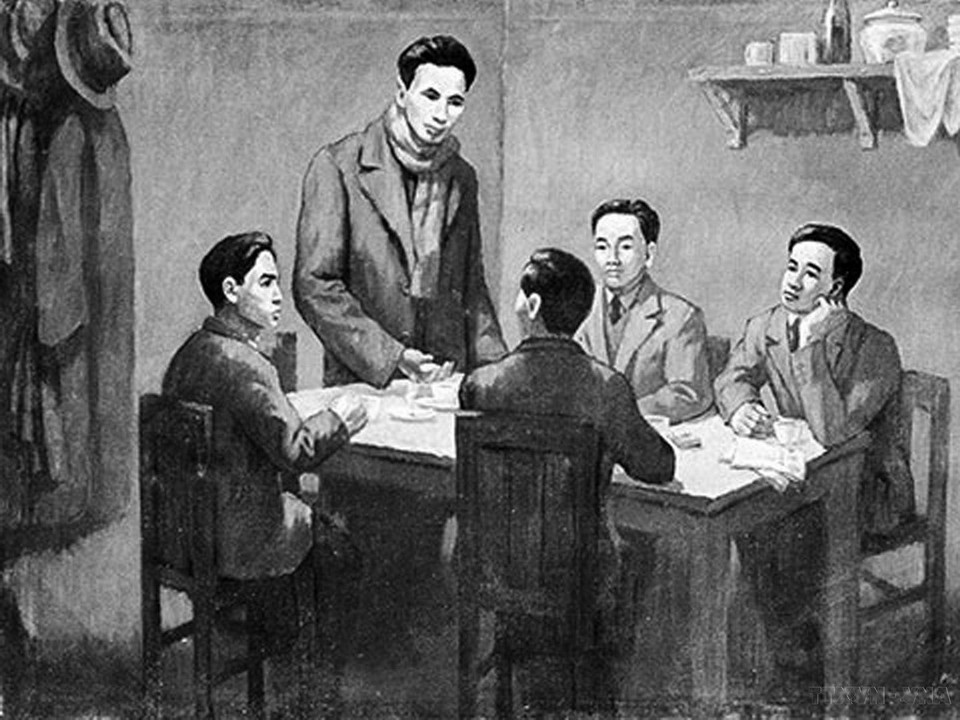
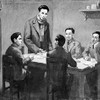
From January 6 to February 7, 1930, the conference unifying communist organisations to establish the Communist Party of Vietnam was held in Hong Kong (China) under the chairmanship of Nguyen Ai Quoc, representing the Communist International. The conference was tantamount to a founding congress. The birth of the Communist Party of Vietnam marked a historic turning point, ending the crisis over political line and the path to national salvation, and paving the way for national reunification and liberation from colonial and feudal oppression. (Photo: VNA)
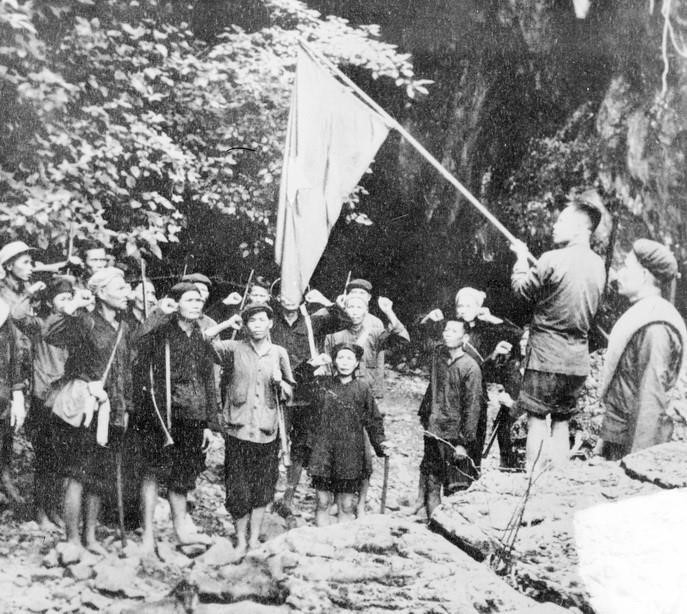
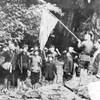
Vietnam’s first guerrilla unit under Party leadership was formed in Bac Son (Cao Lang province) in 1940. (Photo: VNA)
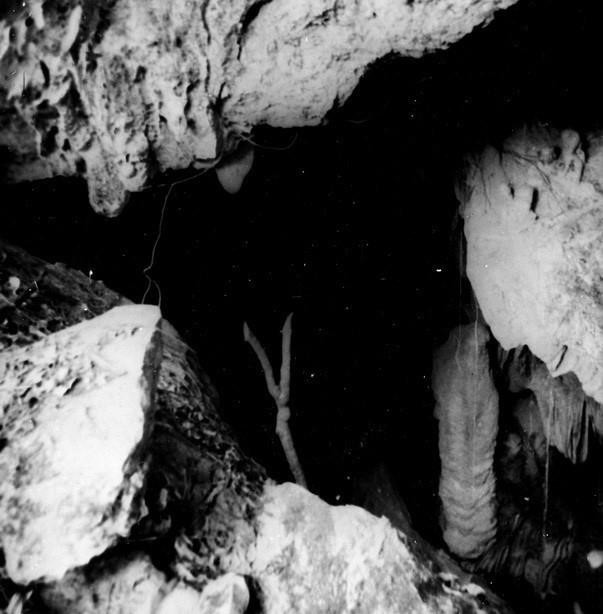
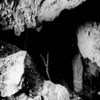
President Ho Chi Minh chose Cao Bang-of strategic geopolitical, defence and security importance and rich in patriotic tradition—as the first revolutionary base area. In the photo: Coc Bo Cave, where Nguyen Ai Quoc lived and worked upon returning to the country in February 1941. (Photo: VNA)
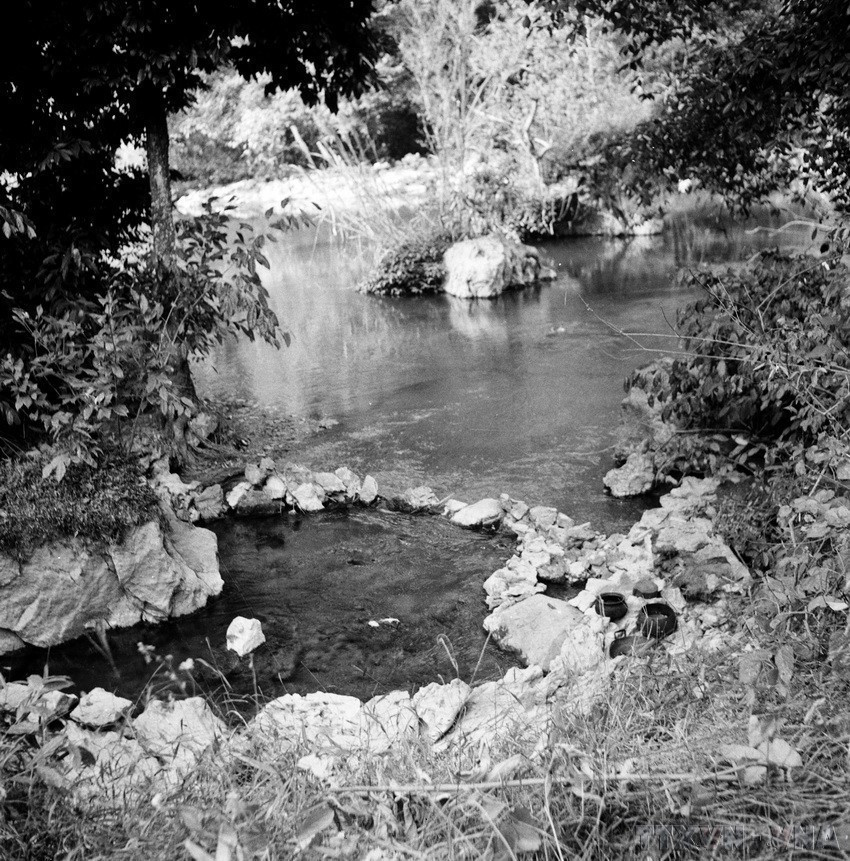
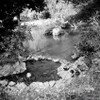
President Ho Chi Minh chose Cao Bang—of strategic geopolitical, defence and security importance and rich in patriotic tradition—as the first revolutionary base area. In the photo: Lenin Stream, where he often cooked during his early days back in the country, February 1941. (Photo: VNA)
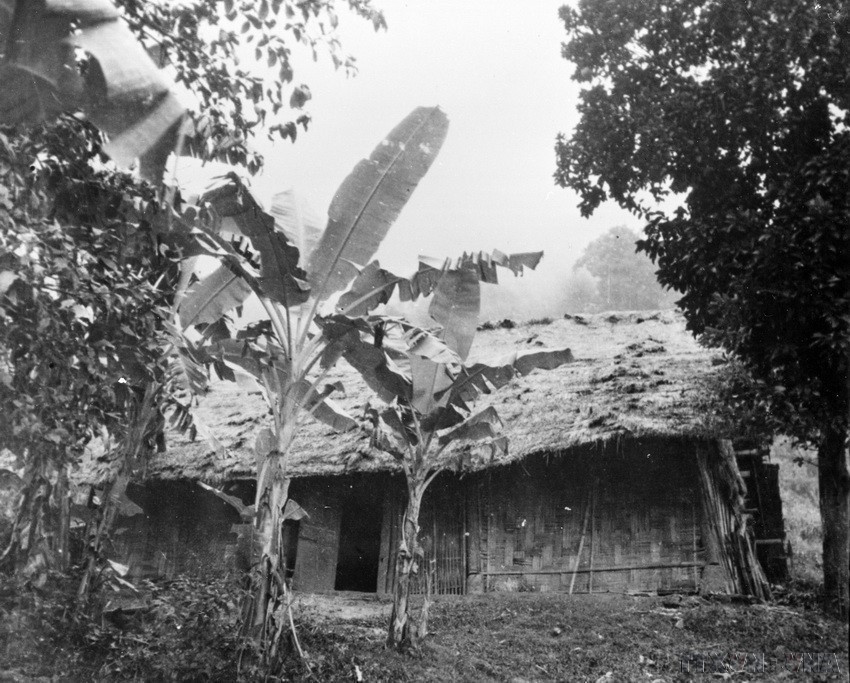
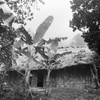
The house of comrade Ma Van Hai in Lung Hoai commune, Hoa An district, Cao Bang, one of the places where President Ho Chi Minh lived and worked in 1942. (Photo: VNA)
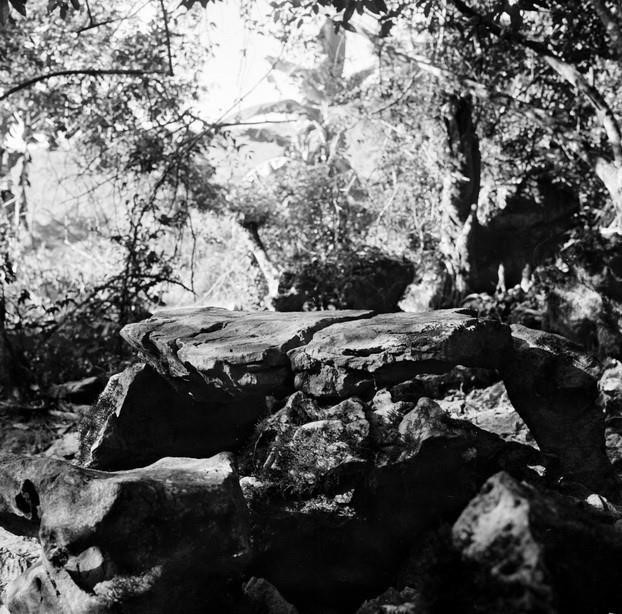
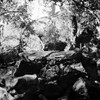
The stone table by Lenin Stream, where Nguyen Ai Quoc often worked during his time in Cao Bang. (Photo: VNA)
0
1
2
3
4
5
6
7
8
9

85 years since President Ho Chi Minh’s return to lead Vietnamese revolution

Eighty-five years ago, on January 28, 1941, after 30 years abroad seeking a path to national salvation, Nguyen Ai Quoc (President Ho Chi Minh) returned to the homeland via Milestone 108 in Pac Bo (Cao Bang). The event marked a turning point of great historical significance, opening a new stage in the development of the Vietnamese revolution and laying the foundation for the nation’s great victories.