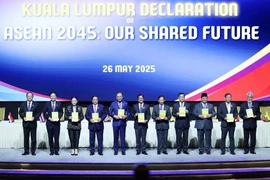
Kuala Lumpur (VNA) – Secretary-General of the Association of Southeast Asian Nations (ASEAN) Dr Kao Kim Hourn has affirmed that the ASEAN Community Vision 2045 (ACV 2045) - recently adopted by regional leaders - will serve as a bold yet pragmatic 20-year roadmap for guiding Southeast Asia’s development amid global uncertainties.
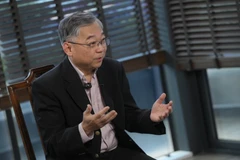
Speaking to the media in Kuala Lumpur, Dr Kao said the new vision reflects ASEAN’s commitment to long-term, inclusive, and resilient growth, while deepening cooperation with external partners.
He recalled that ten years ago, under Malaysia’s chairmanship, ASEAN leaders had adopted the ASEAN Community Vision 2025. This year marks a decade of implementation, and leaders are now embarking on the next phase - a 20-year vision that doubles both the timeframe and the level of ambition.
The ASEAN Secretary-General highlighted that the ACV 2045 is built around four strategic pillars - Politics-Security, Economy, Socio-Culture, and Connectivity. He stressed that this is not just a paper vision, but a practical framework for setting ASEAN’s future priorities, while preserving the region’s unity, solidarity, and centrality.
He added that the roadmap also acknowledges the importance of close coordination with external stakeholders, including dialogue partners and global collaborators.
According to Dr Kao, the ASEAN Community Vision 2045 takes into account both the challenges and opportunities presented by global megatrends. It aims to deliver strategic, real-world responses over the next two decades. The document blends aspiration with strategy and recognises the shifting dynamics of geopolitics, digital transformation, demographic shifts, climate risks, and other pressing issues—all of which are reshaping the region’s future.
Dr Kao also pointed to the growing cooperation between ASEAN, the Gulf Cooperation Council (GCC), and China, especially through upcoming ASEAN-GCC and ASEAN-China Summits. He said these trilateral partnerships open new avenues for deepened economic cooperation.
Each region has its own strengths and ASEAN remains committed to strengthening existing partnerships while exploring new areas of mutual benefit, he noted. He emphasised that ASEAN sees significant potential in closer ties with both the GCC and China, describing the forthcoming summits as key initiatives for creating fresh multilateral economic opportunities.
Earlier, Malaysian Foreign Minister Datuk Seri Mohamad Hasan stated that the adoption of the ACV 2045 marks the beginning of a collective journey toward a more resilient, innovative, and dynamic ASEAN, with people at its core.
He described the vision as a bold ambition to shape ASEAN into a resilient, innovated and people-oriented community - more than just a symbolic document./.

AIIB Chairman lauds Vietnam’s robust development
Deputy Prime Minister and Foreign Minister Bui Thanh Son asked for AIIB's active support in mobilising resources for major infrastructure projects that will define Vietnam's development in the new era.