VNA


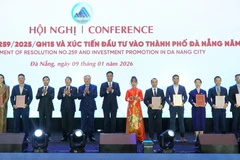
According to Chairman of the Da Nang People’s Committee Pham Duc An, the city prioritises building sustainable economic ecosystems and focuses on key breakthrough sectors with strong spillover effects, including high technology and digital transformation, logistics, urban infrastructure, finance, processing and manufacturing industries, high-tech agriculture, and the pharmaceutical and medicinal herb industry.
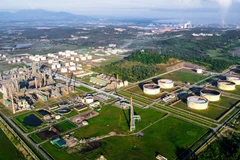
Resolution 79 is not only about SOEs. At a deeper level, it is about how Vietnam reorganises its development drivers in a world that is changing at breakneck speed.
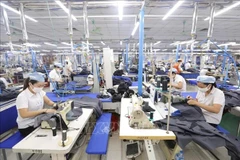
In 2025, Vietnam’s GDP grew by 8%, beating UOB’s forecast of 7.7% but still falling short of the Government’s target of 8.3–8.5%, which would have needed an extraordinary boost in the final quarter.

With the current trading band of +/- 5%, the ceiling rate applicable for commercial banks during the day is 26,388 VND/USD, and the floor rate 23,874 VND/USD.
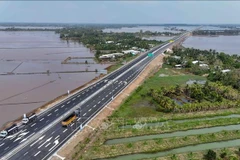
With transport links running smoothly, urban infrastructure upgraded and digital platforms built out in a more systematic way, tourism would move beyond a purely consumption-driven sector to become a deeper, more durable engine of growth.

In 2025, sales reached 53,229 vehicles across the market, a result considered a testament to the efforts by TC Group, Hyundai Thanh Cong, and the entire Hyundai dealership network nationwide amidst a volatile market.
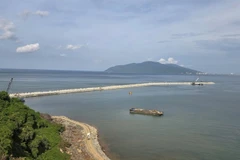
The Da Nang FTZ is expected to contribute 17.9% to the city’s gross regional domestic product and create 127,000 jobs by 2040, with total investment needs estimated at 40 trillion VND (1.6 billion USD).
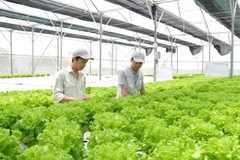
The city’s agricultural sector is undergoing a strong transformation, restructuring toward higher value-added and sustainable development. In recent years, the sector has maintained steady growth, with agricultural, forestry and fisheries output rising by an estimated 2.5% annually.
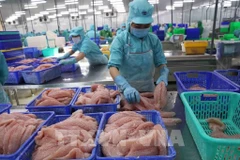
Vietnam’s exports to the Netherlands totalled 13.5 billion USD last year, up 3.7% compared to 2024, while imports stood at 825 million USD, rising 5.2%.
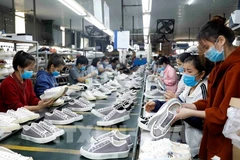
Vietnam currently ranks third globally in footwear production, with around 1.4 billion pairs manufactured annually, behind China and India, and second in exports with approximately 1.3 billion pairs a year.
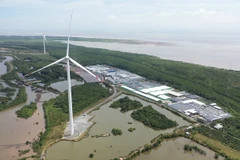
The plant features seven turbines and has a total investment of about 1.6 trillion VND (60.9 million USD), expected to generate 89.5 GWh per year, enough to supply electricity for about 27,000 households.
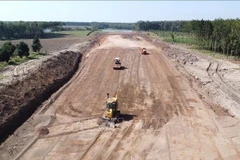
The launch of work on these projects represents an important political event for the province as they demonstrate the strong commitment of the entire political system to developing a comprehensive and modern infrastructure network, enhancing inter-regional connectivity, and addressing social welfare needs.
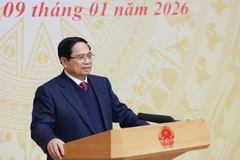
For 2026, the Government has allocated nearly 995.35 trillion VND in state budget investment, with about 85.6% already assigned as of January 7.
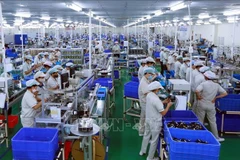
The entire process needs to reassure respondents that statistical activities operate independently, information is protected under the Statistics Law, and all data collection is completely separate from tax management.
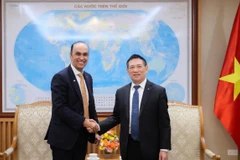
Prudential has been operating in Vietnam for more than 26 years, having been the first foreign insurer to establish a representative office in the country in 1999.
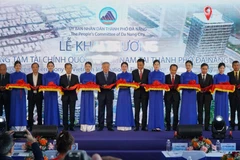
The Government has clearly defined the development orientation of the International Financial Centre in Da Nang as a modern international financial hub closely linked with the innovation ecosystem, digital technology, and sustainable finance.
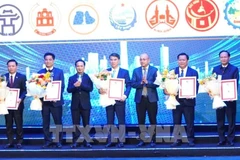
In 2025, Tay Ninh’s economy maintained strong growth momentum, with gross regional domestic product (GRDP) expanding by 9.52%, ranking eighth among 34 provinces and cities nationwide.

As of early January 2026, the province had 8,210 registered fishing vessels, with more than 90% holding valid fishing licences, according to the department. A total of 8,115 vessels, or 98.76%, have been updated in the National Population Database, while 1,773 out of 1,941 vessels measuring 15 metres or longer have been granted food safety certificates, accounting for 91.34%.
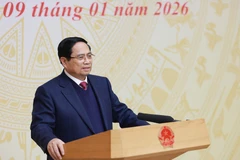
The Prime Minister underlined that public investment has consistently been identified as a key political task, with public investment disbursement results serving as one of the criteria for evaluating officials under Party regulations. Through state spending, public investment directly boosts aggregate demand and serves as an effective tool for regulating and stabilising the macroeconomy while safeguarding major economic balances.
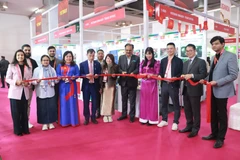
For Vietnamese companies, Indusfood 2026 offers direct access to global buyers, opportunities to connect with distribution partners, insights into emerging consumer trends, and engagement in thematic events on investment, logistics, digital transformation, artificial intelligence and innovation in the food industry.