ASEAN forum focuses on vision, identity, community

It is unity and consistent efforts to build trust and consensus of responsibilities that made the ASEAN community a success, said Deputy Prime Minister Pham Binh Minh on November 21.
It is unity and consistentefforts to build trust and consensus of responsibilities that made theASEAN community a success, said Deputy Prime Minister Pham Binh Minh onNovember 21.

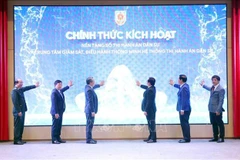
He was addressing the opening ceremonyof the "ASEAN great unity days - One vision, one identity, onecommunity", which took place at the Vietnam National Village for EthnicCulture and Tourism in Hanoi.

The three-day eventthemed "Solidarity-Cooperation-Development" will offer a chance for theASEAN member countries to introduce their land, people and culture aswell as their efforts to preserve and uphold the region's culturalheritage.

This aims to help build a united and dynamic ASEAN Community and a region of peace, prosperity and development.

It is also expected to support Vietnam's role in promotingco-operation within ASEAN and introduce the rich culture of the nation's54 ethnic groups.

A wide range of activities areplanned for the event, including an ASEAN flag hoisting ceremony, artperformances and activities to promote ASEAN culture and tourism.

On the occasion, Vietnam is scheduled to present some of its worldrecognised intangible cultural heritages such as Ca Tru (ceremonialsinging), Quan Ho (traditional love duet singing) and Hue royal courtmusic.

The Association of Southeast Asian Nations(ASEAN) comprises Brunei, Cambodia, Indonesia, Laos, Malaysia, Myanmar,the Philippines, Singapore, Thailand and Vietnam.-VNA
See more

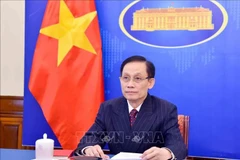
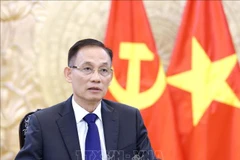
Vietnamese Minister of Foreign Affairs Le Hoai Trung (Photo: VNA)

Vietnamese, Lao foreign ministers hold online talks

The two ministers agreed to maintain close coordination in the time ahead and to expand cooperation under the new framework and orientation, underscoring the significance of the two countries’ “great friendship, special solidarity, comprehensive cooperation, strategic cohesion”.

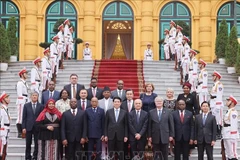
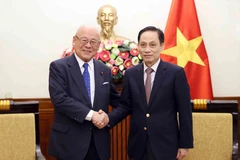
State President Luong Cuong (fourth from left, first row) and newly-appointed foreign ambassadors in Hanoi on December 12, 2025. (Photo: VNA)

State President receives newly-appointed foreign ambassadors

Receiving Egyptian Ambassador Hany Mostafa Mohamed Mostafa Hassan, President Cuong affirmed that Vietnam highly evaluates Egypt’s role, position, and contributions to regional peace and stability. He also congratulated the African country on its achievements in implementing the 2030 Vision.

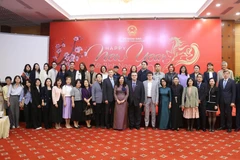
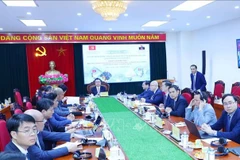
An overview of the seminar on the Party’s leadership in ensuring macroeconomic stability, renewing the growth model, restructuring the economy and promoting international integration (Photo: VNA)

Vietnam, Cuba exchange theoretical views on Party’s leadership in macroeconomic stability

The two sides explored in depth the Party’s role in leadership, orientation, oversight and strategic coordination in economic management; approaches to implementing economic restructuring programmes alongside the renewal of the growth model; measures to respond to global economic volatility, inflationary pressures and shifts in global trade; and the building of effective strategic advisory bodies to ensure the Party’s comprehensive leadership in a changing context.

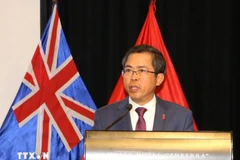
Vietnam’s Ambassador to Australia Pham Hung Tam (Photo: VNA)

Australia–Vietnam Policy Institute serves as bridge for bilateral relations

Established in 2022, AVPI serves as a forum for exchanging ideas among businesses, government agencies, non-profits, universities, and scholars in Australia on Vietnam. The institute acts as a platform for policy dialogue, focusing on research and insights on strategic relations and bilateral economic ties.

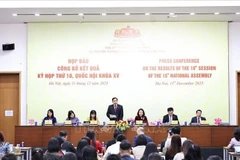
General Secretary and Chairman of the NA Office Le Quang Minh chairs the press conference announcing the results of the NA's 10th session (Photo: VNA)

10th session helps strengthen public trust in personnel work, NA’s supreme oversight

Personnel consolidation carried out at the NA's 10th session helps ensure continuous, unified, effective, and efficient leadership of the state apparatus; guarantee smooth and uninterrupted direction and governance; and prevent any leadership gaps in critical areas. All positions elected or approved by the legislature meet the key criteria required within the organisational structure.