ASEAN reaffirms commitment to advancing green energy agenda

Member states also reviewed progress on six priority areas for 2025, including the development of an underground cable framework, the follow-up agreement to the ASEAN Petroleum Security Agreement (APSA), the launch of the ASEAN Energy Efficiency Database, and the rollout of an investment platform for sustainable building initiatives.

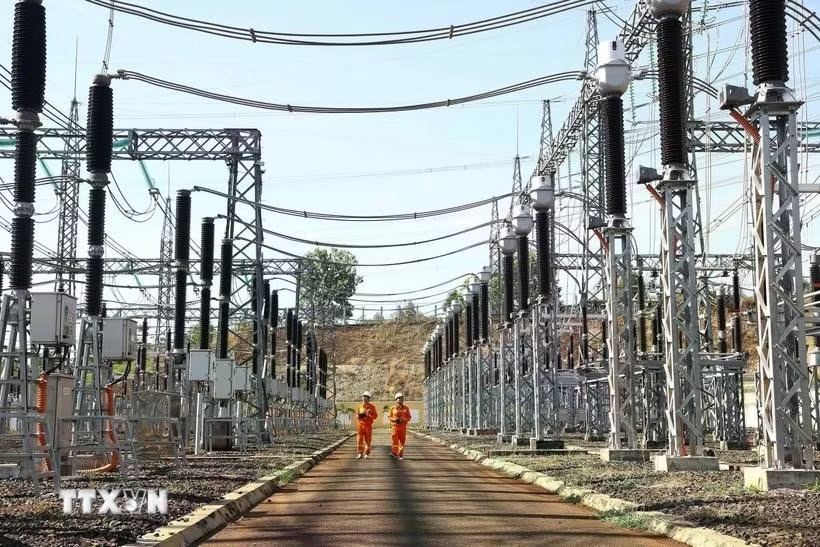
Workers on duty at the Pleiku 2's 500kV substation in Gia Lai province, Vietnam. (Photo: VNA)

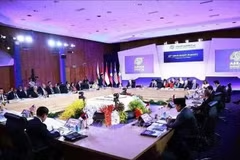
Kuala Lumpur (VNA) - The 43rd ASEAN Senior Officials Meeting on Energy (SOME), held from June 16–18, marked a significant milestone as member states reached consensus on key strategic agendas to deepen regional energy cooperation.

Datuk Mad Zaidi Mohd Karli, Secretary General of Malaysia's Ministry of Energy Transition and Water Transformation (PETRA), announced that the meeting finalised several important documents, notably the enhanced Memorandum of Understanding (MoU) on the ASEAN Power Grid (APG) and the ASEAN Plan of Action for Energy Cooperation (APAEC) for 2026–2030. The enhanced APG MoU will serve as a blueprint for cross-border electricity grid projects and is expected to be signed at the ASEAN Ministers on Energy Meeting (AMEM) in Kuala Lumpur this October.

Member states also reviewed progress on six priority areas for 2025, including the development of an underground cable framework, the follow-up agreement to the ASEAN Petroleum Security Agreement (APSA), the launch of the ASEAN Energy Efficiency Database, and the rollout of an investment platform for sustainable building initiatives.

Additional discussions covered the ASEAN Renewable Energy Long-term Roadmap, the ASEAN Renewable Energy Certificate (REC) framework, and implementation frameworks for nuclear power plants (NPPs).

Speaking on Malaysia’s role in the region’s energy transition, Mad Zaidi highlighted the country’s modern infrastructure, favourable investment environment, and supportive policies as key advantages that position Malaysia to lead ASEAN’s clean energy transition and become the region’s premier hub for green energy.

The meeting, hosted by PETRA, welcomed around 250 participants, including senior energy officials from the 10 ASEAN member states, Timor-Leste as an observer, the ASEAN Secretariat, the ASEAN Centre for Energy, and several ASEAN dialogue partners./.

VNA

See more

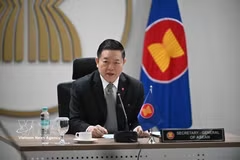
ASEAN Secretary-General Kao Kim Hourn announces the outcomes of the 49th ASEAN Summit and related meetings at the ASEAN headquarters in Jakarta, Indonesia, on November 18, 2026. (Photo: VNA)

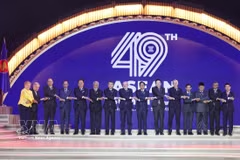
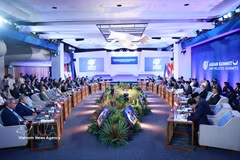
49th ASEAN Summit highlights action-oriented regional cooperation

As 2026 marks the first year of implementing the ASEAN Community Vision 2045, leaders underlined the bloc's solidarity and centrality as well as closer coordination among the three community pillars in response to global economic uncertainties and security challenges, with priorities including digital transformation, AI application, energy security and supply chain resilience.

ASEAN Secretary-General Kao Kim Hourn (Photo: VNA)

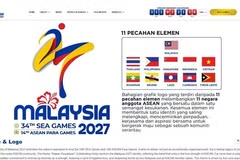
Growing together: 11 nations, one ASEAN home

The new emblem signals an ASEAN that is growing more inclusive while holding to its founding principles of building a peaceful, stable, dynamic region based on equality and cooperation. Its colours come from member states’ national emblems, reflecting diversity inside a single community.

An overview of the dialogue between ASEAN leaders and the ASEAN Business Advisory Council (ASEAN-BAC) in Manila on November 15 (Photo: VNA)

Vietnam puts forward priorities to advance ASEAN cooperation

Appreciating ASEAN-BAC’s report and recommendations, Deputy Minister of Foreign Affairs Dang Hoang Giang, head of Vietnam’s ASEAN Senior Officials’ Meeting (SOM) delegation, called for simplifying procedures, reducing costs, accelerating digitalisation, upgrading the ASEAN Single Window (ASW) and effectively implementing the ASEAN Digital Economy Framework Agreement (DEFA) to make the regional market more accessible.

ASEAN signs Digital Economy Framework Agreement

ASEAN signs Digital Economy Framework Agreement

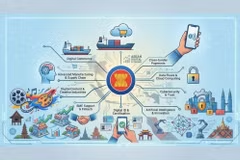
The Digital Economy Framework Agreement (DEFA), the bloc’s first standalone and legally binding digital economy agreement, establishes common rules covering digital trade, cross-border data flows, electronic payments, cyber security and artificial intelligence (AI).

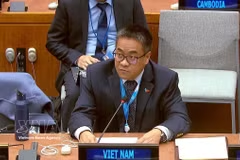
Minister Counsellor Nguyen Hai Luu, Deputy Permanent Representative of Vietnam to the UN, speaks at the discussion on November 12, 2026. (Photo: VNA)

Vietnam supports peace, reconstruction efforts in Gaza: diplomat

Minister Counsellor Nguyen Hai Luu, Deputy Permanent Representative of Vietnam to the UN, expressed deep concern over the dire humanitarian situation in Gaza, particularly as recent heavy rains and flooding have worsened living conditions for residents.

Thailand diversifies oil sources to ensure energy security

Thailand diversifies oil sources to ensure energy security

Although the diversification of oil import sources has helped reduce the risk of domestic oil shortage, it has not immediately reduced energy costs because import prices depend on market mechanisms, transportation costs, foreign exchange rates and the terms of oil contracts.

ST Telemedia Global Data Centres (Thailand), an affiliate of Singapore Telecom, is developing three data cehtres in Thailand including this facility on Rama IX Road in Bangkok. (Photo: bangkokpost)

Thailand tightens regulations on data centres

The new rules focus on controlling investment scale, electricity and water consumption, environmental impacts, and preventing investors from reserving resource quotas beyond their actual needs.

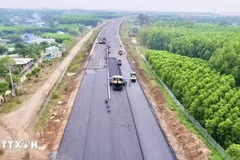
A road is under construction in Dong Nai city, Vietnam. (Photo: VNA)

ADB: Southeast Asia needs 7.1 trillion USD in infrastructure investment by 2040

ADB estimates that the region will need an average of 476 billion USD in infrastructure investment annually during 2026–2040, equivalent to 8.7% of GDP. However, at current investment levels, government budget resources would cover only around 45% of this demand, leaving an annual financing gap of 264 billion USD.

Kyodo News publishes an article titled “Sculptures by Japanese, Vietnamese artists on display in Yokohama,” (Screenshot photo)

Japanese media widely cover top Vietnamese leader ’s visit

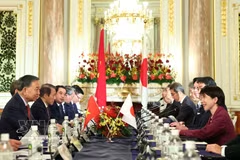
Japanese media have continued extensive coverage of General Secretary of the Communist Party of Vietnam (CPV) Central Committee and President To Lam’s activities in Japan, highlighting his meetings with representatives of leading financial institutions at the Tokyo Stock Exchange, witnessing of cooperation agreement signing and participation in cultural exchanges.

Thailand pushes for establishment of ASEAN emergency public health centre

Thailand pushes for establishment of ASEAN emergency public health centre

The draft agreement stipulates that ACPHEED will comprise three specialised centres based in three ASEAN member states. Vietnam will oversee the centre for prevention and preparedness; Indonesia will host the centre for detection and risk assessment; and Thailand will be responsible for the centre for response and risk communication.