ASEAN’s centrality in maintaining regional stability highlighted at East Sea Int’l Conference

The Association of Southeast Asian Nations (ASEAN)’s centrality in maintaining peace and prosperity in the region was highlighted at the 15th East Sea International Conference that opened in Ho Chi Minh City on October 25.
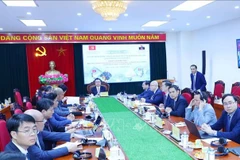
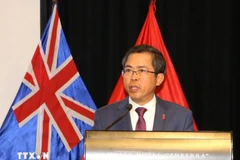
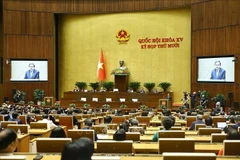
ASEAN’s centrality in maintaining regional stability highlighted at East Sea Int’l Conference ảnh 1The two-day conference, themed “Luminate the Grey, Light up the Green”, is held by the Diplomatic Academy of Vietnam. (Photo: VNA)
HCM City (VNA) – The Association ofSoutheast Asian Nations (ASEAN)’s centrality in maintaining peace andprosperity in the region was highlighted at the 15th East SeaInternational Conference that opened in Ho Chi Minh City on October 25.

The two-day conference, themed “Luminate the Grey,Light up the Green”, is held by the Diplomatic Academy of Vietnam, bringingtogether nearly 50 speakers who are reputable experts from nearly 20 countries.

Addressing the event, the UK’s Minister of State forthe Indo-Pacific Anne - Marie Trevelyan stressed that her country is a “closepartner with Vietnam on maritime security” and remains committed tostrengthening the collaboration.

The UK seeks to preserve a free and openIndo-Pacific, she said, adding that it wants to deepen relationshipswith its partners, support sustainable development, and tackle the sharedchallenges.

“We respect and admire the central role ASEAN hasplayed in maintaining regional stability and prosperity,” she continued.

The UK will increase its commitments to ASEAN andits member nations through specific projects such as Blue Planet Fund and JustEnergy Transition Partnership, the official noted.

 “Inconclusion, the UK’s commitment in this region is steadfast. The peace andprosperity of the South China Sea (East Sea) must remain a priority for all,”she said.

Martin Thümmel, Commissioner for East Asia, South-EastAsia and the Pacific at the German Federal Foreign Office, expressed hisconcern over the recent escalating tensions in the East Sea, noting ASEAN playsthe main role in defending international law and the constructive approach inthe region.

The maritime boundary delimitation betweenIndonesia, Malaysia, and Vietnam and the ongoing negotiations have promoted regionalcooperation, he said.

Delegates shared the view that the East Seahas been considered an international issue, with more risks of conflicts and ifa conflict occurs, it would easily escalate and expand.

Countries are more interested in promoting disputemanagement measures such as the building of a Code of Conduct of Parties in theEast Sea (COC) which is making some positive progress, they said.

Participating experts also looked into amultilateral approach in the East Sea issue. From an ASEAN perspective, multilateralismplays an important role for small countries, contributing to minimising risks,especially when dealing with aggression by powers.

Most of them affirmed that ASEAN has played acentral role and built and operated many mechanisms to guide regional countriesand other multilateral groups.

ASEAN needs to carry forward its leading role in theissues that require joint actions and efforts, including maritime security,they said.

Some considered blue economy cooperation a way to ensurethe balance between economic growth and the sustainable management of seas andoceans, during which countries are main actors and naval forces would play arole in ensuring the sustainable use of seas. /.
VNA

See more

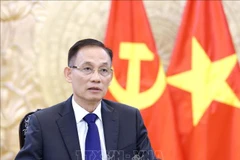
Vietnamese Minister of Foreign Affairs Le Hoai Trung (Photo: VNA)

Vietnamese, Lao foreign ministers hold online talks

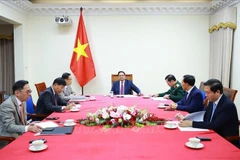
The two ministers agreed to maintain close coordination in the time ahead and to expand cooperation under the new framework and orientation, underscoring the significance of the two countries’ “great friendship, special solidarity, comprehensive cooperation, strategic cohesion”.

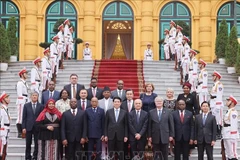
State President Luong Cuong (fourth from left, first row) and newly-appointed foreign ambassadors in Hanoi on December 12, 2025. (Photo: VNA)

State President receives newly-appointed foreign ambassadors

Receiving Egyptian Ambassador Hany Mostafa Mohamed Mostafa Hassan, President Cuong affirmed that Vietnam highly evaluates Egypt’s role, position, and contributions to regional peace and stability. He also congratulated the African country on its achievements in implementing the 2030 Vision.

An overview of the seminar on the Party’s leadership in ensuring macroeconomic stability, renewing the growth model, restructuring the economy and promoting international integration (Photo: VNA)

Vietnam, Cuba exchange theoretical views on Party’s leadership in macroeconomic stability

The two sides explored in depth the Party’s role in leadership, orientation, oversight and strategic coordination in economic management; approaches to implementing economic restructuring programmes alongside the renewal of the growth model; measures to respond to global economic volatility, inflationary pressures and shifts in global trade; and the building of effective strategic advisory bodies to ensure the Party’s comprehensive leadership in a changing context.

Vietnam’s Ambassador to Australia Pham Hung Tam (Photo: VNA)

Australia–Vietnam Policy Institute serves as bridge for bilateral relations

Established in 2022, AVPI serves as a forum for exchanging ideas among businesses, government agencies, non-profits, universities, and scholars in Australia on Vietnam. The institute acts as a platform for policy dialogue, focusing on research and insights on strategic relations and bilateral economic ties.

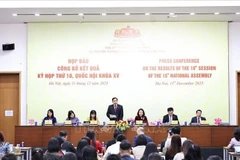
General Secretary and Chairman of the NA Office Le Quang Minh chairs the press conference announcing the results of the NA's 10th session (Photo: VNA)

10th session helps strengthen public trust in personnel work, NA’s supreme oversight

Personnel consolidation carried out at the NA's 10th session helps ensure continuous, unified, effective, and efficient leadership of the state apparatus; guarantee smooth and uninterrupted direction and governance; and prevent any leadership gaps in critical areas. All positions elected or approved by the legislature meet the key criteria required within the organisational structure.