Aviation authority urges heightened flight safety following aircraft collision at Noi Bai airport

The Civil Aviation Authority of Vietnam (CAAV) has issued an urgent directive to aviation units nationwide, calling for strengthened flight safety measures during the summer peak travel period and in anticipation of adverse weather conditions such as thunderstorms.

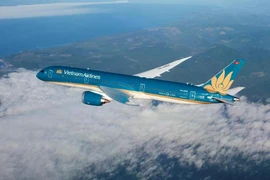
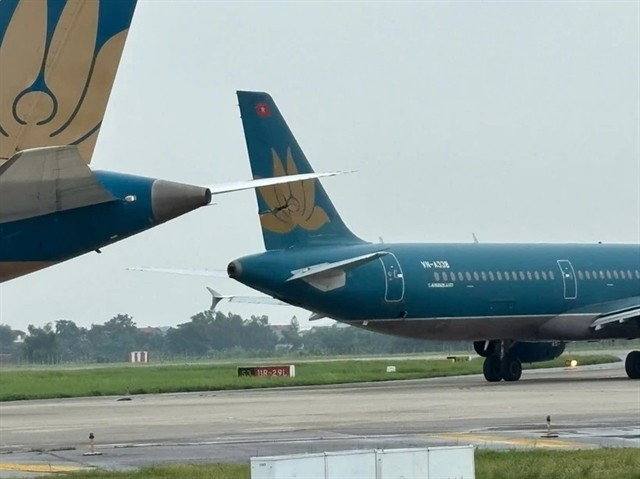
Two Vietnam Airlines aircrafts collide on a taxiway at the Noi Bai International Airport in Hanoi on June 27. (Photo courtesy of Noi Bai International Airport)

Hanoi (VNS/VNA) - The Civil Aviation Authority of Vietnam (CAAV) has issued an urgent directive to aviation units nationwide, calling for strengthened flight safety measures during the summer peak travel period and in anticipation of adverse weather conditions such as thunderstorms.

The move comes in response to a recent ground collision involving two Vietnam Airlines aircrafts.

On June 27, a Boeing 787 preparing to take off for Ho Chi Minh City collided into the tail of an Airbus 321 waiting to take off for Dien Bien city, at the intersection of taxiways S and S3 at Noi Bai International Airport in Hanoi.

The two airplanes and the four pilots have been suspended, while investigation into the cause is underway.

The incident is rated level B in aviation incident assessment, second out of five levels.

The CAAV instructed all relevant entities to strictly implement directives on maintaining aviation safety in poor weather conditions and to adhere fully to operational procedures and crew rest regulations.

Airlines and aviation organisations are required to step up awareness campaigns among staff, especially pilots and air traffic controllers, on compliance with safety protocols. Pilots must strictly follow standard operating procedures, particularly during critical flight phases such as taxiing, takeoff and landing.

Prior to departure, pilots are advised to conduct thorough briefings on taxi routes, use up-to-date airport charts and clearly assign tasks within the cockpit crew. During taxiing, heightened vigilance is required to identify key intersections, narrow taxiways and high-traffic areas. If unsure about clearance from obstacles such as other aircraft, vehicles, personnel or foreign object debris, pilots must immediately halt and inform air traffic controllers.

Pilots are also required to employ a “readback-hearback-confirmation” protocol with air traffic controllers to ensure accurate understanding of instructions. In cases of ambiguity, clarification must be sought before proceeding. Personal activities such as taking photos or filming are prohibited during operations.

Internally, airlines must strengthen flight supervision, conduct regular reviews of operational procedures and promote a culture of continuous safety improvement.

Air traffic controllers are likewise mandated to maintain full visual surveillance of aircraft movements during their shifts, utilising available technologies such as ground surveillance systems, binoculars and visual markers to monitor aircraft position, direction and spacing. Any abnormal or unauthorised movement such as incorrect taxiing or stopping in restricted areas must be detected and addressed promptly.

Controllers must remain fully attentive, accurately relay instructions and repeat them when there is any indication of misunderstanding, especially with critical commands related to runway crossings or holding positions. Weather updates must be frequently communicated to pilots, enabling timely adjustments and informed decision-making.

Airport operators have been told to intensify inspections of signage, ground markings, lighting systems and taxiway indicators to ensure optimal safety and service readiness. They are also encouraged to consider advanced surface movement guidance systems at high-traffic airports to prevent runway incursions and ground collisions.

The CAAV emphasised that all units must remain vigilant and proactive to ensure aviation safety amid growing air traffic and increasingly unpredictable weather patterns./.
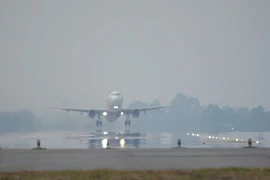
VNA

See more

During the 2026 New Year holiday, civil servants and public employees will enjoy a continuous four-day break from Thursday, January 1, to Sunday, January 4, 2026. (Photo: VNA)

Civil servants, public employees to have four-day New Year break

Under Official Dispatch No. 12729/VPCP-KGVX dated December 25, civil servants and public employees will have a four-day break from Thursday (January 1) to Sunday (January 4, 2026). To offset this, the working day on Friday (January 2, 2026) will be shifted to Saturday of the following week (January 10, 2026).

The campaign aims to mobilise social resources to support 1.5 million people in need during the upcoming Tet (Lunar New Year) holiday. (Photo courtesy of the VNRC)

Vietnam Red Cross Society launches Tet gift campaign

The campaign aims to mobilise social resources to support 1.5 million disadvantaged individuals, including people with disabilities, the elderly, orphaned children and those affected by natural disasters, for the upcoming Tet (Lunar New Year) holiday.

Illustrative image (Photo: VNA)

Incentives in Population Law expected to reverse birth rate decline

Vietnam’s population has already topped 100 million, but the 2025 population report reveals trends accelerating well beyond earlier forecasts. Fertility has nosedived to all-time lows: the total fertility rate slipped from 2.01 children per woman in 2022 to 1.96 in 2023, then plunged to a record 1.91 in 2024.

Hanoi plans fireworks displays at five locations to welcome New Year 2026. (Photo: qdnd.vn)

VGCL supports proposal for four-day New Year break

Under the plan, civil servants and public employees will take the statutory holiday on January 1, be off work on January 2, and make up the working day on the next Saturday, which falls on January 10, 2026. This would create an uninterrupted four-day break from Thursday (January 1) to Sunday, (January 4, 2026).

Streets flowing toward the heart of HCM City teemed with festive crowds (Photo: chinhphu.vn)

Christmas 2025 in HCM City brings faith and community together

Solidarity and kindness define Christmas in HCM City, where love transcends religion and ethnicity. A striking example is Most Venerable Thich Le Trang, Head of the Vietnam Buddhist Sangha (VBS) Executive Board of HCM City, extended Christmas greetings to Archbishop Nguyen Nang of the Archdiocese of Ho Chi Minh City, and they pledged to guide believers and followers to live virtuous lives in love, compassion, and charity, serving as a vivid testament to religious unity.

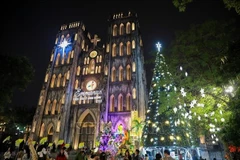
The area around St Joseph’s Cathedral in Hoan Kiem ward is decorated for Christmas 2025 (Photo: VNA)

Christmas in Vietnam blends faith, culture and national unity

Christmas, also known as the Nativity of the Lord, marks the birth of Jesus Christ and is widely celebrated in many countries as a time for family reunions, sharing love and fostering a warm, joyful atmosphere within families and communities.

Illustrative image (Photo: chinhphu.vn)

PM orders urgent post-storm recovery in central region

As of December 21, repairs had been completed on more than 33,200 damaged houses (over 95%, with full completion expected by December 31, 2025), while 480 houses that collapsed or were swept away by floods have been rebuilt (over 29%, with full completion expected by January 31, 2026).