Hanoi (VNA) – As tens of thousands of voices rose in unison at open-air concerts, and millions more watched military parades across streets and digital screens, 2025 became a year when patriotism in Vietnam was not proclaimed, but felt. Through lived cultural experiences – from national celebrations to cinema screens, love for the Fatherland was rekindled in ways that were tangible and deeply emotional.
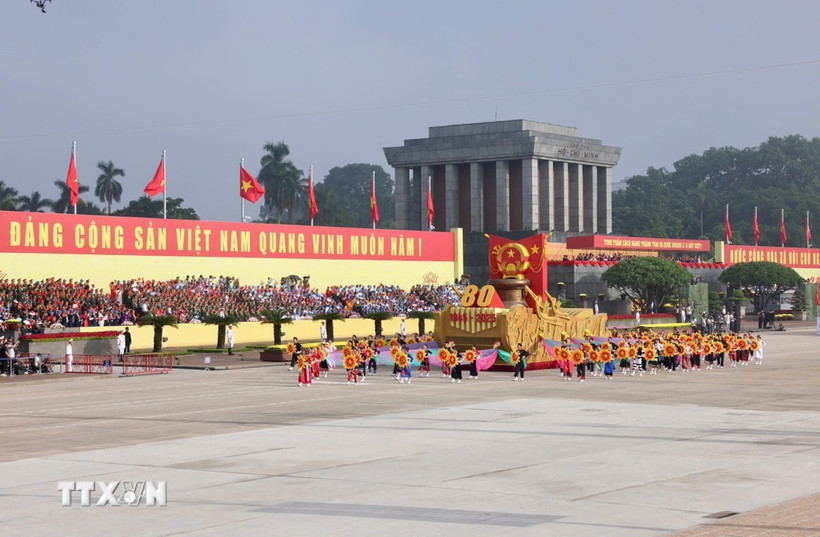
The grand parades marking the 80th anniversary of the August Revolution and National Day (September 2), and the 50th anniversary of the South Liberation and National Reunification were held in a solemn and large-scale manner in 2025. Alongside these commemorations, a series of so-called “national concerts” such as "The Fatherland in Our Hearts" and "Proud to be Vietnamese", as well as the remarkable success of the film "Mua do" (Red Rain) – which grossed over 700 billion VND and won the Golden Lotus Award at the 2025 Vietnam Film Festival, helped generate strong momentum for implementing the Strategy for Developing Vietnam's Cultural Industries to 2030, with a vision to 2045.
According to the Vietnam New Agency, fostering patriotism and the aspiration for national development is among the top ten standout events that shaped the country in 2025.
Throughout Vietnam’s long history, there have been moments remembered not only by dates but by their profound imprint on the people's consciousness—moments when collective will, faith and aspiration converge. The year 2025, marked by major anniversaries of the August Revolution, the National Day, and the National Reunification, was such a milestone. The solemn aura of history blended seamlessly with the pulse of contemporary life, creating a powerful cultural, political and spiritual space that strongly inspired patriotism and the aspiration for national development among Vietnamese people.
In 2025, celebrations of the nation’s major anniversaries were organised with dignity on a large scale, involving the armed forces, mass organisations, and representatives from all walks of life, leaving a deep and lasting impression. The centrepieces were the parades involving tens of thousands of participants. More than traditional ceremonial displays, these events were refreshed in approach – modern, solemn yet naturally and deeply inspiring national pride.
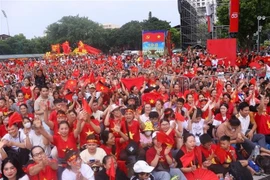
The marching contingents vividly demonstrated the strength of the People’s Army and the People’s Public Security forces, while the most moving images were those “within the embrace of the people”: war veterans with medals shining on their chests; children smiling brightly with small red flags bearing a yellow star on their cheeks. Along historic streets, the sight of the national flag fluttering above disciplined formations and resolute footsteps formed what many described as a “visual epic”. Millions of people watching live, on television or via digital platforms, felt emotionally connected to history in a vivid and tangible way.
That historical spirit did not stop at solemn rituals but spread widely across society, especially among the younger generation. Images, videos, and stories from the celebrations went viral on social media, sparking positive discussions and nurturing a new current of patriotism – natural, relatable, yet enduring.
")
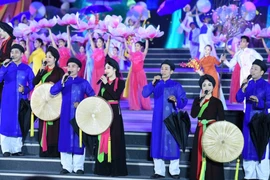
This was reinforced by the flourishing of large-scale cultural and artistic activities dubbed “national concerts”. Programmes such as “To quoc trong tim” (The Fatherland in Our Hearts) and “Tu hao la nguoi Viet Nam” (Proud to be Vietnamese) transcended the format of ordinary performances, becoming spaces where the past met the present, traditional values blended with contemporary artistic language, and epic resonance intersected with popular culture. Songs about the nation and the aspirations for independence, freedom and happiness, sung in unison by tens of thousands, created moments of shared emotion that bound communities together.
Within this cultural flow, the film Red Rain emerged as a special phenomenon. Beyond its record-breaking box office success and Golden Lotus Award, the film stood out for its human-centred approach. Rather than relying solely on grand historical spectacle, it delved into individual destinies, choices and sacrifices, allowing audiences to experience history through deeply personal and authentic emotions.
Similarly, the National Achievements Exhibition, with the theme “80-year Journey of Independence – Freedom – Happiness”, held at the Vietnam Exposition Centre in Hanoi as part of the National Day celebrations, attracted more than 6.5 million visitors, becoming a cultural highlight of the year. Across the country, numerous commemorative, cultural, humanitarian, and social welfare activities further spread the spirit of independence, solidarity, compassion, and national pride.
Taken together, the celebratory events, artistic programmes, and standout cultural products of 2025 helped foster a positive social atmosphere in which love for the Fatherland was not ignited by abstract slogans, but by concrete and genuine emotional experiences. This love went beyond pride in the past to transform into an aspiration for development in a new context. When people, especially the young, feel the depth of history, they also gain a stronger sense of responsibility for the present and the future.
The social impact of these cultural successes has also provided strong impetus for implementing the Strategy for Developing Vietnam's Cultural Industries. Practice has shown that with proper investment, clear orientation, and a harmonious blend of art, technology and the market, Vietnamese cultural products can win domestic audiences and gradually reach the world. Culture, as both a spiritual foundation and a “soft power” resource, is proving to be a vital driver of sustainable national development./.