Hanoi (VNA) – Christmas, also known as the Nativity of the Lord, marks the birth of Jesus Christ and is widely celebrated in many countries as a time for family reunions, sharing love and fostering a warm, joyful atmosphere within families and communities.
In Vietnam, Christmas represents a blend of national traditions and international cultural influences, creating a distinctive and uniquely Vietnamese experience.
The festival was introduced to Vietnam in the 16th century alongside the arrival of Western missionaries. For a long period, it was observed mainly by the Catholic community. Over the past few decades, however, Christmas has evolved into a broader cultural occasion, attracting widespread participation, including from people of other faiths or none.
Unlike in many countries, Christmas in Vietnam is celebrated in a way that reflects local culture and daily life. Pham Thi Hoa, a resident of Yen Hoa ward in Hanoi, said that for Catholics, Christmas is marked solemnly on the night of December 24 and on December 25 with masses and the singing of hymns at churches. Beyond gatherings and gift exchanges, she noted, the occasion offers an opportunity for reflection and spiritual renewal, encouraging people to live with love and compassion in accordance with Christian teachings.
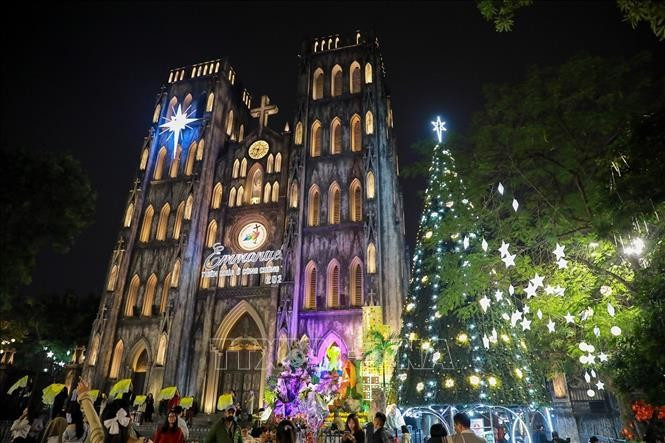
During the festive season, major churches such as St Joseph’s Cathedral, Ham Long Church and Cua Bac Church host a wide range of celebrations. Churches are lavishly decorated with nativity scenes, Christmas trees and festive lights, while surrounding areas are adorned to attract large numbers of visitors and photographers. Many parishes also organise charitable activities to support the poor, the disadvantaged and the homeless.
For non-Catholics, particularly young people, Christmas has become a popular cultural event and an integral part of year-end festivities. Pham Gia Bao, a student at the National Economics University in Hanoi, said that although Christmas is not a traditional Vietnamese festival, he and his friends often visit churches and public spaces such as Hang Ma Street to experience the festive and welcoming atmosphere.
Vietnam currently has 27 Catholic dioceses and more than seven million followers, accounting for over 7% of the population, along with more than 7,000 clergy and around 30,000 members of religious orders. This community has contributed actively to national development and enriched the country’s religious and social life.
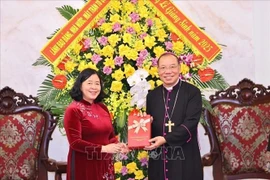
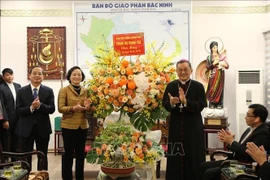
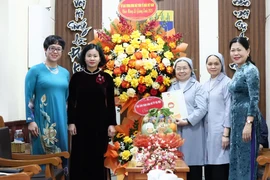
As a multi-religion country, Vietnam consistently pursues a policy of national unity, respecting and guaranteeing freedom of belief and religion. In recent years, Party and State leaders have paid visits to Catholic dignitaries and communities nationwide during the Christmas season, extending greetings and reaffirming the spirit of national solidarity. Christmas has thus become a shared celebration, reflecting not only the State’s attention to religious life but also the enduring spiritual values and social cohesion of the nation./.