Hanoi (VNA) – An intensive course on advanced methods and best practices in oil and gas production and reservoir technologies has been launched for 24 staff from member units of the Vietnam National Industry–Energy Group (Petrovietnam), including Vietsovpetro, the Petrovietnam Exploration Production Corporation (PVEP), and the Petrovietnam Chemical and Services Corporation (PVChem).
The programme aims to update technical knowledge, strengthen professional capability, and facilitate knowledge exchange among engineers and experts working on key national projects.
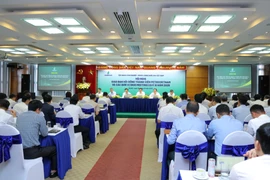
The two-week course, running from November 17–28, is being held at Petrovietnam University's Advanced Training Centre (ATC), and jointly organised by Petrovietnam University and Petrovietnam’s Human Resources Management Division.
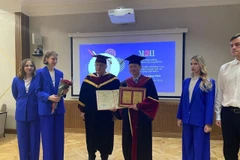
The course is delivered by leading international specialists, including Dr Haji Malikov, Dr Arif Suleymanov, and Dr Turan Ibrahimov from the Scientific Research Institute of Geo-Technological Problems of Oil, Gas and Chemistry (GPOGC) under the Azerbaijan State Oil and Industry University, with support from Dr Le Viet Hai, former Deputy General Director of Vietsovpetro.
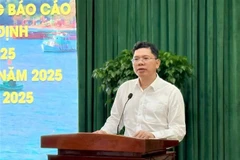
Speaking at the opening ceremony, Nguyen Thi My Hanh, deputy head of the Training Unit at Petrovietnam’s HR Management Division, said the course is part of the continued implementation of Petrovietnam’s cooperation agreement with its partners in Azerbaijan, featuring senior instructors from GPOGC and Dr Le Viet Hai. She noted that it offers a highly valuable opportunity for the group’s young professionals to access world-class expertise directly. The interaction between instructors and participants will help cultivate a new generation of high-quality specialists for Vietnam’s oil, gas, and energy industries, she said.
The curriculum covers a broad range of core and emerging topics in reservoir and production engineering, including gas-lift well performance analysis and artificial-lift techniques, enhanced oil recovery (EOR) methods, and water-flood performance monitoring. It also includes reservoir engineering and analysis, optimisation and decline-curve analysis. Finally, the studies involve modern technologies such as distributed temperature sensing, reservoir fluid phase-behaviour studies, and subsurface uncertainty and risk management.
The training is expected to make a tangible contribution to building a high-calibre workforce capable of applying advanced technological solutions to optimise production performance and manage reservoir risks amid mounting challenges in the oil and energy sectors./.