Bac Ninh promotes UNESCO-recognised Then singing heritage

In 2019, the practice of Then in several provinces, including Bac Ninh, was inscribed by UNESCO on the Representative List of the Intangible Cultural Heritage of Humanity. Following this recognition, Bac Ninh rolled out comprehensive measures, including a master plan on safeguarding ethnic cultural heritage through 2030.

Members of the Luc Ngan Then singing and dan tinh (a traditional stringed instrument) club in Luc Ngan commune, Bac Ninh province, gather every Sunday afternoon (Photo: VNA)

Bac Ninh (VNA) – Bac Ninh is home to the practice of Then singing, a traditional folk art form of the Tay, Nung and Thai ethnic groups, inscribed by UNESCO on the Representative List of the Intangible Cultural Heritage of Humanity. In this land rich in cultural traditions, Then has been embraced by the community as a cherished cultural expression, enriching the province’s diverse heritage.

Breathing new life into Then

For the Tay and Nung ethnic groups in Bac Ninh, Then has long been a familiar spiritual and cultural practice, closely tied to community life. It is categorised into two forms: ritualistic Then, which preserves traditional spiritual elements, and recreational Then, adapted for artistic and cultural purposes.

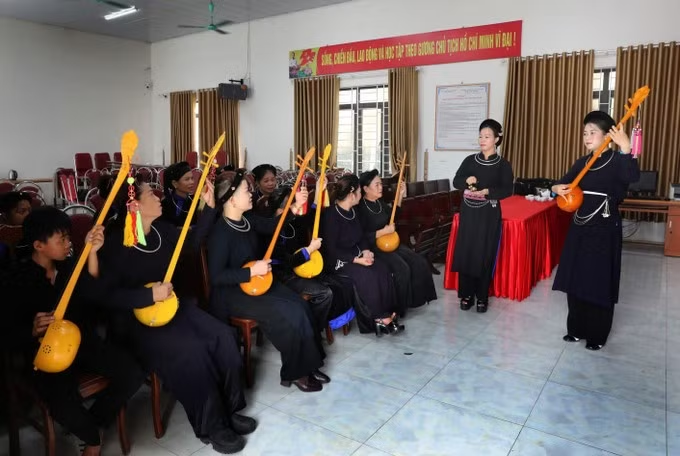
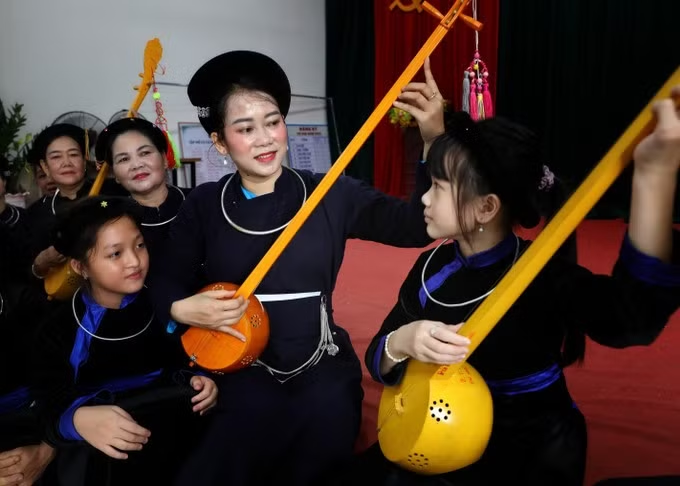
Every Sunday afternoon, members of the Luc Ngan Then singing and dan tinh (a traditional stringed instrument) club gather at Cau Chet village’s cultural house. Elderly members guide the young, while experienced singers support newcomers, all sharing the desire to preserve and pass on the melodies of Then.

According to Ha Thi Duong, vice head of the club, it was founded in 2011 by 11 dedicated members concerned about the risk of Then fading away. Today, it has grown to nearly 60 members across three generations. Their activities not only keep Then alive in the community but also bring their melodies to wider audiences through festivals and competitions.

Among the younger members, Duong Thi Men nurtures her passion for Then by self-learning online and attending virtual classes. “Thanks to the club, I can perform, connect with others, and spread love for Then,” she said, adding that it’s both a joy and a source of pride to contribute to preserving this heritage.

Safeguarding and promoting values

Bac Ninh has long prioritised safeguarding intangible cultural heritage, including Then. Since 2004, the provincial cultural sector has conducted surveys, documentation, and inventories, identifying dozens of artisans and hundreds of practitioners. This laid the groundwork for the Ministry of Culture, Sports and Tourism to recognise Then as a national intangible cultural heritage in 2015.
then2.jpg
Children learn Then singing and dan tinh (a traditional stringed instrument) at the Then singing and dan tinh club in Luc Ngan commune, Bac Ninh province (Photo: VNA)

In 2019, the practice of Then in several provinces, including Bac Ninh, was inscribed by UNESCO on the Representative List of the Intangible Cultural Heritage of Humanity. Following this recognition, Bac Ninh rolled out comprehensive measures, including a master plan on safeguarding ethnic cultural heritage through 2030.

Training activities have expanded, with dozens of classes attracting nearly 200 learners. Several schools in Son Dong and Luc Ngan have included Then in music lessons and extracurricular activities. The province now has 20 Then clubs that drive community engagement, while performances have been linked with community-based tourism, contributing to improved livelihoods for residents.

Artisans also receive attention and support. Two Then practitioners have been awarded the title of Meritorious Artisan and receive monthly allowances. The provincial Department of Culture is drafting resolutions to preserve the heritage as well as provide financial assistance to artisans and clubs involved in UNESCO-recognised practices.

Nguyen Van Dap, Deputy Director of the provincial Department of Culture, Sports and Tourism, stressed that preserving Then requires collective efforts. The province is expanding clubs, encouraging schools to include Then in their extracurricular activities, and integrating the heritage with tourism products, he stated. The locality is promoting the application of technology, digitising documents, and producing videos and clips to introduce Then singing on social media platforms.

He underlined that Bac Ninh will continue to strengthen heritage management, comply with international conventions and national laws to ensure Then remains a living and sustainable cultural treasure./.

VNA

See more

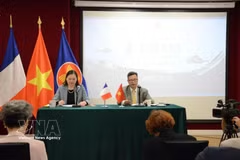
Vietnamese Ambassador to France Trinh Duc Hai (right) speaks at a press conference introducing the Vietnamese Theatre Week in France. (Photo: VNA)

Vietnamese theatre arts to take centre stage in France

Vietnamese Ambassador to France Trinh Duc Hai noted that Paris is chosen for its status as a major global cultural and artistic centre and the headquarters of UNESCO. The year 2026 also marks 50 years since Vietnam joined UNESCO.

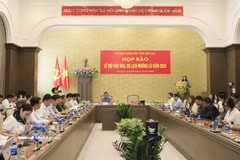
An overview of the press conference (Photo: VNA)

Over 2,000 people to perform Thai Xoe dance in Lao Cai in October

The festival will provide an opportunity to review achievements in preserving and promoting the values of Thai Xoe, honour the cultural identities of ethnic groups in the Northwestern region, and promote the land and people of Lao Cai. It will also showcase local tourism products and destinations and strengthen linkages for tourism development.

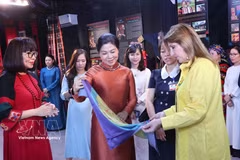
The Vietnamese and Panamanian first ladies experience cultures of Vietnam's ethnic groups. (Photo: VNA)

Vietnamese, Panamanian first ladies bond over ethnic textiles at Hanoi cultural event

The two ladies were briefed on the cultural diversity of Vietnam's ethnic groups and shown traditional costumes, along with weaving, embroidery and pattern-making techniques preserved and handed down through generations. The materials, colours and patterns of the costumes reflect aesthetic values as well as stories of history, customs, traditions and the distinct identity of each community.

Historical cinema helps foster patriotism, strengthen Vietnam’s soft power

Historical cinema helps foster patriotism, strengthen Vietnam’s soft power

When history is told through human stories, using modern cinematic language and backed by adequate investment, films can both nurture patriotism and national pride and become competitive cultural industry products. This is also a way for cinema to help turn the spirit of Politburo Resolution No. 80-NQ/TW into reality by transforming Vietnamese values into an internal resource and a source of national soft power.

Vietnamese athletes compete against Iran in the women’s team kata final in karate at ASIAD 2026 on September 22. (Photo: Xinhua/VNA)

ASIAD 20 prompts Vietnam to sharpen focus on key sports

Vietnam’s gold medals came from karate and sepak takraw, reaffirming its strengths in sports with established traditions and focused investment. Meanwhile, bronze medals in canoeing and teqball showed potential in events where Vietnamese athletes are gaining international experience.

Lieutenant General Phan Xuan Tuy, Director of the Political Academy of the People's Public Security under the Ministry of Public Security, provides information about the conference. (Photo: quochoi.vn)

National conference to promote Vietnamese cultural values

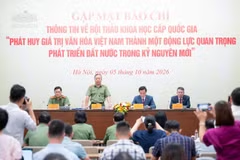
More than 200 delegates are expected to attend a national scientific conference in Hanoi on October 10 to discuss ways to promote Vietnamese cultural values as an important driving force for national development in the new era

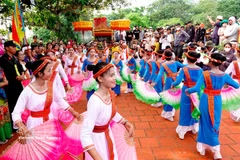
Young girls perform a Cham dance throughout the ritual of carrying the attire of the goddess Po Sah Inu. (Photo: baolamdong.vn)

VFF leader extends Kate wishes to Brahmanist Cham community

In her letter, Hoai She praised the dignitaries and the Brahmanist Cham community for their contributions to upholding patriotic traditions, preserving cultural identity, promoting socio-economic development and strengthening great national unity.

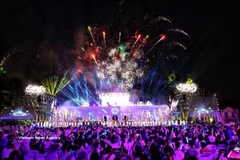
Fireworks display at the closing ceremony of the second Cultures of the World Festival. (Photo: VNA)

Cultures of the World Festival closes, leaving impressions on visitors

The 2026 festival was particularly significant as it coincided with the 50th anniversary of Vietnam’s membership in UNESCO, marking five decades during which Vietnam has evolved from a country emerging from war into an active and responsible member, increasingly contributing initiatives to UNESCO and the international community.

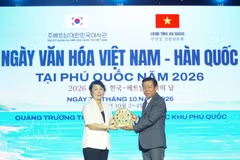
An An Giang leader presents gift to Park Chan A, First Secretary at the Republic of Korea Embassy in Vietnam and Director of the Korean Cultural Centre. (Photo: VNA)

Vietnamese, Korean cultures showcased on Phu Quoc island

Addressing the opening ceremony, Vice Chairwoman of the Phu Quoc Special Zone People’s Committee Nguyen Thi Kim Loan emphasised that the event is a chance for people from Vietnam and the RoK to meet, experience and appreciate each other’s cultural values, thereby fostering mutual understanding, respect and friendship.

Traditional costumes from around the world come together, creating a vibrant multicultural space in the heart of Hanoi. (Photo: VNA)

“Colours of Five Continents” bring cultural vibrancy to Hanoi’s Hoan Kiem Lake

Themed “Heritage Convergence – Future Creation,” the festival provided a vibrant and open platform for cultural exchange, showcasing distinctive Vietnamese cultural values through ao dai, performing arts and street activities, while giving participating countries an opportunity to share and celebrate their cultural identities.

Hanoi festival celebrates Vietnamese and global cultures (Photo: VNA)

Hanoi festival showcases Vietnamese and world cultures

Through diverse cultural experiences, the second Cultures of the World Festival in Hanoi 2026 highlights culture as a bridge connecting people, promoting mutual understanding and supporting international cooperation and sustainable development.