Hanoi (VNS/VNA) - Climate change poses challenges and opportunities for Vietnamese businesses as global markets increasingly prioritise sustainable products and services, said economists and industry experts.
The Director of Sustainability & Climate Change Advisory Services at Deloitte Vietnam, Pham Minh Huong, noted that enterprises can tap into new potential by developing environmentally-friendly products and improving energy efficiency.
According to the Ministry of Industry and Trade, if Vietnam raises its energy efficiency rate from the current 1.8% to 2%, it would have an impact equivalent to halving the electricity output from coal, currently the country’s largest source of carbon emissions.
Companies like Hoa Phat have already begun investing in green steel technologies, adopting renewable energy to reduce emissions. These efforts meet regulatory requirements and help expand market share in developed economies.
Despite promising examples, ESG adoption in Vietnam remains limited.
Le Hoang Hai, Deputy Head of the Public Company Supervision Department at the State Securities Commission of Vietnam (SSC), revealed that only 14% of more than 700 companies listed on the Ho Chi Minh Stock Exchange (HOSE) publish standalone sustainability reports. This figure drops below 5% when limited to those who are audited.
The primary barrier is the lack of a comprehensive legal framework and specific guidance for ESG standards. To address this, the SSC is collaborating with the International Finance Corporation (IFC) to develop a national set of ESG standards, expected by 2026. The aim is to assist small and medium-sized enterprises (SMEs), which make up 97% of Vietnam’s total businesses, in aligning with international regulations.
The Vice Chairman and Secretary-General of the Vietnam Association of Certified Public Accountants (VACPA), Tran Khanh Lam, views ESG assurance as a business opportunity for auditors and a driver for improved corporate governance.
In 2023, over 500 auditors participated in IFRS S1 and S2 training programmes co-organised by VACPA and the Association of Chartered Certified Accountants (ACCA). However, Lam acknowledged that a shortage of experts in environmental and technological fields poses a challenge to high-quality ESG auditing.
A recent report by PwC Vietnam found that only 20% of auditors currently possess basic ESG knowledge, underlining the need for long-term workforce training and resource development.
International governance expert Simon C.Y. Wong warned that climate-related economic losses could reach 38 trillion USD globally by 2049 without urgent action. This highlights the need for decisive corporate governance that integrates environmental and social risks.
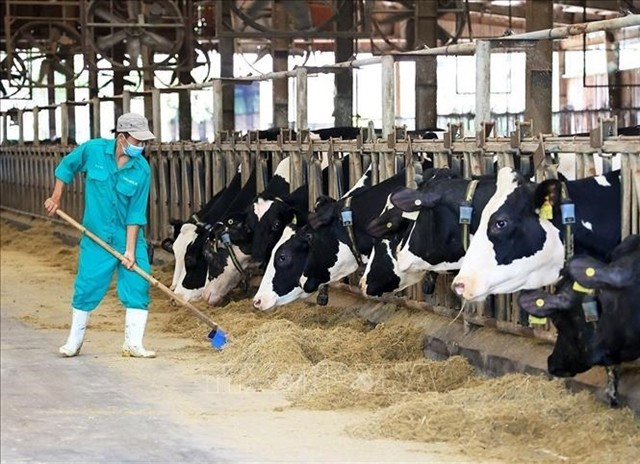
Leading Vietnamese corporations such as Vinamilk and PAN Group offer successful examples. Vinamilk has developed Global GAP-certified dairy farms and integrated ESG practices across its supply chain to reduce emissions. Meanwhile, PAN Group has applied international governance standards to improve sustainable operations.
The Director of Sustainability & Climate Change Advisory Services at Deloitte Vietnam, Pham Minh Huong, stressed that governance is not just about compliance, but a foundation for achieving environmental and social goals. Implementing international standards like IFRS S1 and S2 enables transparency and boosts credibility in global markets.
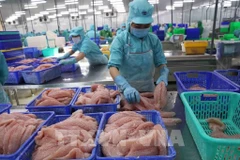
For instance, Vietnamese seafood exporters have used these frameworks to meet rigorous ESG requirements in the EU and US markets, where sustainability has become a crucial evaluation criterion.
Le Hoang Hai, Deputy Head of the Public Company Supervision Department at the State Securities Commission of Vietnam (SSC), reaffirmed that Vietnam’s regulatory framework is evolving. Corporate governance obligations are already set out in the 2019 Securities Law and Decree No 155/2020/NĐ-CP. The SSC has intensified its monitoring of ESG disclosures and imposed strict penalties on non-compliant firms.
In 2023, 15 listed companies were fined for delayed or opaque sustainability reporting – a sign of growing enforcement. These regulatory efforts help enterprises adapt to climate risks and prepare them to capture opportunities in a greener global economy./.
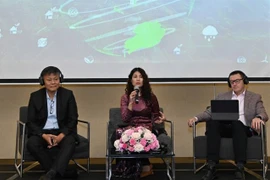
Embracing ESG practices, a vital trend for businesses: workshop
At “How to Integrate ESG into Business Strategy: Best Practices from Singapore” held recently by VIETSTAR Institute of Management (VIETSTAR) and Singapore Management University (SMU), Boon Hoe Ooi, former CEO of Singapore's Jurong Port, said embracing ESG is an inevitable requirement.