Hanoi (VNS/VNA) - The domestic meat market is facing mounting pressure as imports surge, with cheaper products increasingly dominating supermarket shelves. Experts warn the trend could undermine local farmers and threaten the long-term sustainability of the livestock sector if no strategic measures are taken.
According to a recent report from the Ministry of Agriculture and Environment, Vietnam spent nearly 2.6 billion USD on livestock imports in the first seven months of this year, up almost 23% compared to the same period in 2024. Meat and meat by-products accounted for more than 1 billion USD, while milk and dairy products represented over 860 million USD.
In July alone, imports were valued at nearly 400 million USD.
Officials attributed the increase to rising domestic consumption and higher local raw material costs, which pushed Vietnamese meat prices above those of foreign products.
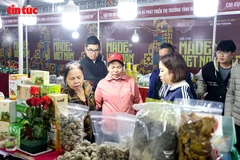
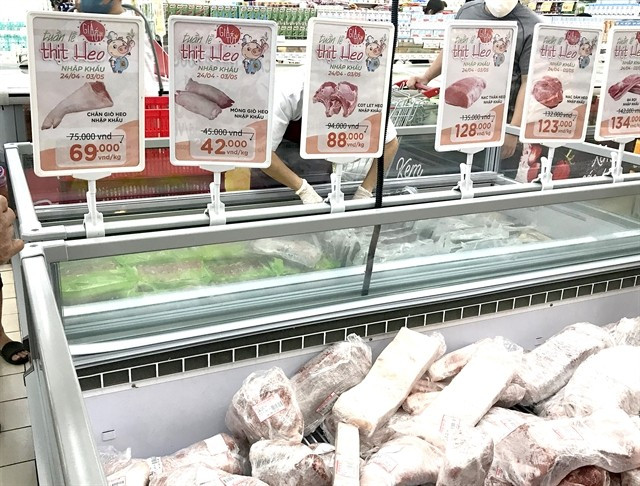
At supermarket and convenience store chains in HCM City, pork imported from Brazil is priced 20-30% lower than domestic products. Large distribution networks are also stocking a wide range of imported meats, with some frozen products from Europe, Canada and Australia sold at just 60-80% of local prices.
A representative of a major supermarket chain said that imported pork, beef and poultry are typically 30-40% cheaper than domestic equivalents, raising suspicions among customs authorities of possible under-declared taxes.
The representative attributed the low prices to reduced production costs in exporting countries, where modern technology and large-scale farming are widely applied.
The significant price gap has fuelled rising demand for imported meat, adding further pressure on Vietnamese farmers.
According to the Southeast Livestock Association, domestic producers face high production costs due to dependence on imported raw materials and small-scale operations. At the same time, Vietnam’s increasingly open market makes it easier for foreign products to flood shelves and challenge the competitiveness of local suppliers.
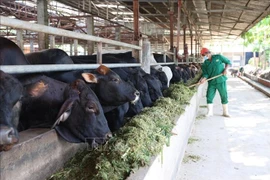
Nguyen Thanh Khue, chairman of the Board of Directors of Viet-Uc Agricultural Livestock Co. in Ba Ria-Vung Tau, said the company’s cattle herd has shrunk by 90% compared to four years ago.
Speaking to thesaigontimes.vn, Khue attributed the decline to soaring production costs, largely due to heavy reliance on imported raw materials, with animal feed alone making up 80% of total expenses.
In addition, fluctuations in the USD/VND exchange rate and recent tax policies, including a 5% VAT on animal feed, which was previously exempt from the tax, have further driven up costs, raising meat prices and weakening the competitiveness of domestic products.
Low profits and sluggish beef consumption are forcing livestock businesses to cluster their operations and scale down, Khue said.
Temporary advantage
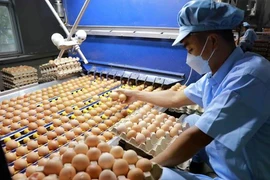
To stay competitive, domestic producers are attempting to leverage Vietnamese consumers’ preference for hot, freshly processed meat over frozen imports.
Ly Kim Chi, chairwoman of the Food and Foodstuff Association of HCM City, said that imported meat is currently cheaper than local products.
However, this price advantage has not yet overshadowed the cultural preference for fresh meat. This remains the greatest advantage of local suppliers, she told thesaigontimes.vn.
Experts caution that relying on consumption habits alone is unsustainable. Rising imports of cheap meat are seen as an inevitable outcome of deeper international integration. Unless the livestock sector improves productivity and reduces costs, the widening price gap will likely push consumers toward imported products, gradually shifting preferences toward chilled and frozen meat.
With competition intensifying, experts emphasised the need for coordinated strategies from the Government and relevant ministries. Proposals include stricter quality controls, higher food safety standards and technical barriers to protect domestic producers.
In addition, they also recommended support programmes to advance technology, improve breeding and expand domestic consumption markets.
To ensure the long-term survival of the industry, stakeholders emphasise the importance of increasing productivity, modernising technology, adopting value-chain livestock models and fostering stronger cooperation between businesses.
Such measures will be essential to mitigate the impact of cheap imports, protect local farmers and secure the sustainable development of Vietnam’s livestock industry in the era of global integration, the experts argued./.
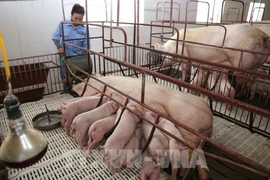
Vietnam considers multi-storey pig farming to modernise livestock industry
Multi-storey pig farming offers several advantages over traditional models as it leverages scientific and technological advances such as AI, blockchain, ICT, and automation for smart farming systems to support early disease detection, real-time weight estimation, and cost optimisation.