Vietnam considers multi-storey pig farming to modernise livestock industry

Multi-storey pig farming offers several advantages over traditional models as it leverages scientific and technological advances such as AI, blockchain, ICT, and automation for smart farming systems to support early disease detection, real-time weight estimation, and cost optimisation.

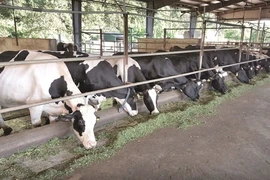
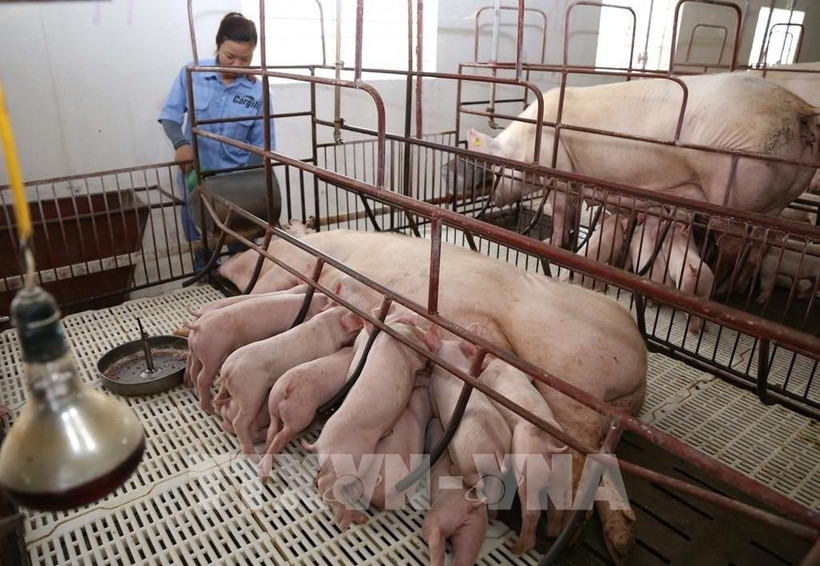
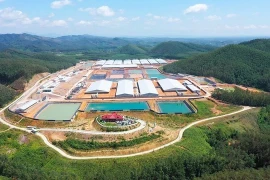
The Minh Loc Breeding Pig Production and Livestock Cooperative in Cam Minh commune, Ha Tinh province. (Photo: VNA)

Hanoi (VNA) – Deputy Minister of Agriculture and Environment Phung Duc Tien has submitted a proposal to the Prime Minister seeking approval to implement a multi-storey pig farming model in Vietnam.

According to the Ministry of Agriculture and Environment (MAE), two companies, BAF Vietnam JSC and Xuan Thien Thanh Hoa JSC, have submitted official documents requesting guidance on launching multi-storey pig farms.

BAF Vietnam has set up a strategic partnership with Muyuan Foodstuff Group of China, the world’s largest pig farming enterprise renowned for its high-rise, large-scale pig farming operations.

This company has proposed a smart 6-storey pig farming complex in Tay Ninh province. The project would raise 64,000 breeding sows and produce up to 1.6 million commercial pigs per year, with a total investment estimated at over 12 trillion VND (475 million USD). Once fully operational, the project is expected to generate 12–13 trillion VND in annual revenue, with a projected payback period of 5 to 5.5 years.

The MAE noted that China began developing multi-storey pig farms in 2018 and now has over 2,000 such facilities, including nearly 4,500 high-rise pig farm buildings. These supply around 2.65 million breeding sows and over 30 million market hogs annually.

Multi-storey pig farming offers several advantages over traditional models as it leverages scientific and technological advances such as AI, blockchain, ICT, and automation for smart farming systems to support early disease detection, real-time weight estimation, and cost optimisation. Biosafety and disease control are also significantly improved through advanced systems for water, waste, and gas treatment, which reduce emissions, save water, and generate organic fertiliser for agriculture.

Air quality is managed via a four-layer filtration system that eliminates over 95% of odour, disinfects emissions, and prevents disease outbreaks from external sources. This model also saves land and infrastructure costs while requiring fewer workers since one person can oversee up to 2,000 pigs.

Vietnam’s Law on Animal Husbandry encourages the application of high-tech and modern farming methods to enhance productivity, quality, biosafety, and environmental protection. In 2024, the country issued a national standard for multi-storey pig farms, detailing regulations on farm scale, processes, and infrastructure. Moreover, the strategy for animal farming development 2021–2030, with a vision to 2045, sets the goal of modernising the livestock sector, boosting productivity and competitiveness while ensuring biosafety and environmental sustainability.

Pig farming is Vietnam’s key livestock industry, accounting for 62–65% of total live meat output. In 2024, the country produced nearly 5.2 million tonnes of live pigs, ranking 6th globally./.
VNA

See more

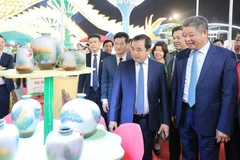
Officials visit a booth at the festival. (Photo: VNA)

Vietnam OCOP Festival 2025 opens in Hanoi

The festival functions as a space to bring together regional OCOP excellence, a forum connecting OCOP stakeholders with distributors, investors, experts and consumers, and a platform to spread pride in indigenous culture, local knowledge, and the aspiration for legitimate prosperity.

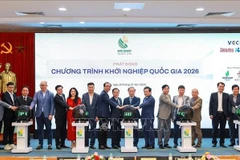
Prime Minister Pham Minh Chinh (third from right) and officials launch the Ministry of Construction’s new information technology systems at the conference on December 21. (Photo: VNA)

Modern, comprehensive infrastructure – a need for fast, sustainable development: PM

The Party and State continue to define infrastructure development as one of the three strategic breakthroughs, with priority given to building comprehensive and modern infrastructure, particularly transport facilities, technological infrastructure, and green – digital transition infrastructure, to help realise the national target of double-digit growth, the PM said.

Prime Minister Pham Minh Chinh addresses he third meeting of the National Steering Committee implementing the Politburo’s Resolution 68 in Hanoi on December 20. (Photo: VNA)

PM pushes trust, breakthroughs to accelerate private sector growth

Prime Minister Pham Minh Chinh noted that since the rollout of Resolution 68, alongside supporting resolutions from the National Assembly (NA) and Government, there has been a marked change in understanding the private sector’s critical position and role in Vietnam’s socialist-oriented market economy.

PM Pham Minh Chinh chairs the meeting (Photo: VNA)

Private sector thrives eight months after Resolution 68’s launch: PM

The private sector has shown marked progress eight months after the launch of Resolution 68, registering about 18,000 new enterprises monthly and pushing the nationwide total to nearly 1.1 million, Prime Minister Pham Minh Chinh told the third meeting of the National Steering Committee in Hanoi on December 20.

Phin Ho Tra – a national five-star OCOP product. (Illustrative photo: VNA)

Hanoi to host Vietnam OCOP Festival 2025

The festival is seen a practical activity celebrating the achievements made by the capital and the country in 2025, affirming OCOP’s role in rural economic development, contributing to realising Vietnam’s aspiration for strong economic growth in the context of deep integration.

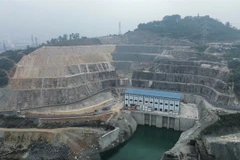
The expanded Hoa Binh Hydropower Plant (Photo baochinhphu.vn)

EVN launches major power projects

Among the flagship projects inaugurated was the expanded Hoa Binh Hydropower Plant with a total installed capacity of 480MW per year and average annual output of about 488 million kWh.

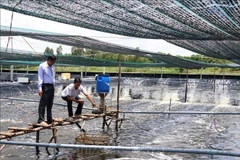
An ultra-intensive shrimp farming model linked with environmental protection in Ca Mau province. (Photo: VNA)

Fisheries take the lead in the Mekong Delta’s green transition

Across the Mekong Delta, leading aquaculture producers, processors and exporters, along with suppliers of inputs, are transitioning to circular, high-tech and clean production models that cut greenhouse gas emissions and comply with international certification standards.

A perspective view of the Red River Landscape Boulevard project in Hanoi (Photo: VNA)

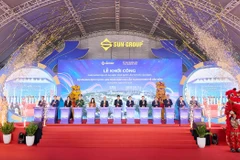
Works starts on Hanoi’s Red River Landscape Boulevard Axis project

The project is among the 234 key works and projects being launched, inaugurated or technically opened simultaneously across 34 cities and provinces nationwide to mark the 14th National Party Congress. Its launch contributes to implementing the country’s strategic development orientations while concretising Hanoi’s development goals in the new period.