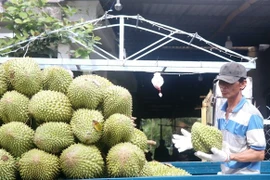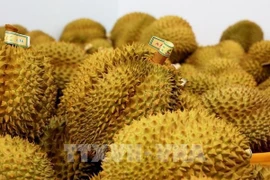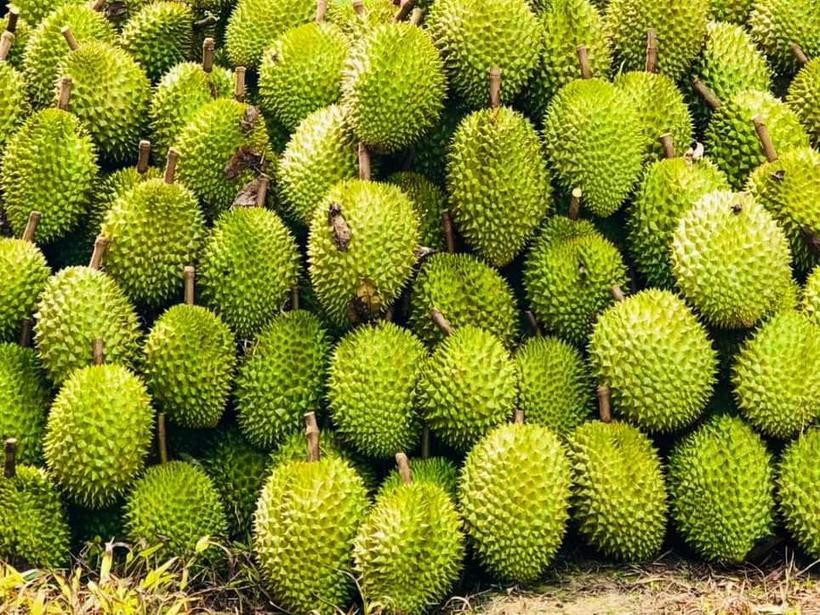
Hanoi (VNA) – The recent move by the General Administration of Customs of China (GACC) to expand the list of growing area codes and packing facility codes for Vietnamese durian will creates favourable conditions to boost Vietnamese durian exports to the Chinese market.
According to the Ministry of Agriculture and Environment’s Plant Production and Protection Department, the GACC has updated its records to include 829 growing area codes and 131 packing facility codes for Vietnamese durian.
Previously, the ministry’s Plant Protection Department submitted dossiers for 1,604 durian growing areas and 314 packing facilities to the Chinese agency, of which 829 growing areas and 131 packing facilities have been approved.
The ministry recommended that regions and businesses seize this opportunity while complying with plant quarantine and food safety regulations to ensure sustainable exports.
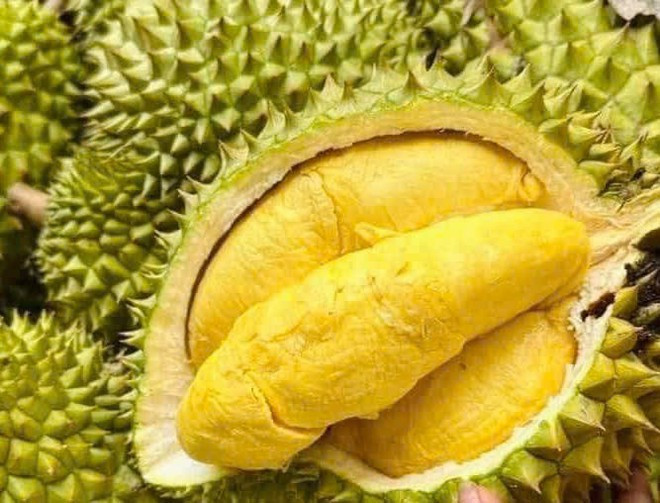
Compared to other traditional Vietnamese fruits exported to China—such as mango, dragon fruit, longan, lychee, and watermelon—durian faces stricter inspection requirements. GACC conducts on-site or online inspections of all Vietnamese growing areas and packing facilities before approving codes and granting export licenses.
According to the department, both Vietnamese fresh and frozen durian are eligible for export to over 20 countries. However, since the durian protocol was signed with China, over 90% of Vietnam’s durian output has been consumed by the Chinese market. Despite this strong demand, China maintains high technical standards and is increasingly tightening its regulations—especially regarding food safety.
Many businesses, growing areas, and packing facilities focus solely on registering to qualify as a legitimate export sites, without paying sufficient attention to maintaining compliance with the technical requirements set out in the protocol.
In addition, the fraudulent use and trading of growing area and packing facility codes persist, making product traceability difficult and quality control nearly impossible.
The department also warned against harvesting unripe or immature durian in pursuit of profit, noting that this practice has led to complaints from the Chinese market about underdeveloped fruit, damaging the quality, reputation, and brand of Vietnamese durian.
Among Vietnam’s fruit and vegetable exports in 2024, durian led the sector with a value of 3.3 billion USD, accounting for 46% of total fruit export revenue. China remained the dominant market, importing 3.2 billion USD worth of durian—97% of Vietnam’s total durian exports. Durian also made up 74% of Vietnam’s total fruit and vegetable export value to China.
This remarkable growth stems from China’s official approval for durian imports starting mid-2023. Additionally, in 2024, Vietnam’s frozen durian was also officially exported to China, further boosting the export value of the fruit.
In the first four months of 2025, Vietnam’s durian exports to China reached only about 130 million USD, equivalent to 35,000 tonnes. This represents a sharp decline compared to over 500 million USD during the same period in 2024.
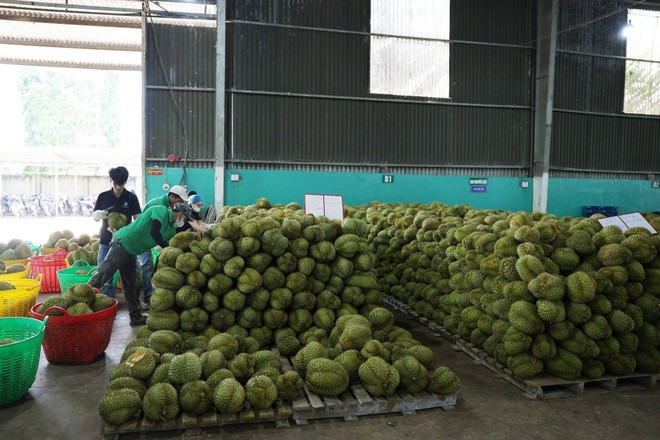
China imports around 7 billion USD of fresh durian annually, and this figure is expected to exceed 10 billion USD in the near future. Additionally, the country also spends about 1 billion USD on frozen durian imports. Given this demand, Vietnam has set a target of earning 3.5 billion USD in durian exports in 2025.
Driven by strong market demand, Vietnam’s durian growing area has rapidly expanded to nearly 180,000 ha, with an estimated output of 1.5 million tonnes in 2024. However, the department warned that this sudden growth carries risks such as fragmented growing areas, poor quality control, water shortages, and the overuse of pesticides.
At a meeting in early May to address the challenges facing durian exports, Minister of Agriculture and Environment Do Duc Duy instructed the implementation of urgent measures to restore export activity. Accordingly, the ministry will coordinate with Chinese customs authorities to resolve technical issues and accelerate the process of assigning growing area codes and approving packing facilities. Simultaneously, the ministry will urgently develop a plant quarantine protocol for durian to support exports throughout 2025./.