Coastal tourism potential highlighted for Ho Chi Minh City

Ho Chi Minh City is seeking to unlock the tourism potential of its special zones and coastal areas, particularly Con Dao and Can Gio, as part of efforts to strengthen its role as a regional tourism hub and international gateway.

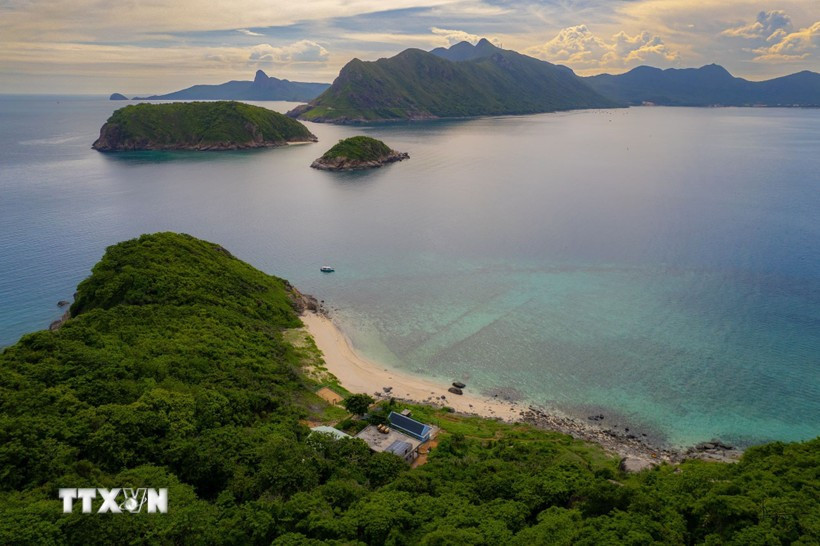
Con Dao – A paradise for discovery and experience (Photo: VNA)

Ho Chi Minh City (VNA) – Ho Chi Minh City is seeking to unlock the tourism potential of its special zones and coastal areas, particularly Con Dao and Can Gio, as part of efforts to strengthen its role as a regional tourism hub and international gateway.

Following the expansion of its new development space, the southern city aims to enhance inter-regional connectivity in infrastructure, markets and space for tourism development. Authorities view coastal and island tourism as a key source of “green” growth that could help reposition the city on the regional and global tourism map.

According to Nguyen Van Manh, Vice Chairman of the Con Dao Special Zone People's Committee, Con Dao is not only a national symbol of revolutionary heritage but is also emerging as a distinctive destination of national and international standing.

Con Dao’s combination of historical and cultural heritage, pristine marine ecosystems, rich biodiversity and unique local culture provides a strong foundation for sustainable tourism development. The destination receives more than 600,000 visitors annually, with over 80% visiting historical and cultural sites. Museums and heritage complexes attract more than 200,000 visitors each year, while eco-resort tourism draws about 40,000 visitors, contributing significantly to the local economy.

Positioned as a “red address” of national significance, Con Dao is increasingly targeting high-quality visitors who stay longer and spend more, in line with its strategy to limit mass tourism and prioritise sustainability.

With the principle of “conservation for development, development for conservation,” Con Dao has been shifting from an exploitative approach to one that is controlled, sustainable, and responsible in preserving and enhancing the value of its cultural and historical heritage as well as its natural resources.

Local tourism and travel agencies share that Con Dao is a pioneer in balancing tourism development with environmental protection and in fostering a civilised lifestyle at historical sites and tourist attractions. Initiatives such as the “Green Offering Basket” campaign and the commitment to “say no to burning votive paper” at all heritage sites have helped encourage more environmentally responsible behaviour among visitors.
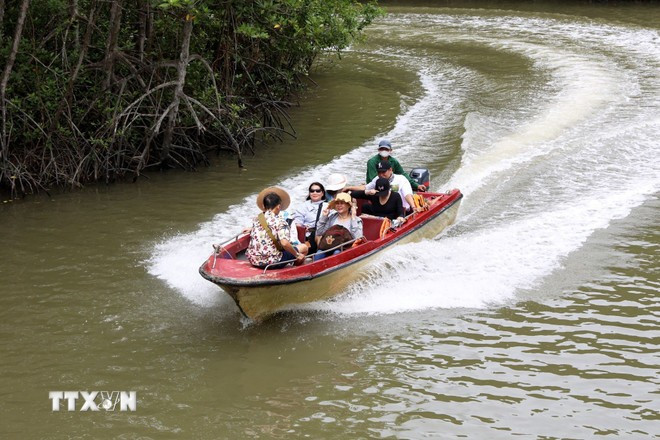
trai-nghiem-khong-gian-du-lich-dao-khi-o-can-gio-30.jpg
Tourists travel by motorboat to visit Monkey Island in Can Gio. (Photo: VNA)

Alongside Con Dao, Can Gio is considered a “rare asset” for developing coastal tourism. The city’s tourism sector plans to shift toward higher-quality growth in 2026 by diversifying products and expanding tourism space to riverside, coastal and ecological areas.

Currently, travel from the city centre to Can Gio takes about two to two-and-a-half hours, including a ferry crossing at Binh Khanh, limiting its attractiveness for resort and night-time tourism. Experts say improved connectivity could unlock the area’s significant natural advantages.

Can Gio boasts extensive mangrove forests, brackish-water ecosystems, traditional salt-making villages, fishing communities and revolutionary historical sites, offering strong potential for distinctive tourism products. The area could also develop river tourism routes linking the city centre and Vung Tau.

Dang Manh Phuoc, CEO of Outbox - a specialised market research firm focusing on tourism and hospitality in Vietnam, pointed out that with a good balance between conservation and development, Can Gio has the potential to build an international green tourism brand for Ho Chi Minh City. The main challenge lies in turning natural resources into engaging visitor experiences while keeping environmental sustainability intact.

Can Gio is expected to benefit from several major infrastructure projects, including the Ben Thanh – Can Gio urban railway, expected to operate in 2028, the Can Gio Bridge, which is scheduled for completion in 2029, a key interchange connecting to the Ben Luc – Long Thanh Expressway, and a proposed sea-crossing route to Vung Tau.

According to the Municipal Department of Tourism, the city targets 11 million international visitors and 50 million domestic tourists in 2026, with tourism revenue projected to reach 330 trillion VND (nearly 13 billion USD).

With new development space, improved infrastructure and stronger coordination between authorities and businesses, Ho Chi Minh City expects its coastal and island areas to become important growth drivers for sustainable tourism./.
VNA

See more

Good fortune, peace and cultural experiences within spring journeys

Good fortune, peace and cultural experiences within spring journeys

In recent years, alongside the tradition of family reunions during the Lunar New Year (Tet), travelling during the holiday has become increasingly popular. Early spring travel is not merely about sightseeing; it also carries the meaning of seeking good fortune, peace and cultural experiences across different regions of the country.

Illustrative photo. (Photo: VNA)

Over 8,300 babies born in first four days of Tet holiday

A total of 8,358 babies were born at medical facilities nationwide, through both natural delivery and cesarean sections, during the first four days of the Lunar New Year (Tet) holiday, according to the Ministry of Health.

Brocade weaving is a cultural lifeblood for the Khmer community in the Bay Nui (seven-mountain) area of An Giang. (Photo: VNA)

Khmer brocade weaving helps drive heritage-based economic development

Nestled at the foot of the majestic That Son mountain range, Van Giao - the brocade weaving village of Khmer people in An Cu commune, An Giang province - is not only a repository of centuries-old cultural heritage but is also emerging as a model for heritage-based economic development.

People and vehicles travel across the Lo river pontoon bridge on the morning of February 16. (Photo: VNA)

PM commends units for constructing pontoon bridge to serve Tet travel demand

Prime Minister Pham Minh Chinh on February 16 sent a letter commending the determination and strong sense of responsibility of agencies and units in urgently building a pontoon bridge across the Lo river in Phu Tho province to promptly serve people’s travel demand during the Lunar New Year (Tet) 2026.

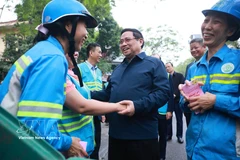
Prime Minister Pham Minh Chinh visits and extends Lunar New Year greetings to a patient undergoing treatment at Bach Mai Hospital. (Photo: VNA)

PM extends best wishes to doctors, patients on Tet occasion

Prime Minister Pham Minh Chinh visited and extended Tet greetings to medical staff and patients at Bach Mai Hospital and Viet Duc University Hospital in Hanoi while inspecting healthcare services during the holiday at these two leading central hospitals on February 16, or the last day of the Year of the Snake.

The Van Mieu-Quoc Tu Giam heritage site in Hanoi remains a major attraction for large numbers of visitors during the early days of spring. (Photo: VNA)

Hanoi offers free parking, public transport during Lunar New Year

During Tet, Hanoi offers free parking at selected schools and locations surrounding central heritage sites. In addition, single-journey fares are waived on the Cat Linh–Ha Dong and Nhon–Hanoi Station metro lines, while subsidised public bus services across the city are operating free of charge during the holiday period.

President Luong Cuong, his spouse, delegates and artists at the special Spring Homeland Art Programme 2026. (Photo: VNA)

Five major shifts chart overseas Vietnamese affairs in 2026 and beyond

In a world marked by intensifying strategic competition, emerging conflicts and intertwined economic, security and social challenges, nearly 6.5 million Vietnamese living in over 130 countries and territories have continued to look to the homeland as a firm spiritual anchor. The homeland remains a source of confidence, connection and aspiration for Vietnamese abroad.

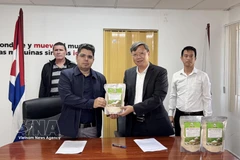
Vietnamese Ambassador to Cuba Le Quang Long (right) symbolically hands over 250 tonnes of rice to Cuban Deputy Minister of Agriculture Telce Abdel González (Photo: VNA)

Vietnam supports Cuba in ensuring food security

Cuban Deputy Minister of Agriculture Telce Abdel González affirmed that Cuba will create all favourable conditions for AgriVMA’s rice production project in Los Palacios district, Pinar del Río province, with a view to expanding the model to other localities across the country.