Philippines's activists rejoice over the Hague Tribunal's ruling (Photo: AFP/VNA)
 Hanoi (VNA) – Malaysia and India have called for peaceful resolutions in the East Sea after the Hague Tribunal adopted the ruling on July 12 rejecting China’s historic rights claim in a dispute in the sea area with the Philippines.
In a statement issued on July 12, Malaysia’s Ministry of Foreign Affairs stated that it is important to maintain peace, security and stability by exercising self-restraint in activities in the East Sea (internationally known as the South China Sea) and avoid the use of force that could complicate the dispute and escalate tensions.
“Malaysia cherishes peace and stability of the South China Sea and believes that China and all relevant parties can find constructive ways to develop healthy dialogues, negotiations and consultations while upholding the supremacy of the rule of law for the peace, safety and security for the region,” the statement said.
The country’s foreign ministry also called on the involved parties to ensure the full and effective implementation of the Declaration on the Conduct of Parties in the East Sea (DOC) and soon reach a code of Code of Conduct in the East Sea (COC).
The same day, India’s Ministry of External Affairs issued a statement saying “India supports freedom of navigation and over flight and unimpeded commerce, based on principles of international law as reflected notably in the United Nations Convention on the Law of the Sea (UNCLOS).”
“India believes that states should resolve disputes through peaceful means without threat or use of force and exercise self-restraint in the conduct of activities that could complicate or escalate disputes affecting peace and stability,” the statement said.
It added that sea lanes of communication passing through the East Sea are critical for peace, stability, prosperity and development.
As a member of UNCLOS, India urged the involved parties to show their maximum respect to UNCLOS, the document that laid down international legal order for seas and oceans.
Following the Permanent Court of Arbitration’s ruling, Australian Minister of Foreign Affairs Julie Bishop on July 13 called on both the Philippines and China to respect the judgment because “it is final and legally binding on both of them”.
"We certainly urge all parties to take steps to ease tensions, to refrain from provocative actions that would escalate tensions and lead to greater uncertainty,” she said.
"This treaty, the Law of the Sea, codifies pre-existing international custom. It's a foundation to maritime trade and commerce globally, and so to ignore it would be a serious international transgression,” she added.
Meanwhile, the Republic of Korea (RoK) called for "peaceful and creative diplomatic efforts".
Yonhap News Agency cited a statement of the RoK Ministry of Foreign Affairs as saying the country has consistently maintained the view that the East Sea dispute should be resolved in accordance with relevant agreements and international regulations.
"Our government, while bearing in mind the arbitration ruling announced on July 12, hopes for a resolution of the South China Sea dispute through peaceful and creative diplomatic efforts," it said.
The ministry also reaffirmed its position that peace, stability and freedom of navigation and flight should be guaranteed in the area that serves as a key maritime trade route.
Canadian Senator Tobias C. Enverga Jr said in a statement that he is pleased with the PCA’s unanimous ruling on seven of the 15 points filed by the Republic of the Philippines .
“It is a clear statement by the international community that the People’s Republic of China’s claim does not hold up to closer scrutiny and that it is attempting to coerce the smaller nations in the region by using its military and economic might”, he added.
“ I urge the Canadian government to do everything in its power to ensure that all parties comply with agreed upon international conventions and demand that the People’s Republic of China comply with its obligations under the Convention, which the country ratified in 1996,” he ended.
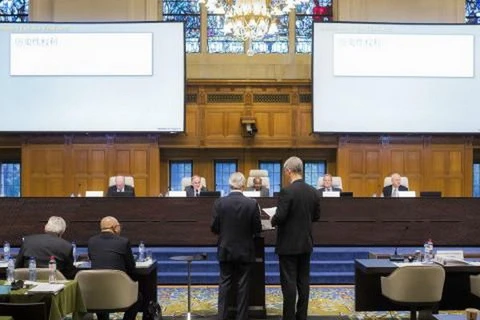
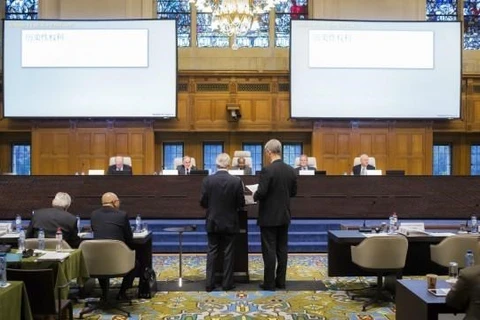
On July 12, the PCA in The Hague, the Netherlands, issued the ruling on the case brought by the Philippines against China’s nine-dash line claim in the South China Sea .
It affirmed that China’s claims to historic rights over waters within the nine-dash line are contrary to the 1982 United Nations Convention on the Law of the Sea (UNCLOS).
China has caused permanent and irreparable harm to the coral reef ecosystem at the Spratly (Truong Sa) archipelago, and that it also has no historic title over waters of the South China Sea, the tribunal said.
The Hague Tribunal also finds no legal basis for China to claim historic rights to resources within the nine-dash line.
According to The Hague court, China has no rights to a 200-nautical mile exclusive economic zone (EEZ) surrounding the Mischief and Thomas reefs.
The court defined “Ba Binh” feature in Vietnam’s Truong Sa (Spratly) archipelago as a “rock” which means it has no EEZ.
The PCA also underlined that China has interfered with the traditional fishing rights of the Philippines in Scarborough Shoal, highlighting that China’s actions have worsen disputes between the country and the Philippines when efforts have been made to resolve the disputes./.