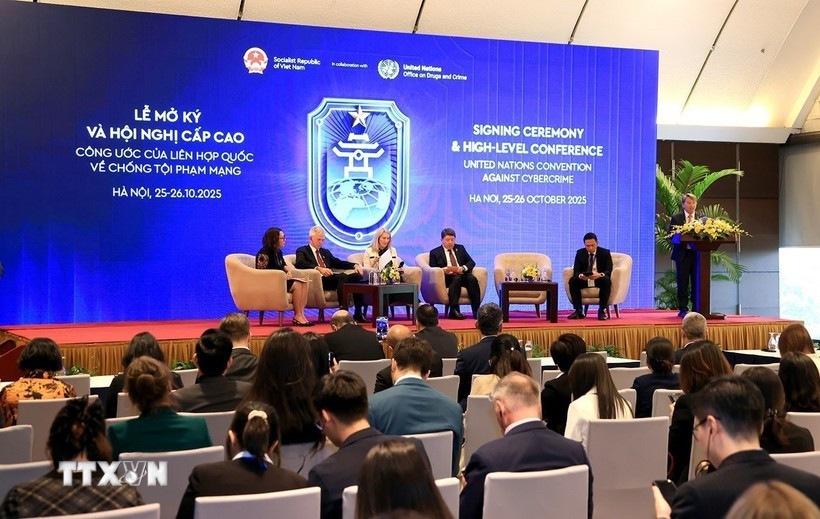
Hanoi (VNA) – International delegates expressed their hope that the Hanoi Convention will establish a transparent and effective mechanism for cross-border cooperation, thereby strengthening mutual trust among nations in the prevention and combat of cyber incidents.
The shared expectation was voiced during the first high-level plenary session held on October 15 in Hanoi, as part of the Signing Ceremony and High-Level Conference of the United Nations Convention against Cybercrime (Hanoi Convention).
Delegates agreed that this marks an important foundation for global cooperation in the digital era, reflecting the shared determination of the international community to build a safe, trustworthy, and humane cyberspace.
Cybercrime: A major global threat
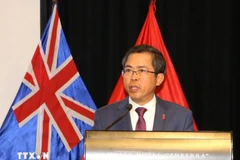
Australian Assistant Minister for Foreign Affairs and Trade Matt Thistlethwaite described cybercrime as one of the most pressing challenges of our time.
Citing Australia’s experience, he said cybercrime has caused enormous economic losses to individuals, businesses, and even the government. In 2024 alone, cybercrime cost the Australian economy more than 12.5 billion AUD.
However, Thistlethwaite stressed that the consequences of cybercrime go far beyond economic damage, inflicting deep social harm.
Lives have been lost and workers have been driven to despair after being trapped in online scam operations, he said, adding that families have lost their life savings to internet fraud.
Cybercriminals also target government systems, critical infrastructure, and businesses in attempts to steal valuable data, he stated.
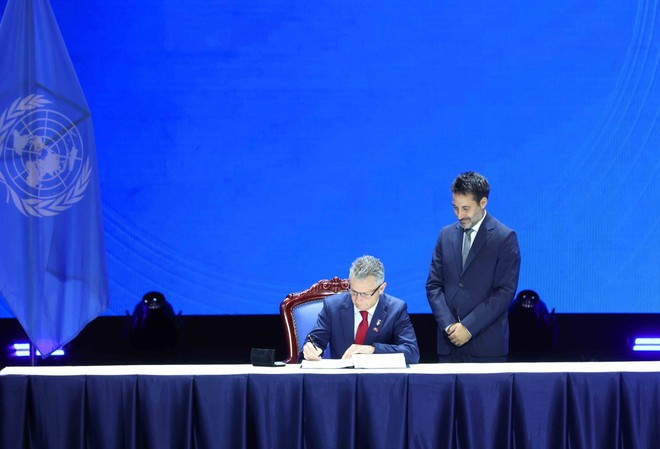
In this context, holding cybercriminals accountable has become increasingly difficult as cyberattacks expand across borders on a massive scale. Global cooperation, therefore, is essential, and Hanoi Convention is expected to help narrow the operating space of organised crime while enhancing global capacity to respond.
He said that Australia is committed to supporting global efforts to prevent cybercrime and to working together to combat this crime worldwide.
Sharing the same view, Vice President of Ecuador María José Pinto González Artigas pointed out the unpredictable consequences of cybercrime in terms of human.
“When talking about the consequences of cybercrime, we often mention data and money, but there is another aspect, less measured but extremely important. That is the human aspect. Those who are hurt can be our relatives and family,” she said.
Speeding up global cooperation mechanism
Cambodian Deputy Prime Minister Sok Chenda Sophea said that countries must respond swiftly and effectively, making use of the Hanoi Convention as an essential tool to curb cybercriminal activities.
According to the official, while each nation has its own priorities in formulating policies, legal frameworks, and law enforcement mechanisms, it is crucial that these priorities be aligned with the international convention, turning shared commitments into concrete actions to protect people’s lives and safeguard citizens worldwide.
He added that the Cambodian Government is forging key partnerships with the private sector to strengthen cybersecurity controls and enhance national resilience against cyber threats.
He reaffirmed Cambodia's commitment to this essential international agreement and said it looked forward to working closely with all member states in implementing the convention and translating its provisions into actions.
Participating in the plenary session, Polish Deputy Prime Minister and Minister of Digital Affairs Krzysztof Gawkowski also underscored the importance of international cooperation in jointly combating cybercrime.
“For years, we have witnessed not only a surge in the number of cyberattacks but also increasing sophistication and scale in cybercriminal activities. Thus, Poland welcomes the adoption of the Convention by the General Assembly, which will strengthen our collective ability to address cross-border challenges,” he said.
However, the Polish delegate noted that the signing of the convention is only the beginning. What matters most, he stressed, is the concerted effort of all nations to implement the convention effectively and share responsibility in pursuit of the common global goal./.