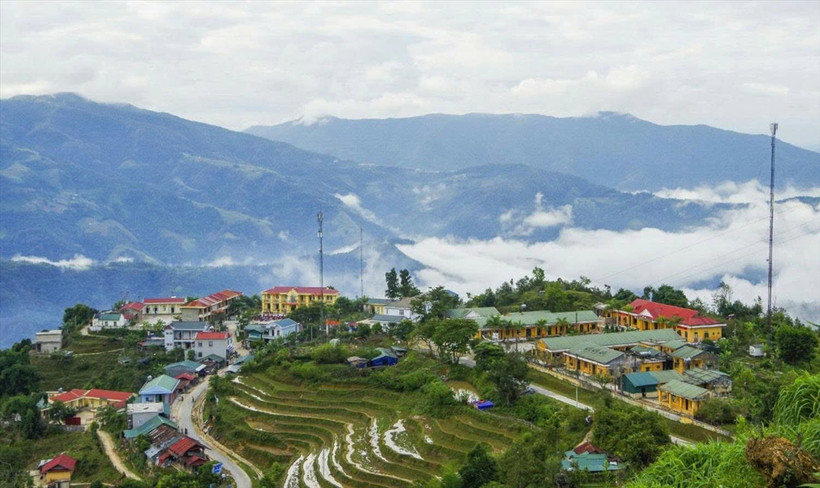
Lai Chau (VNA) – Over the past years, village cultural houses in Thu Lum commune, Lai Chau province, have played a vital role as the heart of social and cultural life in the border region.
These houses host a variety of lively activities, including legal education campaigns, cultural and artistic exchanges, and sports events. They also serve as a hub for uniting local ethnic communities in protecting the border, preserving cultural identity, and contributing to the sustainable development of Thu Lum.
Travelling over 200 km from the centre of Lai Chau province, one sees the transformation of Thu Lum from a once sparse mountainous area with dilapidated bamboo and thatched homes to a community with solid, well-built houses, improved farmland, and a noticeably higher standard of living.
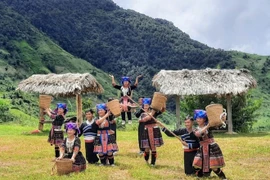
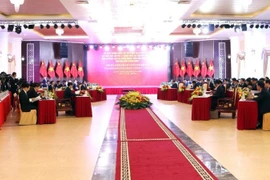
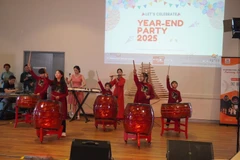
At the Thu Lum village cultural house, residents gathered for the 2025 National Great Unity and Military-Civil Culture Festival. The village was chosen as a focal point for the commune. The festive atmosphere was marked by cultural performances, cooking contests, and traditional games, alongside commemorations of the 95th traditional day of the Vietnam Fatherland Front (18/11/1930 – 2025).
Thu Lum is home to 76 households and 430 residents, all belonging to the Ha Nhi ethnic group. Thanks to government support, only 15 households remain classified as poor. Over the past year, local authorities promoted civilised practices in weddings, funerals, and festivals. Families have actively contributed to building healthy, safe communities, and all children now attend school on time, achieving a 100% school-age attendance rate. In 2025, 61 households were recognised as “cultural families,” with eight maintaining the title for three consecutive years.
Head of Si Hu Pha village emphasised that the cultural house has become a central hub for community activities, strengthening solidarity and fostering cultural, artistic, and sports movements. It not only hosts meetings and events but also serves as a bridge for sustainable social and cultural development in the village.
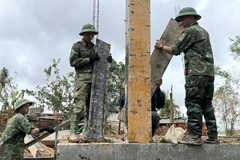
In Lo Ma village, the cultural house stands as a well-maintained wooden building with cement roofs, constructed with government support. Despite weathering over the years, the community cherishes and protects it.
Village chief and Party Secretary Lu Ha Tu recalled the past when the old cultural house was unsafe, cramped, and lacked basic facilities. Today, the upgraded house with electricity, water, and a spacious courtyard accommodates meetings, cultural events, and sports, bringing the community together.
Through educational campaigns by commune officials, border guards, literacy classes, and cultural exchange programmes at the cultural houses, villagers have improved their knowledge and awareness. The houses nurture love for their homeland, preserve ethnic cultural heritage, and strengthen border security awareness. Literacy classes and cultural activities help residents gain new knowledge while celebrating their traditions, from folk songs to dances, passing them to younger generations.
Thu Lum commune has 17 villages, each featuring a cultural house designed to meet the community's needs. Many of these houses are equipped with tables, chairs, sound systems, and tents, which have been funded through national target programmes and policies aimed at supporting ethnic minorities and disadvantaged areas. Villagers frequently contribute to the maintenance and upgrade of these facilities.
Nguyen Truong Giang, Secretary of the commune Party Committee and Chairman of the People’s Council, stated that most village cultural houses are functional and equipped with basic sound systems. However, some facilities have deteriorated due to age and harsh weather. The local authorities are now reviewing and planning repairs and upgrades to ensure each cultural house remains a true community hub.
With ongoing investment and support from local authorities, the village cultural houses in Thu Lum will become more modern and fully equipped to meet the growing needs of residents. These houses serve as a connection between the past and present, as well as between the authorities and the community. They play a vital role in preserving culture, strengthening national defence, and contributing to a robust border region./.