Badminton players seek Asian championship medals in China
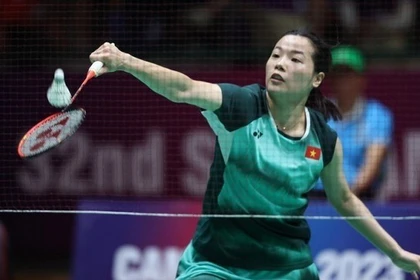
Vietnamese players will compete in the Badminton Asia Championship 2026 from April 7-11 in China, seeking for highest results.
Vietnamese players will compete in the Badminton Asia Championship 2026 from April 7-11 in China, seeking for highest results.

Now in its third year, the 20-million-USD annual programme provides participating clubs with funding of up to 1 million USD, alongside strategic support and international exposure, to support clubs in expanding their brands and audiences leading up to and throughout the Esports World Cup 2026.

Launched on January 9, 2016, the street started as a modest 140-metre stretch that few expected would have such a big impact on Vietnam’s publishing scene.

Vietnam earned 1,225.68 points, gaining nine places and 36.17 points compared to the previous update.
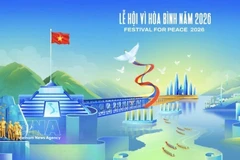
The design centres on a white dove – the global symbol of peace – carrying a golden rice ear and three flowing multicoloured silk ribbons.
In addition of selling good products, Vietnamese exporters are implementing a value transformation strategy smartly and effectively to win export markets.

Vietnam’s leading steelmaker Hoa Phat Group has signed an agreement with TÜV SÜD Rail GmbH to provide testing, inspection and certification services for its railway rail products, marking a key step in its strategy to develop high-quality steel for modern rail systems.

Vietnam plans State-budget advances to its fuel price stabilisation fund, aiming to cushion domestic fuel price swings amid global market volatility and rising energy costs.

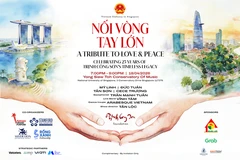
This event is part of a series of commemorative activities honouring his musical legacy, which was announced on the occasion of the 25th anniversary of his passing (April 1, 2001 – April 1, 2026).

In Hanoi, the VNSO concert will take place on April 11 at the Vietnam National Academy of Music’s Great Hall, featuring Symphony 92 by Joseph Haydn, Claude Debussy’s Petite Suite and Georges Bizet’s Carmen Suites 1 and 2.

The side coached by Kim Sang Sik climbed to 1,225.68 points, gaining 36.17 points from the previous ranking. The rise returns Vietnam to the global Top 100, a notable milestone for the national team.
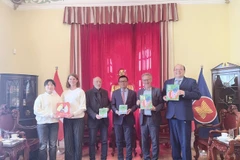
The meeting came as Lobe’s beloved book " The Grandmother in the Apple Tree," translated into Vietnamese by Chu Thu Phuong and published by Kim Dong Publishing House, was recently recognised at Vietnam’s 2025 National Book Awards.
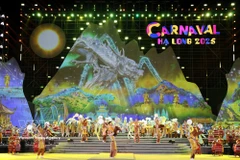
A major highlight will come on April 11 with a free public concert at October 30 Square in Ha Long Ward, marking the opening of the 17th National Radio Festival – Quang Ninh 2026. Organisers are bracing for a massive turnout of up to 50,000 spectators.
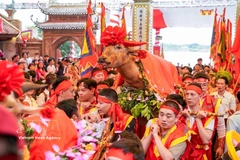
More than an annual cultural event, it serves as an occasion for the community to pay tribute to their forebears while reaffirming the enduring vitality of a nationally recognised intangible cultural heritage in contemporary life.

According to the Vietnam Recreational and Electronic Sports Association (VIRESA), the system, named the SEA Esports Nations Cup (SNC), represents the first regional esports tournament designed specifically for national teams in Southeast Asia.
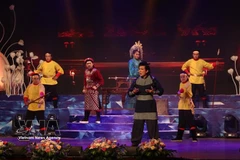
Viewing cultural industries as a cornerstone of sustainable development, the city is working to establish a comprehensive ecosystem supporting traditional performing arts.
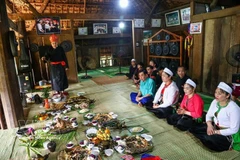
A highlight will be a national conference on ethnic cultural affairs and a ceremony honouring village elders, artisans and reputable individuals, scheduled for April 17. The event will draw leaders of central agencies, local authorities, researchers, and cultural managers, alongside community representatives.

The World Cup tournament will be an opportunity for Da Nang to promote its tourism and sports potential to the world, adding that the city will include the sport in its school physical training programmes and on the list of regular sports for long-term development.

The result confirmed Vietnam’s strong qualifying campaign, highlighted by consistent performances and attacking efficiency, with all three goals in this match coming from headers.
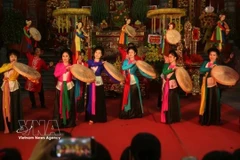
Throughout the development journey of any nation, culture always forms the spiritual bedrock of society. A strong cultural foundation enables not only economic progress but also the preservation of identity, moral standards, and long-term social stability.
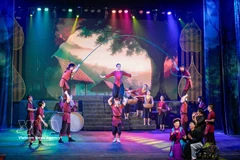
Politburo Resolution No. 80-NQ/TW dated January 7, 2026 on developing Vietnamese culture affirms that culture stands on par with politics, economy, and society, serving as a foundation, an endogenous resource, and a key driver of national development.
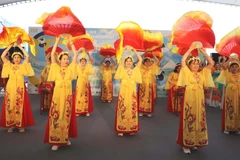
Duong Trung Duc, President of the Overseas Vietnamese Association in Macau, said that while Vietnam has joined the event for three consecutive years, this was the first time the Vietnamese delegation was selected among the opening groups to lead the parade procession.
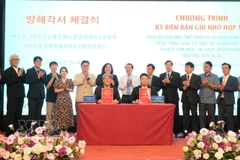
Both Bac Ninh and Jeonbuk boast rich and distinctive cultural heritage. Jeonbuk is known for Pansori, a traditional Korean vocal art, and Hanji paper, which is being nominated for UNESCO recognition. Meanwhile, Bac Ninh is home to Quan Ho folk singing and the Dong Ho folk painting tradition. These shared strengths provide a solid foundation for the two sides to jointly develop cultural tourism products and promote artistic exchanges, according to Deputy Director of the Department of Culture, Sports and Tourism of Bac Ninh Do Tuan Khoa.
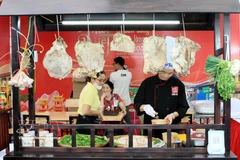
The story of Pho Co traces back to Van Cu village in Nam Dong commune, Ninh Binh province, considered the cradle of Vietnam’s pho-making craft.
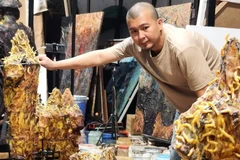
Vietnam will, for the first time, participate in the Venice Art Biennale in Italy with an independent art project and dedicated exhibition space, marking a significant step forward for the country’s fine arts and its integration into the global art scene.
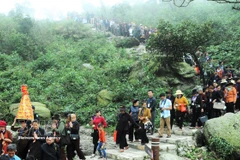
Across many localities, festivals are evolving beyond traditional cultural gatherings into drivers of heritage-based economic development. This transformation both preserves cultural values and enhances the competitiveness of local tourism destinations.
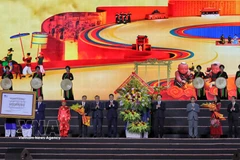
Bac Ninh–Kinh Bac is a land rich in historical depth and cultural heritage. Over centuries, it has nurtured a diverse cultural legacy integral to Vietnam’s identity. While Quan ho (love duet) folk singing symbolises the soul of the region, Dong Ho folk folk woodblock printings stands as a unique artistic heritage reflecting Vietnamese creativity and aesthetics.
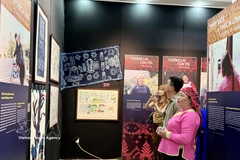
The exhibition aims to foster public understanding of the human – nature relationship, the value of indigenous knowledge, and the growing role of women in climate change adaptation.