Digital competence emerges as a highlight among Vietnamese teachers

The TALIS 2024 results reaffirm the positive standing of Vietnamese teachers in the region, consistent with the strong performance of Vietnamese students in PISA 2022 and SEA-PLM 2024. The report, however, underscores the urgent need to invest in digital capacity, professional development, and school management reform.

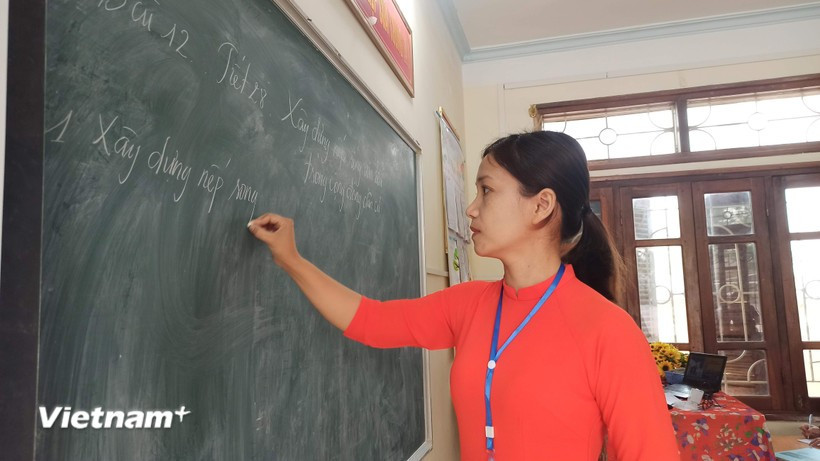
Vietnam records positive results in teacher survey. (Photo: VNA)

Hanoi (VNA) – Up to 64% of Vietnamese teachers have used artificial intelligence (AI) in teaching, ranking fifth among 55 countries and territories participating in the Teaching and Learning International Survey (TALIS) 2024, far exceeding the OECD average of 36%.

The TALIS 2024 survey, conducted by the Organisation for Economic Co-operation and Development (OECD), provides internationally comparable data on lower secondary teachers and school principals, reflecting their characteristics, perspectives, and professional experiences amid education reform and digital transformation.

Vietnam joined TALIS 2024 with a nationally representative sample of 202 schools across 58 provinces and cities, involving 202 principals and 4,410 teachers. The entire process was conducted digitally under OECD’s rigorous technical and data security standards to ensure objectivity and reliability.

According to the results, the average age of Vietnamese teachers is 42, younger than the OECD average of 45; 70% are women, and 91% hold a permanent contracts. Vietnam’s teaching workforce is characterised as young, dedicated, technologically competent, and highly satisfied with their profession.

Remarkably, 92% of Vietnamese teachers believe their profession is valued by society, the highest rate among all participating countries (compared to the OECD average of 22%). Meanwhile, 87% feel that their opinions are heard and respected by policymakers, an 8% increase from 2018.

Job satisfaction remains exceptionally high: 97% of teachers are satisfied with their work (OECD average: 89%), and only 3% of those under 30 plan to leave the profession within the next five years (OECD: 20%). Moreover, 58% are satisfied with their current salary, 19 percentage points higher than the OECD average and up 6% from 2018.

However, 71% say their schools lack the infrastructure for AI application, nearly double the OECD average of 37%. Among teachers who report that they have not used AI in their teaching in the 12 months prior to the survey, 60% report that they do not have the knowledge and skills to teach using AI (lower than the OECD average: 75%).

The survey also revealed that 95% of Vietnamese teachers view professional learning activities as having a positive impact on teaching (OECD: 55%). In Viet Nam, 96% of recent graduates (teachers who have completed their initial teacher education in the five years prior to the survey) “agree” or “strongly agree” that the quality of their initial education was high overall (higher than the OECD average: 75%).

Professional collaboration has also improved notably, with 69% of teachers engaged in team teaching (a sharp rise from 2018) and 98% expressing trust in their colleagues and principals. Particularly, 97% agreed or strongly agreed that school leaders maintain good professional relationships with staff (OECD: 86%).

Work-related stress among Vietnamese teachers remains low, with only 4% of teachers experiencing stress “a lot” in their work, though 54% admitted to pressure related to student achievements and maintaining classroom discipline.

The TALIS 2024 results reaffirm the positive standing of Vietnamese teachers in the region, consistent with the strong performance of Vietnamese students in PISA 2022 and SEA-PLM 2024. The report, however, underscores the urgent need to invest in digital capacity, professional development, and school management reform.

Based on these findings, the Ministry of Education and Training has proposed key policy recommendations, including the issuance of national digital competency standards for teachers, investment in technological infrastructure, and flexible short-term training in educational technology and data safety. It also calls for integrating special education and educational psychology into teacher training, and establishing interdisciplinary support networks linking teachers with school psychologists and healthcare professionals.

The ministry further emphasised building a model of “professional learning schools”, enhancing academic autonomy for key teachers, and fostering instructional leadership among principals and core educators. Other priorities include performance-based salary reform, reducing administrative workload, increasing time for professional activities, and supporting young teachers’ welfare and housing, especially in rural areas./.


VNA

See more

Scientific research activities at the National Hospital of Endocrinology. (Photo: VNA)

Vietnam sets roadmap for intellectual workforce to 2045

The strategy aims to build a high-quality Vietnamese intellectual workforce with a rational structure, identified as a core driving force for the rapid development of modern productive forces, as well as a leading force in digital transformation, innovation and international integration.

Le Duy Thanh, former Chairman of the Vinh Phuc People’s Committee, is escorted to the courtroom. (Photo: anninhthudo.vn)

Appeal trial opened for Phuc Son Group corruption case

According to the first-instance verdict, Nguyen Van Hau, Chairman and CEO of Phuc Son Group, exploited personal and professional connections to bribe over 132 billion VND (over 5 million USD) to leaders of the Party Committees, People’s Committees, and departments in Vinh Phuc and Quang Ngai, enabling Phuc Son Group to secure many contracts in these localities and Phu Tho province.

A performance at the year-end review programme in Sydney on December 14, co-organised by the Vietnam-Australia Scholars & Experts Association and Vietnam-Australia Cultural Exchange Organisation. (Photo: VNA)

Gathering honours knowledge, culture, community spirit of OVs in Australia

Addressing the gathering that drew more than 300 guests, Vietnamese Consul General in Sydney Nguyen Thanh Tung highlighted contributions of the Vietnamese community in Australia, particularly intellectuals and professionals, to the host society as well as cooperation between the two countries.

Agricultural production models help farmer access modern technology to improve output. (Photo: VNA)

Three national target programmes basically meet, exceed 2021-2025 goals

A report from the Central Steering Committee for National Target Programmes for the 2021–2025 period showed that poverty reduction in ethnic minority-inhabited areas averaged 3.2% per year. Per capita income among ethnic minorities is estimated to reach 45.9 million VND (1,760 USD) in 2025, a 3.3-fold increase from the 2020 level, well surpassing the goal of more than doubling.

Illustrative image (Photo: VNA)

Noi Bai Airport to operate expanded int’l terminal with comprehensive automation

The upgrade follows directives from the Prime Minister and the Ministry of Construction and is designed to ease pressure on existing infrastructure by lifting the terminal’s annual capacity from 10 million to 15 million passengers. For the first time, a full suite of automated technologies has been deployed across the terminal, giving travellers greater control over their procedures from check-in to boarding.

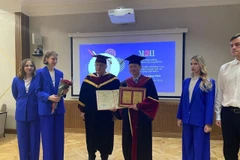
Professor Dr. Tran Hong Thai receives the honorary doctorate title and certificate from Professor Nikolay Rogalev of MPEI. (Photo published by VNA)

Vietnamese professor awarded honorary doctorate by Moscow institute

Professor Dr. Tran Hong Thai, Standing Vice President of the Vietnam Academy of Science and Technology (VAST) was granted an Honorary Doctorate by The Moscow Power Engineering Institute (MPEI) for his outstanding contributions to scientific development, education and international cooperation in the energy sector.

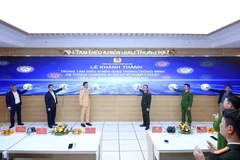
Delegates perform the inauguration protocol for the Hanoi smart traffic control centre in the capital on December 13. (Photo: VNA)

Hanoi officially launches smart traffic control centre

Equipped with 1,837 AI-powered cameras installed at 195 key intersections, the centre serves as the “brain” for real-time monitoring of traffic conditions and urban order. Through the system, police officers can observe traffic on major roads and junctions, promptly detect congestion, violations, accidents and incidents, and take timely response measures.

Vietnamese Deputy Minister of National Defence Sen. Lieut. Gen. Hoang Xuan Chien speaks at the event. (Photo: VNA)

Vietnam repatriates remains of US MIA servicemen

Vietnamese Deputy Minister of National Defence Sen. Lieut. Gen. Hoang Xuan Chien voiced his confidence that sustained goodwill and joint action would allow both sides to tackle lingering war consequences while broadening cooperation across other domains, which, he described as the best way to heal physical, emotional, and societal scars and fostering the stronger Vietnam - US relationship.

Law enforcement forces at sea in Ho Chi Minh City are working to raise awareness among fishermen about combating illegal, unreported, and unregulated (IUU) fishing (Photo: VNA)

HCM City tackles fishing violations at roots

As of December 9, all of the 4,475 fishing vessels in HCM City had registered and updated in the VNFishbase database, of them 4,268 licensed. The remainder, classified as ineligible, are strictly monitored and kept moored locally, with no permission to put to sea.

Vice Chairman of the municipal People’s Committee Hoang Nguyen Dinh addresses the event (Photo: VNA)

HCM City takes tough measures to curb IUU fishing violations

Ho Chi Minh City is mobilising its entire political system to intensify the fight against illegal, unreported and unregulated (IUU) fishing, aiming to join the national effort to have the European Commission’s “yellow card” removed.

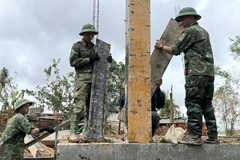
Soldiers of Division 315 helping build a house for a flood-hit family in Dak Lak (Photo: VNA)

Dak Lak launches all-out, rapid “Quang Trung Campaign”

The central province of Dak Lak is mobilising all resources to swiftly rebuild and repair houses damaged by Storm Kalmaegi (Storm No. 13) and the historic floods in November, under the “Quang Trung Campaign” directed by the Prime Minister.