Draft revised law looks to establish framework for railway development, investment attraction

Instead of relying solely on ticket revenues, investors may be granted rights to exploit land around railway stations and urban areas, thereby generating resources for reinvestment, accoding to the draft revised law.

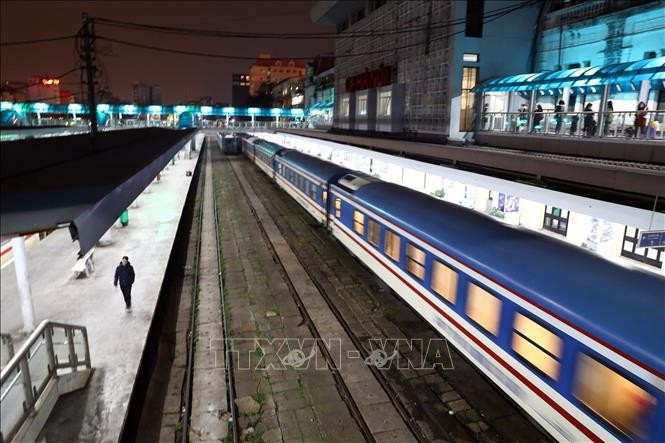
North–South train departing from Hanoi Station (File photo: VNA)

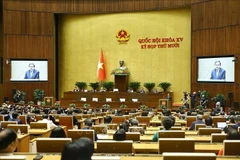
Hanoi (VNA) – The National Assembly (NA) held group discussions on the afternoon of June 16 to scrutinise the draft revised Railway Law, part of its ongoing 9th session.

Minister of Construction Tran Hong Minh stated that while the 2017 Railway Law has yielded positive results, it has also revealed a number of institutional and regulatory bottlenecks that have hindered the efficiency and effectiveness of railway infrastructure development. As Vietnam prepares to implement major rail projects in the coming period, a series of specific mechanisms and policies will be necessary.

To that end, the ministry has proposed amending the law to incorporate these mechanisms, aiming to build a consistent legal framework, Minh said. The draft has already received feedback from the Government and the Politburo and is currently being refined following a review by the NA’s competent agencies.

According to the minister, the revised law introduces new provisions on capital mobilisation and the promotion of the private economic sector’s investment. Five private investors have already registered to participate in upcoming railway projects.

One of the notable additions to the draft law is the integration of railway development with urban planning models. Instead of relying solely on ticket revenues, investors may be granted rights to exploit land around railway stations and urban areas, thereby generating resources for reinvestment.

The draft law also proposes streamlined investment procedures to reduce project preparation time and lower costs for the State, Minh noted.
anhthep.jpg
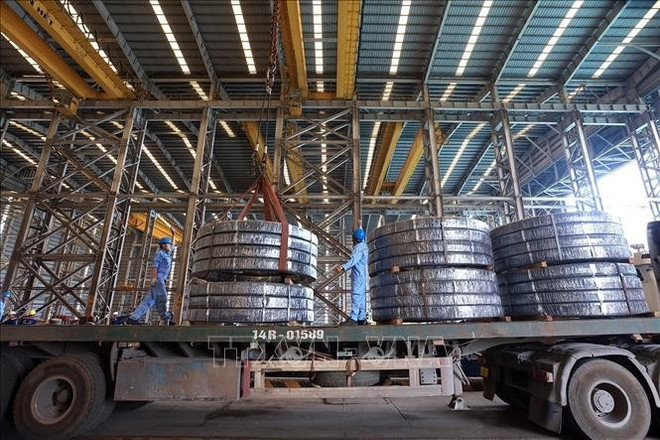
Vietnamese steel and mechanical engineering firms are poised for investment boost if the revised railway law is adopted. (Photo: VNA)


Lawmakers broadly supported the proposed amendments which they said will not only help modernise the railway system but also provide a favourable legal corridor for developing the railway industry and attracting investment from various economic sectors.

The revisions' focus on sci-tech application, international cooperation, and the improvement of human resources quality will contribute to a sustainable and globally integrated railway sector, they opined.

Regarding railway infrastructure requirements stipulated in Article 10 of the draft, deputies proposed clearer stipulations tailored to each category of railway within the national system. They also called for the inclusion of partnership mechanisms, tendering procedures, investor rights, and the use of digital technologies and artificial intelligence in railway management and operations./.
VNA

See more

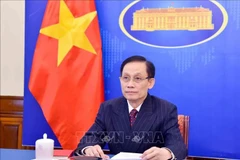
Vietnamese Minister of Foreign Affairs Le Hoai Trung (Photo: VNA)

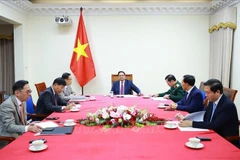
Vietnamese, Lao foreign ministers hold online talks

The two ministers agreed to maintain close coordination in the time ahead and to expand cooperation under the new framework and orientation, underscoring the significance of the two countries’ “great friendship, special solidarity, comprehensive cooperation, strategic cohesion”.

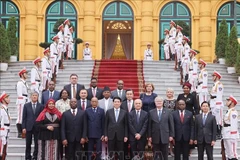
State President Luong Cuong (fourth from left, first row) and newly-appointed foreign ambassadors in Hanoi on December 12, 2025. (Photo: VNA)

State President receives newly-appointed foreign ambassadors

Receiving Egyptian Ambassador Hany Mostafa Mohamed Mostafa Hassan, President Cuong affirmed that Vietnam highly evaluates Egypt’s role, position, and contributions to regional peace and stability. He also congratulated the African country on its achievements in implementing the 2030 Vision.

An overview of the seminar on the Party’s leadership in ensuring macroeconomic stability, renewing the growth model, restructuring the economy and promoting international integration (Photo: VNA)

Vietnam, Cuba exchange theoretical views on Party’s leadership in macroeconomic stability

The two sides explored in depth the Party’s role in leadership, orientation, oversight and strategic coordination in economic management; approaches to implementing economic restructuring programmes alongside the renewal of the growth model; measures to respond to global economic volatility, inflationary pressures and shifts in global trade; and the building of effective strategic advisory bodies to ensure the Party’s comprehensive leadership in a changing context.

Vietnam’s Ambassador to Australia Pham Hung Tam (Photo: VNA)

Australia–Vietnam Policy Institute serves as bridge for bilateral relations

Established in 2022, AVPI serves as a forum for exchanging ideas among businesses, government agencies, non-profits, universities, and scholars in Australia on Vietnam. The institute acts as a platform for policy dialogue, focusing on research and insights on strategic relations and bilateral economic ties.

General Secretary and Chairman of the NA Office Le Quang Minh chairs the press conference announcing the results of the NA's 10th session (Photo: VNA)

10th session helps strengthen public trust in personnel work, NA’s supreme oversight

Personnel consolidation carried out at the NA's 10th session helps ensure continuous, unified, effective, and efficient leadership of the state apparatus; guarantee smooth and uninterrupted direction and governance; and prevent any leadership gaps in critical areas. All positions elected or approved by the legislature meet the key criteria required within the organisational structure.