Hanoi (VNA) – Education plays a central role in narrowing the skills gap for green transition as countries implement comprehensive solutions to achieve the sustainable development goals and realise their net-zero commitment by 2050, according to Deputy Minister of Education and Training Nguyen Van Phuc.
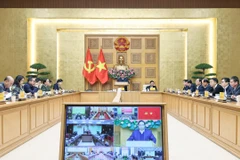
Speaking at the Ministerial Session on Investing in People – Shaping the Workforce for the Future Economy held in Hanoi on April 17 within the framework of the 4th Partnership for Green Growth and the Global Goals 2030 (P4G), Phuc said Vietnam has issued comprehensive education policies and regulations aimed at facilitating the development of industries associated with the circular economy, creating a foundation for the growth of a green workforce.
The regulations stipulate training programme standards as well as quality assurance and accreditation, he said, adding Vietnam also updated new subjects while enhancing equality in education, thereby ensuring transparency and improving education quality throughout the system.
The development of green industries such as smart waste management, recycling technologies, and sustainable logistics have all been prioritised, he stressed.
Mentioning policies for developing a workforce oriented toward a green future, Phuc stated that as the demand for high-quality and highly skilled human resources is an urgent issue for every country, Vietnam has implemented the strategy for education and training development for 2021-2030 with a vision to 2045. It identifies university autonomy and digital transformation as strategic breakthroughs to enhance high-quality human resources training for the 21st century.
The Ministry of Education and Training has approved priority training programmes for key national- and ASEAN-level occupations, with the goal of creating high-quality human resources ready to promote green innovation.
Vietnam's green transition process places people at the centre by creating sustainable employment opportunities, ensuring workers can access jobs in the green economy, and improving quality of life through clean technology, renewable energy, and green cities, he emphasised.

International delegates at the discussion shared experiences on identifying gaps between existing occupations and skills, and new ones for the green transition. These include specific policies to prepare human resources for a green future, and successful cooperation models between governments, businesses, and domestic and international organisations to build a green workforce.
Colombian Vice Minister of Foreign Affairs for Multilateral Affairs Mauricio Jaramillo Jassir highlighted his country's focus on people-centred investment strategies, integrating green growth into national development policies while strengthening retraining programmes and social protection during the workforce transition.
Rwanda's Minister of Environment Valentine Uwamariya emphasised investing in both people and infrastructure, with specialised vocational training in solar energy, sustainable agriculture, and green construction, and fostering public-private partnership to create green employment opportunities.

Asian Development Bank (ADB) Country Director for Vietnam Shantanu Chakraborty recommended parallel strategic priorities, including substantial education investment, practical "green" curricula across all education levels, lifelong learning environment, and governments’ support policies like tax incentives and sponsorship for research and development.
The ADB advocates closer coordination between education institutions, businesses, and government agencies to narrow skills gaps and deepen community participation in green initiatives./.