Energy Asia 2025 kicks off in Malaysia

Malaysian Prime Minister Anwar Ibrahim noted that the Asia-Pacific region accounted for half of global energy consumption and 60% of greenhouse gas emissions in 2024. Despite this, regional countries, including eight of ten ASEAN member states, remain committed to climate goals, including net-zero emissions and tripling global renewable capacity by 2030.

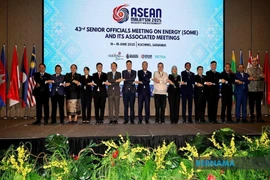
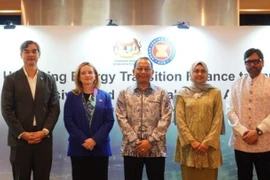
Kuala Lumpur (VNA) – Energy Asia 2025 - a premier thought leadership and business advocacy forum, championing Asia’s pivotal role in the global energy transition - kicked off in Kuala Lumpur, Malaysia, on June 16, gathering over 4,000 delegates and 180 global speakers from 50 countries and territories to discuss the region’s energy transition.

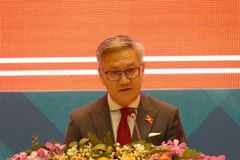
Addressing the event, Malaysian Prime Minister Anwar Ibrahim noted that the Asia-Pacific region accounted for half of global energy consumption and 60% of greenhouse gas emissions in 2024. Despite this, regional countries, including eight of ten ASEAN member states, remain committed to climate goals, including net-zero emissions and tripling global renewable capacity by 2030.

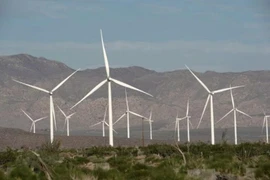
PM Anwar stressed the need for clear financial frameworks to attract investment in renewable energy, especially as Southeast Asia received only 2% of global clean energy funding last year, despite vast potential in wind energy in Vietnam, hydropower in Laos, solar energy in Malaysia, and geothermal in Indonesia.

He emphasised modernising regional power grids, citing ASEAN's progress on the ASEAN Power Grid (APG) and Malaysia’s own plans to invest 43 billion MYR (10.1 billion USD) in grid upgrades using AI and battery storage.

The Malaysian leader also warned that fossil fuels still dominate global supply and called for a fair energy transition that does not leave vulnerable populations behind. He said energy security must also ensure social equity and universal access.

The Association of Southeast Asian Nations (ASEAN) has developed a regional Carbon Capture and Storage (CCS) roadmap, and Malaysia recently passed the Carbon Capture, Utilisation and Storage Bill 2025. The country is cooperating with over 10 international partners to position CCS as both a decarbonisation tool and potential revenue stream, according to the PM.

Themed “Delivering Asia’s Energy Transition,” the three-day event features over 50 strategic dialogues, aiming to strengthen cross-border cooperation in clean energy deployment, decarbonisation, and sustainable economic growth./.
VNA

See more

A healthcare worker performs a swab test on a patient during influenza symptom screening at a community health centre in Banten, on January 7, 2026. (Photo: antaranews.com)

Indonesia reports first death related to so-called super flu

Yovita Hartantri, head of the New and Re-emerging Infectious Diseases Team at Hasan Sadikin Regional Hospital in Bandung, said the hospital treated 10 patients with influenza A subclade K between September and November last year. The patients exhibited a range of symptoms, with at least three developing severe complications.

Thailand enters technical deflation: Expert

Thailand enters technical deflation: Expert

Associate Professor Thanavath Phonvichai, President of the University of the Thai Chamber of Commerce and Chairman of the Centre for Economic and Business Forecasting, attributed the current bout mainly to lower production costs, particularly cheaper fuel and persistently low agricultural prices.

Indonesia spots four Sumatran tigers at national park

Indonesia spots four Sumatran tigers at national park

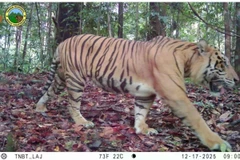
Camera traps installed in Bukit Tigapuluh National Park of Indonesia have recorded four individual Sumatran tigers (Panthera tigris sumatrae), providing strong evidence that the conservation area's ecosystem remains well preserved.

Deputy Prime Minister and Agriculture Minister of Thailand Thammanat Prompao (Photo: The Nation)

Agricultural envoys ordered to boost Thai crop exports

Deputy Prime Minister and Agriculture Minister of Thailand Thammanat Prompao said that the ministry is prioritising a “market-led, innovation-supported, higher income” strategy, built on three key pillars: strengthening confidence in core, established markets to protect Thailand’s market share; targeting high-potential products to open new opportunities, including dried seahorses, dried geckos, live crocodiles for consumption, and breeding crocodile parent stock for farming; and expanding networks by deepening cooperation with key trading partners, including China, and widening sales channels, such as digital platforms, so Thai products can reach consumers more directly.

Illustrative image (Photo: Internet)

Thailand maps out national semiconductor strategy

Under the strategy, Thailand will prioritise power, sensor, photonics, discrete and analog semiconductors, which are closely linked to the country’s established electronics manufacturing base and supply chains serving the automotive, energy, data centre and industrial sectors.

MDEC headquarters (Photo: nabalunews.com)

Malaysia’s digital exports surge

Malaysia's digital exports recorded 6.8 billion RM (1.67 billion USD) between 2024 and the first half of 2025, marking a milestone in the country’s development journey of digital economy.