Exploring Hanoi by public transport: fresh boost for tourism

The operation of the cultural train, Metro Line 2A, and bus routes not only eases traffic congestion but also opens new opportunities to explore Hanoi in a modern, eco-friendly way.

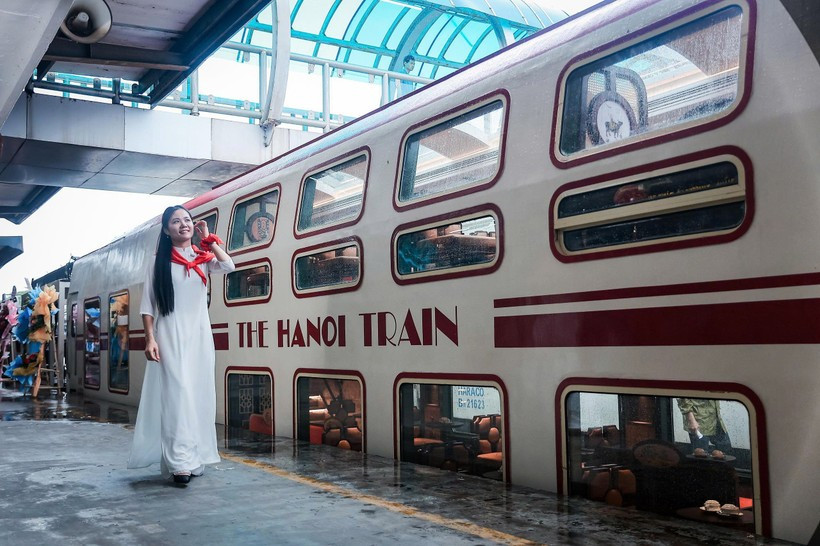
The cultural train tour The “Hanoi Five City Gates” Train (The Hanoi Train) offers a distinctive and culturally rich tourism product. (Photo: VNA)

Hanoi (VNA) – As cultural industries grow rapidly, Hanoi is opening a new direction for tourism by combining sightseeing with modern public transport such as metro lines and buses.

It is expected to provide convenient and unique journeys and create innovative tourism products that can give the capital’s tourism sector a fresh boost.

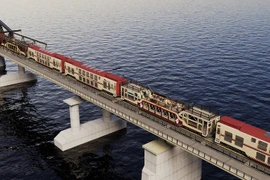
On the occasion of the 80th anniversary of the August Revolution, the cultural train tour The “Hanoi Five City Gates” Train (The Hanoi Train) was officially launched, offering a distinctive and culturally rich tourism product. From September 3, the train has been running on the Thang Long–Kinh Bac route, connecting Hanoi with the Quan ho (love duet) folk music region of Bac Ninh.

On board, visitors can enjoy traditional "xam" (blind wanderers' music) and "cheo" (Vietnamese traditional opera) singing alongside contemporary music, and sample iconic Hanoi delicacies such as green rice and lotus tea. Each carriage is decorated to reflect the city’s history and identity: one evokes Hanoi’s subsidy-era lifestyle, another features the iconic Long Bien Bridge, while others recreate images of old collective housing blocks. The journey also introduces the cultural heritage of Bac Ninh, from Quan ho singing to Dong Ho folk painting. Tickets quickly sold out after the first commercial trips on September 6.
du-khach.jpg
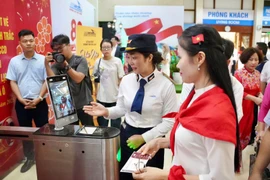
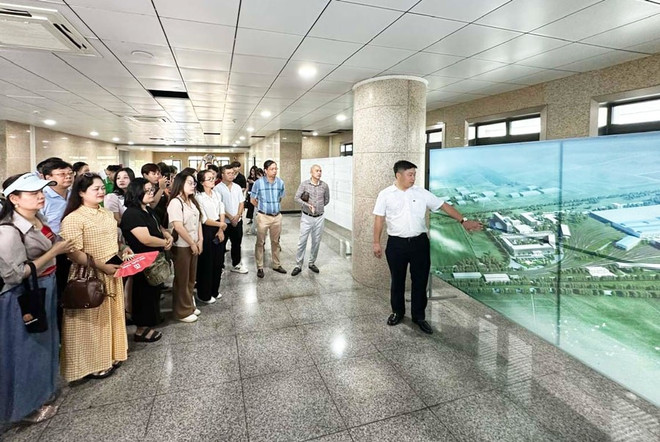
Tourists visit the Hanoi Metro control centre of Metro Line 2A from Cat Linh station to Yen Nghia station. (Photo: hanoimoi.vn)

Earlier, in August, the Hanoi Department of Tourism and Hanoi Metro launched another tourism product on Metro Line 2A (Cat Linh–Yen Nghia). Stretching 13km with 12 stations, the line connects to major attractions such as President Ho Chi Minh’s Mausoleum, the Temple of Literature, the National Cinema Center, Royal City shopping mall, Van Phuc Silk Village, and Van Quan Lake. Visitors can even tour the control centre, take photos, and try out a train-driving simulator.

Alongside the rail system, Hanoi has expanded bus routes to tourism sites. Beyond the popular double-decker city tour, electric buses now link the city centre with destinations such as Bat Trang Pottery Village. During the ongoing national exhibition celebrating Vietnam’s 80-year journey of independence, 20 free electric bus routes have carried large numbers of visitors.

According to Deputy Director of the Hanoi Department of Tourism Tran Trung Hieu, the operation of the cultural train, Metro Line 2A, and bus routes not only eases traffic congestion but also opens new opportunities to explore Hanoi in a modern, eco-friendly way.

Nguyen Van Ngoc, Deputy General Director of Hanoi Metro, said that transforming transport infrastructure into cultural tourism products is a creative step that expands the city’s potential for urban tourism. This approach also represents a “creative reuse” of urban assets, linking them with cultural and economic development.

Tourism experts noted that while these products are attracting strong attention, Hanoi must develop long-term strategies to sustain their appeal. Chairman of the Hanoi UNESCO Travel Club Truong Quoc Hung stressed that cultural and experiential activities need to be expanded so that each train or bus ride becomes a genuine cultural journey. For rail-based products, he suggested offering package tours that combine tickets with accommodation and sightseeing.

Similarly, Vice Chairman of the Hanoi Tourism Association Nguyen Tien Dat called for stronger partnerships with localities and businesses to diversify destinations, enhance culinary and shopping experiences at stops, and build on successful international models of public-transport-based tourism.

Hanoi’s tourism strategy prioritises sustainable development and a green, modern urban environment.

According to Director of the city’s Department of Tourism Dang Huong Giang, more surveys and pilot programmes will be implemented to design and perfect tourism products linked to public transport, with the goal of making the capital more attractive to visitors in the years ahead./.
VNA

See more

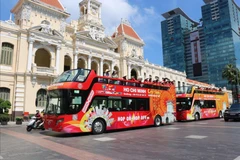
A double-decker sightseeing bus in Ho Chi Minh City. (Photo: VNA)

HCM City elevates destination appeal, enhances tourism workforce quality

As Ho Chi Minh City’s tourism sector continues to sustain growth momentum, it is shifting strongly from post-merger recovery to development acceleration, with a focus on restructuring destination spaces to offer diverse tourism models and attract more domestic and international visitors.

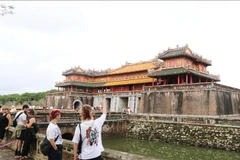
Visitors tour Ngo Mon (Noon Gate) at the Hue Imperial Citadel. (Photo: VNA)

Visit Vietnam Year – Hue 2025: renewing heritage, shaping distinct brand

Visit Vietnam Year – Hue 2025 has left a series of strong imprints, reflecting a marked transformation in Hue’s tourism in terms of scale, quality and brand positioning. More than a programme of events, it has become a powerful driver, helping position Hue as a competitive cultural and heritage tourism centre in the region.

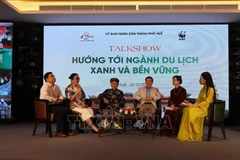
A view of the talkshow within the conference in Hue on December 12 to review and discuss strategic orientations for the 2023-2025 roadmap to reduce plastic waste in the local tourism sector. (Photo: VNA)

Hue accelerates shift toward green, low-plastic tourism models

Over the past three years, Hue tourism authorities have strengthened communication and advocacy for plastic waste reduction through 10 training sessions with 690 participants, “Coffee Talk” events, professional Zalo groups, and direct engagement with businesses. As a result, 102 enterprises and business households have signed commitments to reduce plastics, and 12 hotels have pioneered plastic-reduction practices.

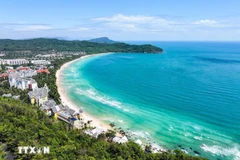
The inaugural flight from New Delhi lands at Phu Quoc International Airport (Photo: Sun Group)

Phu Quoc welcomes new direct flights from India

Phu Quoc International Airport welcomed over 180 Indian travellers on a new direct flight from New Delhi on December 10, marking the start of a month-long flight series that will link the two destinations and bring a fresh wave of visitors to Vietnam’s pristine island.

Visitors pose for a photo at Ben Thanh Market in HCM City (Photo: VNA)

HCM City speeds up digital tourism to draw more travellers

Following its goal of building a friendly destination, the Ho Chi Minh City Department of Tourism is rolling out a range of local stimulus programmes, with a focus on bringing the city’s signature attractions closer to domestic and international visitors through digital platforms.

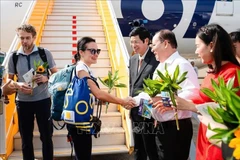
Foreign visitors are touched to receive meaningful gifts from their Vietnamese friends (Photo: VietnamPlus)

Vietnam welcomes more than 19 million international visitors in 11 months

A UN Tourism report highlighted Vietnam’s performance as one of the most notable recoveries worldwide. While tourism across the Asia–Pacific has rebounded to only around 90% of pre-COVID levels, Vietnam is among a select group of destinations, alongside Japan, recording rapid and sustained growth, it said.

Foreign visitors explore Hanoi’s old quarters by cyclo, admiring the city’s timeless beauty. (Photo: VNA)

Vietnam draws French holidaymakers during Christmas, New Year

Patrice Caradec, President of the Syndicate of French Tour-Operators (SETO), said the country has not attracted as many French tourists since COVID-19. As Vietnam reopened later than several Asian destinations, pent-up demand has surged with the full recovery of tourism. The “S-shaped” nation has now returned to pre-pandemic levels of French arrivals.