Exporters make contingencies as fear of tariffs looms

Vietnamese exporters have proactively diversified their markets from the start of the year to mitigate risks as they may soon face significant tax hikes globally, said industry insiders and experts.

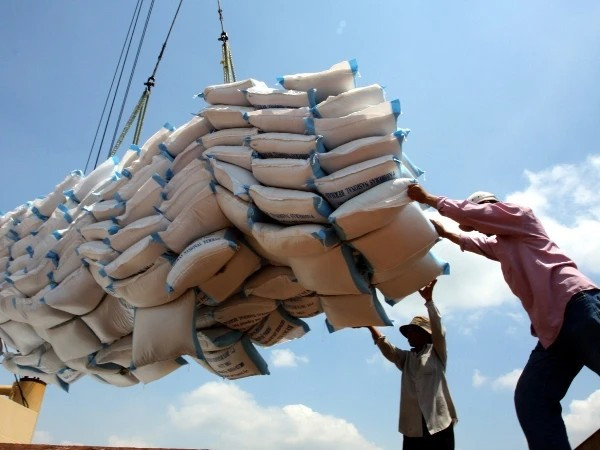
A rice shipment being readied for transport in the Mekong Delta province of Dong Thap. (Photo: VNA)

Hanoi (VNS/VNA) - Vietnamese exporters have proactively diversified their markets from the start of the year to mitigate risks as they may soon face significant tax hikes globally, said industry insiders and experts.

Chairman of the members’ council at Saigon Industry Corporation (CNS), Nguyen Phi Long, said CNS has made plans for a scenario in which it faces higher tariffs. CNS’s export portfolio includes high-quality plastic products and moulds, primarily headed to Europe and the US.

“Trade defence investigation, however, has become a real concern,” Long said.

In 2024 alone, the US initiated 11 trade defence cases against Vietnamese exports, accounting for roughly one-third of the 32 cases across 12 other markets. Investigated goods included solar panels, shrimp, corrosion-resistant steel, moulded fibre trays and paper plates. Investigations into cross-border subsidies further complicate matters. Meanwhile, other products, including plywood, wooden cabinets, hot-rolled steel and truck tyres, have been flagged for potential trade defence actions.

He said Vietnamese exporters must seek strategies to enhance product quality and diversify export markets as a countermeasure for global trade uncertainties.

According to a Ministry of Industry and Trade report, Vietnam has established trade relations with over 200 countries and territories. In 2024, the ten largest export markets for Vietnam were led by the US, with an export turnover of 119.6 billion USD, followed by China (50.8 billion USD), the EU (42.3 billion USD), the Republic of Korea (21 billion USD), and Japan (20.1 billion USD).

“To increase exports to the US, domestic businesses should collaborate with local importers and distributors to select products of clear origin,” said Do Ngoc Hung, Vietnam’s trade counsellor in the US.

He advised exporters to import raw materials from the US to help balance trade. Strengthening understanding and compliance with trade defence regulations is a proven way to help businesses minimise risks and ensure smooth operations.

General Director of ABC Bakery Kao Sieu Luc said that Vietnamese businesses should develop market share for premium products when they are capable. In 2024, ABC Bakery’s export orders increased by 40% compared to the previous year, thanks to investments in producing products for export to Japan. The company has secured orders to produce up to June 2025, with 60 containers per month heading for Japan. While exporting to nearby markets has significantly reduced logistics risks, businesses must align their production and materials with new market segments to stay competitive.

Economists advised businesses to adapt to new trade flows by continuously improving product quality, seeking technological solutions to optimise costs, enhancing automation through high-tech applications and artificial intelligence (AI) and accelerating digital transformation and green initiatives to meet global sustainability standards.

In addition, researching and using new raw materials to reduce dependence on imports and lower production costs is also essential. Strengthening direct and indirect export channels while securing positions in global supply chains will help mitigate risks in strict markets./.

VNA

See more

A refilling station of Petrolimex (Photo: VNA)

Import tariffs on certain fuel products reduced to 0%

Rising tensions in the Middle East, particularly the conflict involving the US, Israel and Iran, have significantly affected the global energy market, especially shipping activity through the Strait of Hormuz – a strategic route for transporting crude oil from the region.

Fishermen raise the national flag before heading out to the sea to affirm Vietnam’s sovereignty over its seas and islands. (Photo: VNA)

Dong Thap promotes IUU awareness from start of fishing season

Gia Thuan commune, located in the eastern part of the province, is a key fishing locality with 563 fishing vessels, including 423 offshore boats and 140 nearshore vessels, producing an average annual catch of over 42,970 tonnes of seafood.

Industrial production surges in the first two months of 2026. (Photo: VNA)

Industrial production posts strong growth in first two months

According to the National Statistics Office (NSO) under the Ministry of Finance, the index of industrial production (IIP) in February was estimated to decrease 18.4% from the previous month but increase 1% year on year. Overall, in the January–February period, the IIP rose 10.4% compared with the same period last year.

A delegation from the Nghe An provincial People’s Committee inspects production and business activities at the VSIP Nghe An Industrial, Urban and Service Park. (Photo:nhandan.vn)

Nghe An steps up reforms to attract FDI

In 2025, the provincial People’s Committee licensed 25 new FDI projects and approved capital adjustments for 20 others, bringing the total newly registered and additional investment to more than 1 billion USD. Many large-scale projects in the Southeast Nghe An Economic Zone have already become operational, contributing to export growth, state budget revenues and job creation.

Nearly 35,500 enterprises are newly registered nationwide, with total registered capital reaching nearly 313.7 trillion VND and more than 167,500 registered workers. (Photo: VNA)

Nearly 35,500 new businesses set up in first two months

The enterprises registered combined capital of about 313.7 trillion VND and more than 167,500 employees. Compared with the same period last year, the number of new businesses surged by 70.7%, while registered capital rose by 36.1% and registered labour increased by 19.1%.

The yarn factory of Unitex Textile and Dyeing Company Limited applies new technology to optimise operations using an automated model. (Photo: VNA)

Resolution 68: International lessons for private sector development

A common feature in many successful economies is a fundamental shift in the perception of private enterprises. In countries such as Singapore, Germany, Republic of Korea (RoK) and China, private firms are viewed not mainly as entities requiring strict control but as development partners and key forces generating growth, jobs and innovation.