Farmers increase technology application in fruit cultivation

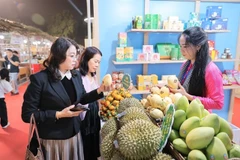
In recent years, fruit farmers have applied science and technology to cultivation in an effort to improve productivity, fruit quality, and income value.

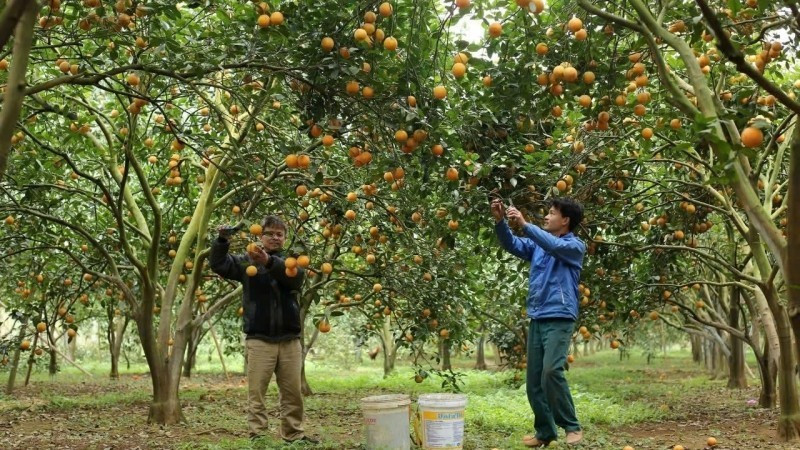
Hoa Binh farms pick oranges (Photo: VNA)

Hanoi (VNA) - In recent years, fruit farmers have applied science and technology to cultivation in an effort to improve productivity, fruit quality, and income value.

Numerous large-scale, concentrated production areas have been formed, serving both domestic demand and export.

The Plant Protection and Production Department under the Ministry of Agriculture and Environment reported that the northern midland and mountainous regions have about 271,900 hectares of fruit trees, accounting for 21.4% of the country’s total. Farmers have adopted advanced cultivation processes, including more than 3,000 hectares of banana, over 3,400 hectares of longan, 4,172 hectares of orange, and more than 10,000 hectares of pomelo. There are 20,700 hectares of fruit trees certified under VietGAP and equivalent standards, and 67 hectares meeting organic standards.

However, according to the department, fruit cultivation in these regions is facing difficulties due to the common small-scale and scattered production, which affects quality management, traceability, and product sales.

Traditional irrigation methods remain popular, and water-saving drip irrigation technology is not yet widely applied. Many businesses have not developed raw material areas but mainly collect produce through traders, resulting in uneven quality and high risk.

Phan Huy Thong, Vice President of the Vietnam Gardening Association, commented that much of the cultivation area is on overly steep or poor-quality land, and unreliable irrigation sources affect productivity and product quality. Additionally, the quality of seedlings and materials is not strictly controlled, and the number of growing areas with traceability codes remains limited.

According to experts, in the coming period, ministries, sectors, and localities should prioritise the selection and restoration of indigenous and local specialty varieties, and continue to invest in and restructure fruit crops toward high quality, good yield, and disease and pest resistance.

It is essential to focus on applying high technology in production; expanding the area under VietGAP, GlobalGAP, organic, circular, and ecological farming standards; and applying digital technology in product management and traceability to enhance transparency and build consumer trust./.

VNA

See more

The Quang Tri coastal road project, spanning nearly 55km, is among key projects with regional connectivity that play an important role in promoting socio-economic development in the central province of Quang Tri. The project is expected to be completed by the end of 2026.(Photo: VNA)

Public investment disbursement slow despite record capital scale

As of February 28, total disbursed capital reached 55.74 trillion VND, equivalent to 5.6% of the plan assigned by the Prime Minister. Of the figure, disbursement of the central budget was estimated at 10.18 trillion VND, or 2.9% of the plan, while that of local budgets totalled 45.56 trillion VND, reaching 7% of the target.

Delegates taste UK food (Photo: VNA)

Taste of UK week promotes British foods in Vietnam

The “Taste of the UK” food week, held for the first time in Ho Chi Minh City from February 26 to March 11, is an opportunity to promote British food products and strengthen their presence in Vietnam, while giving local consumers a chance to experience the diversity of UK cuisine.

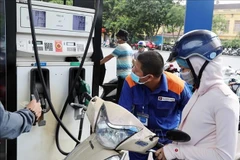
A customer purchases E5RON92 bioethanol fuel at a PVOIL gas station on Thai Thinh street, Hanoi (Photo: VNA)

Retail fuel prices rise sharply in March 5 adjustment

According to the Ministry of Industry and Trade, the global fuel market during the latest price adjustment period from February 26 to March 4, 2026 was influenced by several major factors, including the escalating military conflict between the US – Israel coalition and Iran.

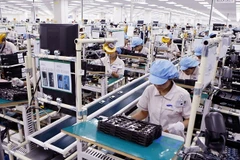
Workers at a textile factory in Hanoi (Photo: VNA)

Supporting industries seek fresh growth momentum

Against a backdrop of global uncertainty and supply chain restructuring, the Government has introduced a range of measures aimed at injecting new momentum into domestic manufacturing. New provisions covering workforce training, testing and certification, trade promotion and technology upgrades have been implemented.

Workers package fruits at the factory of Vina T&T Group (Photo: nhandan.vn)

Vietnamese exporters adapt to escalating Middle East conflict

The Ministry of Industry and Trade’s Export-Import Department forecasts upward pressure on global prices for consumer goods, fuel, and crude oil in the coming time. Such hikes could exert indirect but broad negative effects on Vietnam’s overall production and trade, with particular exposure in exports destined for the Middle East.

The MoIT will closely monitor global oil prices, output, inventories and trade flows to adjust imports and domestic supply accordingly. - Illustrative image (Photo: VNA)

Vietnam triggers fuel contingency plan over Middle East crisis

The Ministry of Industry and Trade will closely monitor global oil prices, output, inventories and trade flows to adjust imports and domestic supply accordingly. It will also intensify oversight of key traders’ compliance with their 2026 minimum reserve obligations.

Workers process tra fish for export. (Photo: VNA)

Agro-forestry-fishery exports up over 17% in first two months

Of the total export value in the January–February period, agricultural products accounted for 6.09 billion USD, up 17.1% year-on-year. Seafood exports reached 1.76 billion USD, marking a sharp increase of 23.3%, while forestry products brought in 2.82 billion USD, up 7.4%.

Many private businesses are investing in the service and real estate sectors in Da Nang. (Photo: VNA)

Da Nang augments efforts to attract high-quality investments

Da Nang has consistently implemented business support policies and a selective investment attraction strategy, prioritising high technology, smart city building and sustainable development, thereby strengthening investor confidence and enhancing the city’s competitiveness in the new development phase.

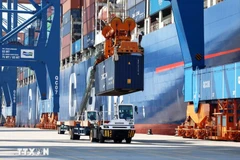
Export activities at the Cai Mep - Thi Vai port cluster (Photo: VNA)

Southern region opens wide to new wave of US investment

Since 2025, US enterprises have increasingly explored investment opportunities across provinces in the Southern Key Economic Region. Ho Chi Minh City has emerged as a leading destination, highlighted by multiple cooperation agreements concluded in late 2025.

Visitors explore Vietnamese furniture products at HawaExpo 2026. (Photo: VNA)

Ho Chi Minh City’s HawaExpo 2026 triples in scale

Held under the theme “Gateway to Vietnam Furniture Prowess” and featuring more than 2,500 booths, the four-day event is expected to serve as a gateway to exploring the genuine capabilities of Vietnam’s wood and furniture industry, as well as a strategic trading hub for international markets.

Deputy Governor of the State Bank of Vietnam Pham Thanh Ha answers reporters’ questions. (Photo: VNA)

SBV vows agile policy response amid global headwinds

In the coming period, the SBV will calibrate interest rate management in line with macroeconomic developments and inflation trends, while requiring credit institutions to publicly disclose lending rates to enhance transparency.