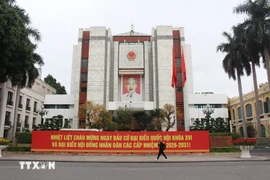
New York (VNA) – Media outlets and researchers in the US and other countries have offered various assessments of Vietnam’s upcoming election of deputies to the National Assembly and People’s Councils at all levels for the 2026–2031 term, highlighting the event as an important political milestone in the country’s development process.
In its article titled “Ten Elections to Watch in 2026,” the US-based Council on Foreign Relations (CFR) listed Vietnam’s National Assembly and People’s Council election among notable political events of the year. The article noted that the election will reflect the political will and high level of consensus following the 14th National Congress of the Communist Party of Vietnam.
Other research organisations have also observed that the election will take place as Vietnam continues to promote economic and administrative reforms. According to the East Asia Forum of the Australian National University, the vote, scheduled for March 15, would represent a “strategic turning point” as Vietnam seeks to maintain economic growth while adjusting its foreign policy amid intensifying competition among major powers.
Meanwhile, the South China Morning Post commented that Vietnam is accelerating institutional reforms and strengthening anti-corruption efforts. In this context, the new National Assembly is expected to continue playing an important role in improving the legal framework and enhancing oversight of the State apparatus.
In a podcast released on March 10 on the Stratfor website, Nate Fischler, an Asia-Pacific analyst at geopolitical intelligence firm RANE, said the upcoming election could help clarify policy orientations for the new development phase and may have some impact on Vietnam’s political and economic environment.
US scholars have also expressed positive views on the event. On his personal social media account, Professor Edmund Malesky of Duke University wrote that the election will help consolidate the institutional foundation for Vietnam’s next stage of development. He also predicted that the new legislature may see the emergence of more capable young faces in policymaking, thereby strengthening the National Assembly’s role in law-making and supervision of administrative reforms./.