German scholar confident in Vietnam's prosperity

Westarp highlighted Vietnam’s emergence as a “middle power” with increasing international influence.

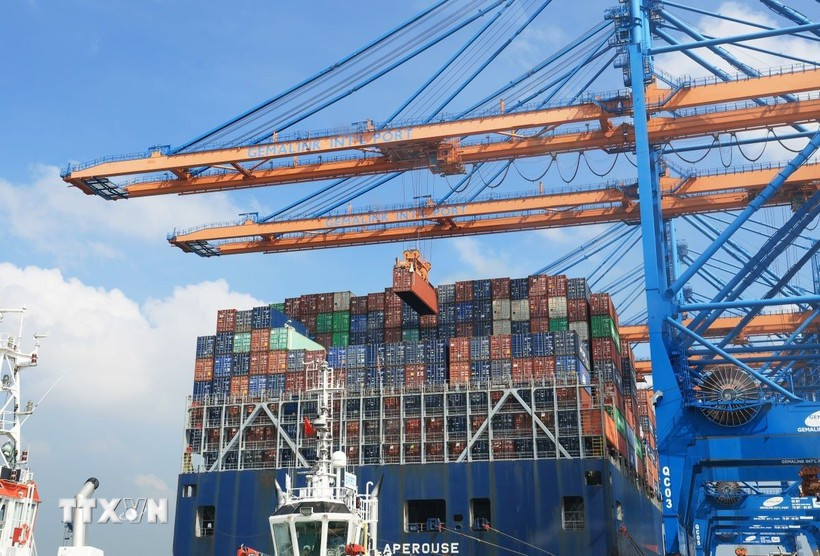
Loading containers onto a 200,000 DWT vessel at Gemalink International Terminal, Phu My township, former Ba Ria-Vung Tau province (now part of Ho Chi Minh City). (Photo: VNA)

Berlin (VNA) – Vietnam’s early completion of the Millennium Development Goals (MDGs) and its active pursuit of the Sustainable Development Goals (SDGs) demonstrate strong governance, inclusive policies, and effective global cooperation, said Ludwig Graf Westarp, Vice President of the Vietnam – Germany Association.

In an interview with the Vietnam News Agency's correspondent in Berlin on the occasion of the 80th National Day (September 2, 1945 – 2025), Westarp, who is a lecturer at Dortmund University of Technology and once served as Chief Representative of the German Association of Small and Medium-Sized Enterprises in Vietnam, said these achievements have improved living standards, reduced inequality, and promoted sustainable growth, laying the foundation for a happier and more prosperous Vietnam.

Westarp, who first visited Vietnam in 2012, said the Southeast Asian country and its people have greatly enriched his life. Since then, both his career and family have developed strong ties with Vietnam.

According to the German scholar, after nearly 40 years of the Doi moi (Renewal) process, Vietnam has transformed from a poor, agriculture-based country into a fast-growing, globally integrated middle-income economy. Rising GDP, industrialisation, and trade expansion have reduced poverty and improved infrastructure, while enhancing social welfare, expanding healthcare and education, and raising living standards.
economic-growth-2.jpg
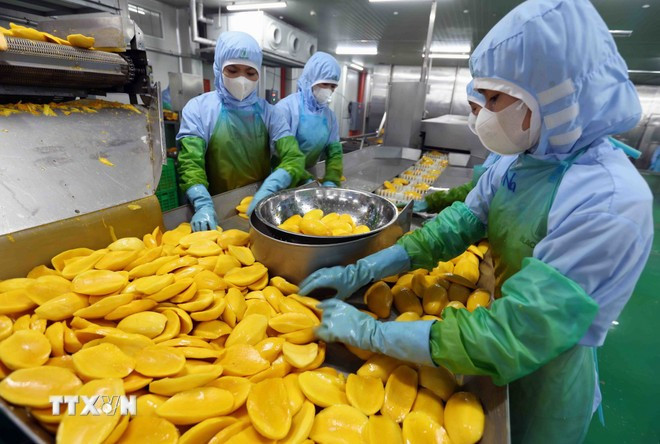
Processing agricultural products for export. (Photo: VNA)

Westarp highlighted Vietnam’s emergence as a “middle power” with increasing international influence. The country has twice served as a non-permanent member of the UN Security Council, held ASEAN Chairmanship in 1998, 2010 and 2020, hosted APEC Years in 2006 and 2017, and is currently a member of the UN Human Rights Council. It has also joined major trade agreements such as the Comprehensive and Progressive Agreement for Trans-Pacific Partnership (CPTPP), the EU–Vietnam Free Trade Agreement (EVFTA), and the Regional Comprehensive Economic Partnership (RCEP), while upgrading ties with the US, Japan, and Australia. These steps place Vietnam at the centre of regional discussions on supply chains, digital trade, climate, and security.

Vietnam’s contributions to UN peacekeeping have grown from its first deployment in 2014 to regular troop rotations. As ASEAN Chair in 2020 under the theme “Cohesive and Responsive,” the country helped establish mechanisms to respond to the COVID-19 pandemic. Hosting APEC in 2017, it led the adoption of the Da Nang Declaration on inclusive, rules-based growth.

The country has also pursued an independent foreign policy, combined with the “Four No's” defence policy, and maintained a maritime position based on international law, especially the 1982 UN Convention on the Law of the Sea (UNCLOS). This approach allows Vietnam to expand partnerships while safeguarding autonomy and minimising the risk of overdependence, Westarp noted.

From a war-torn nation to a country that helps shape international rules, engages actively in trade, and participates in peacekeeping operations, Vietnam today serves as a flexible “bridge” between major powers and the Southern Hemisphere, which is trustworthy enough to assume important diplomatic roles while maintaining an independent and self-reliant foreign policy, he emphasised.

However, the scholar cautioned that Vietnam still faces challenges, including the risk of the “middle-income trap,” productivity gaps, uneven regional development, and environmental pressures. Climate change, resource constraints, and global geopolitical tensions require agile policy responses, while domestic reforms in law, governance, and technology are needed to sustain growth.

Vietnam’s 80-year journey has created unity, economic strength, and international standing for a new era of development. To seize opportunities in digital growth, green transition, and high-value industries, the country must overcome structural weaknesses, environmental pressures, and global uncertainties through reforms, innovation, and sustainable strategies, Westarp added./.
VNA

See more

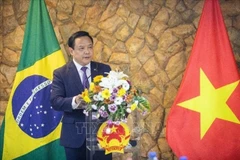
Vietnamese Ambassador to Brazil and Guyana Bui Van Nghi speaks at the event. (Photo courtesy of the Vietnamese Embassy in Brazil)

Vietnam highlights diplomatic gains, growing ties with Brazil, Guyana

On the occasion of the 50th anniversary of Vietnam – Guyana diplomatic ties, Ambassador Bui Van Nghi described the milestone as an opportunity for both sides to deepen political trust, broaden cooperation in potential areas, and make positive contributions to peace, cooperation and sustainable development in the regions and beyond.

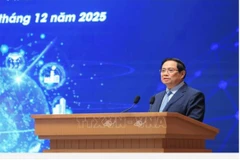
Prime Minister Pham Minh Chinh addresses the third National Forum on Digital Economy and Digital Society in Hanoi on December 20. (Photo: VNA)

Digital economy as driver, digital society as foundation of growth: PM

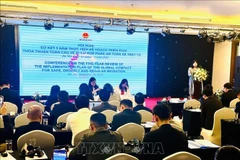
The forum, themed “Developing an inclusive and comprehensive digital economy and digital society to achieve double-digit GDP growth in the 2026–2030 period,” brought together leaders of ministries and localities, technology enterprises, research institutions, experts and representatives of international organisations in Vietnam.

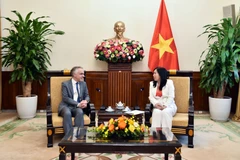
Deputy Minister of Foreign Affairs Le Thi Thu Hang (R) and Benoit Guidée, Director of the Asia–Oceania Department at the French Ministry for Europe and Foreign Affairs meet in Hanooi on December 19. (Photo: VNA)

Deputy FM meets French official

Deputy Minister of Foreign Affairs Le Thi Thu Hang stressed that Vietnam attaches great importance to its relationship with France, the first European Union country with which Vietnam has established a Comprehensive Strategic Partnership, noting that the two sides enjoy a solid foundation and significant potential for further cooperation.

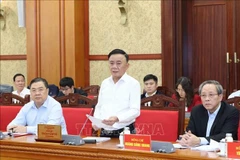
Politburo member and permanent member of the Party Central Committee’s Secretariat Tran Cam Tu speaks at the event in Hanoi on December 19 (Photo: VNA)

Senior Party official reviews preparations for 14th National Party Congress

Politburo member and permanent member of the Party Central Committee’s Secretariat Tran Cam Tu expressed his belief that relevant agencies will continue to make efforts to basically complete organisation- and service-related preparations by December 31, ensuring readiness for the final rehearsals ahead of the opening of the 14th National Party Congress.

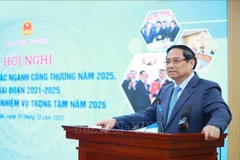
Prime Minister Pham Minh Chinh addressing the conference of the the Ministry of Industry and Trade on December 19 (Photo: VNA)

PM urges industry, trade sector to pioneer in six key areas

Prime Minister Pham Minh Chinh stressed that to make a substantive contribution to national development, the industry and trade sector must also achieve double-digit growth, generate new jobs, strengthen traditional growth drivers such as export and consumption, and accelerate emerging engines of growth, including the green, digital, circular, knowledge-based and sharing economies.

State President Luong Cuong (middle) presents congratulatory flowers to the two promoted officers (Photo: VNA)

Two military officers promoted to rank of Senior Lieutenant General

Lieutenant General Do Xuan Tung, Vice Director of the General Department of Politics of the Vietnam People’s Army (VPA), and Lieutenant General Do Van Banh, Political Commissar of the National Defence Academy were promoted to the rank of Senior Lieutenant General at a ceremony in Hanoi on December 19.

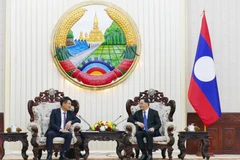
Lao Prime Minister Sonexay Siphandone (R) hosts a reception for Prosecutor General of the Supreme People’s Procuracy of Vietnam Nguyen Huy Tien. (Photo: VNA)

Vietnam–Laos step up cooperation in procuracy sector

They highly valued the effective and substantive cooperation results achieved by the Supreme People’s Procuracies of Vietnam and Laos in recent years, and called on both sides to continue enhancing coordination, stepping up exchanges of delegations at all levels, sharing professional and technical experience, and maintaining and expanding training and capacity-building programmes for officials.