Germany’s EVIPA ratification marks strong vote of confidence in Vietnam

Germany’s decision is widely seen as a clear affirmation of growing confidence in Vietnam’s investment climate, governance capacity and long-term development orientation.

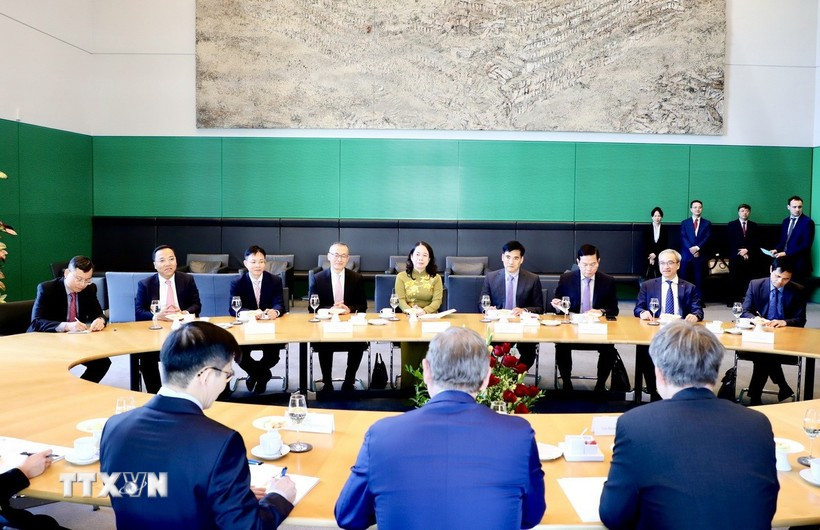
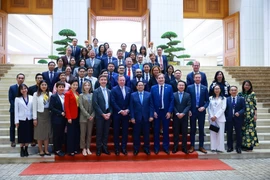
During a meeting with Vietnamese Vice President Vo Thi Anh Xuan on July 2, 2025, Vice President of the German Bundestag (parliament) Bodo Ramelow announced that he and the German Parliament had begun the process of seeking input from relevant parties in order to ratify the EVIPA. (Photo published by VNA)

Berlin (VNA) – Germany’s completion of the ratification process for the EU–Vietnam Investment Protection Agreement (EVIPA) in 2025 – the year marking the 50th anniversary of bilateral diplomatic relations has become a highly symbolic milestone, reflecting the depth of political and economic trust between the two countries.

The move represents not only an important legal step but also carries profound strategic significance for Vietnam–Germany relations in particular and Vietnam–EU ties more broadly.

Amid ongoing volatility in the global economy, Germany’s decision is widely seen as a clear affirmation of growing confidence in Vietnam’s investment climate, governance capacity and long-term development orientation. Beyond its legal implications within the EU–Vietnam framework, Germany’s ratification of EVIPA is also regarded as a strong policy statement: Vietnam has emerged as a long-term strategic investment partner of Europe’s largest economy.

EVIPA is among a new generation of investment protection agreements that set high standards for transparency, investor protection, dispute settlement mechanisms and the responsibilities of host states.

Germany’s approval of the agreement – as Europe’s largest economy and one of the EU’s most influential members – indicates that Vietnam has met the stringent criteria set by European partners for a strategic investment destination.

Observers note that this development reflects Vietnam’s persistent and consistent reform efforts over many years. From improving the legal framework for investment, enterprises and land management to enhancing transparency, streamlining administrative procedures and safeguarding the legitimate rights of foreign investors, Vietnam has gradually built the image of an open, stable and predictable economy. These factors have been instrumental in strengthening trust with partners such as Germany.

International economic experts believe Germany’s ratification of EVIPA sends a message that goes beyond trade and investment. Oliver Massmann, General Director of Duane Morris Vietnam, said it is as strong political signal, demonstrating Germany’s recognition of Vietnam’s strategic role in Southeast Asia.

According to him, Vietnam is among the few countries in the region that possess the necessary conditions to become a new hub for manufacturing, technology and supply chains for Europe amid global economic restructuring.

From a business perspective, EVIPA is expected to create a safe legal corridor for long-term German capital flows into Vietnam. German corporations, known for their cautious investment approach, typically prioritise markets with clear protection frameworks, transparent dispute resolution mechanisms and long-term policy stability. EVIPA meets these requirements, paving the way for large-scale investments in high technology, renewable energy, infrastructure, finance and processing industries.

Analysts also point out that Germany’s ratification of EVIPA during the 50th anniversary of diplomatic ties further enhances its symbolic value. It is not only the outcome of half a century of bilateral cooperation but also an important foundation for a new phase of deeper and more substantive partnership.

For Vietnam, EVIPA represents both an opportunity and a commitment. While the agreement imposes higher standards in governance, environmental protection, social responsibility and the rule of law, it also serves as a positive catalyst for institutional upgrading, improved growth quality and the attraction of more selective and sustainable investment flows.

As the EU seeks reliable partners in the Asia–Pacific to diversify supply chains and reduce dependence on traditional markets, Vietnam is increasingly viewed as a strategic choice. Germany’s ratification of EVIPA can be seen as a "vote of confidence" in Vietnam, affirming the country not only an attractive investment destination but also as trusted long-term partner./.

VNA

See more

A nuclear reactor at the DaLat Nuclear Research Institute (Photo: VNA)

New decree sets roadmap for nuclear infrastructure and workforce development

The decree also covers simulation systems and databases for radiation safety, nuclear safety and nuclear security; specialised computational software for safety assessment; monitoring and command-and-control systems for responding to radiation and nuclear incidents; as well as design documentation, technical manuals, prototype products and other related facilities and equipment.

Hanoi's market surveillance team 2 inspects a shop in Hong Ha ward on July 14. (Photo: VNA)

Growing e-commerce market sees tougher fight against counterfeits

The local e-commerce market has surpassed 30 billion USD this year, recording growth of 25% and accounting for two-thirds of the value of the digital economy. However, this rapid growth has also brought about serious consequences, particularly the widespread proliferation of counterfeit and imitation goods and trade fraud.

The interest rate policy has been adjusted in line with market movements to ensure system liquidity and reduce capital costs. (Photo: VNA)

Banking sector anchors macroeconomic stability, setting stage for new growth cycle

Throughout 2025, the State Bank of Vietnam (SBV) has reaffirmed its role as the central regulatory authority in managing monetary policy, stabilising the financial market, and maintaining macroeconomic balance. Closely monitoring international and domestic economic trends, the SBV steered the monetary policy proactively while closely coordinating with the fiscal policy to achieve the dual objective of controlling inflation and supporting growth.

Professor Reena Marwah from the University of Delhi, and Secretary-General of the Association of Asia Scholars. (Photo: VNA)

Vietnam – A rising star in Asia: Indian professor

Vietnam’s projected GDP growth of around 8% in 2025 shows that its economy is on an impressive growth trajectory, driven by multiple reinforcing engines, said Professor Reena Marwah from the University of Delhi, and Secretary-General of the Association of Asia Scholars (AAS).

Harvesting jackfruit (Photo: VNA)

China to allow import of Vietnamese fresh jackfruits from June 1, 2026

To ensure smooth customs clearance, all orchards and packing facilities participating in exports must be registered and approved by competent authorities of both countries. The list of approved entities granted export codes will be published and regularly updated on the GACC website.

The fruit and vegetable sector is also set to hit a record, with exports projected at around 8.5 billion USD in 2025. (Photo: VNA)

Agro-forestry-fishery exports poised to hit record high in 2025

Agro-forestry-aquatic exports totalled 64.01 billion USD in the first 11 months of 2025. If performance in the final month matches that of recent months, the figure could approach 70 billion USD, far exceeding the 65-billion-USD target set for the year.

A view of Dinh Vu port in Hai Phong city. (Photo: VNA)

Circular on domestic maritime transport permits for foreign vessels issued

Under the circular, which will take effect from February 1 next year, the Minister of Construction will grant the permits for cases such as transporting oversized or overweight cargo or other types of goods using specialised vessels; clearing congested cargo, passengers, and luggage at ports when Vietnamese ships are unable to handle them; and conducting disaster relief, disease control, or emergency humanitarian aid.

At a tax office in Hanoi (Photo: VNA)

Decree regulates corporate income tax incentives

A CIT rate of 15% applies to enterprises with a total revenue in the preceding year of not more than 3 billion VND (114,000 USD), while a CIT rate of 17% applies to enterprises with a total revenue in the preceding year of over 3 billion VND but not more than 50 billion VND.