Vietnam-EU relations entering new phase of challenges, promising prospects

Vietnam-EU trade has nearly tripled within a decade, reaching 67 billion EUR in 2024, despite a turbulent geopolitical environment. Vietnam is now the EU’s largest trading partner in ASEAN, while the EU remains a benchmark market with the highest but most stable standards for Vietnamese exports.

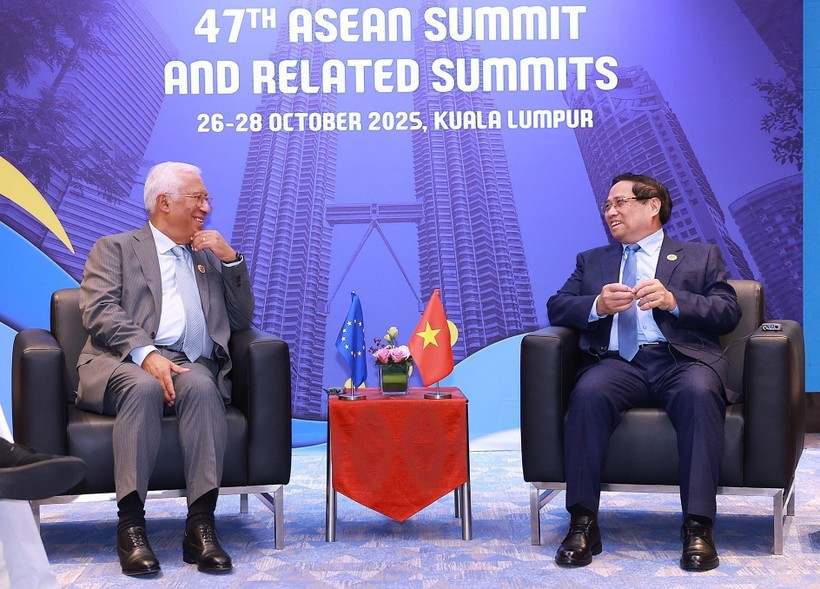
Prime Minister Pham Minh Chinh (R) meets President of the European Council Antonio Costa on the sidelines of the 47th ASEAN Summit in Malaysia. (Photo: VNA)

Hanoi (VNA) – Looking back on 35 years of Vietnam-European Union (EU) relations, one can observe a profound shift in both the scale and quality of engagement between the two sides. The relationship is entering a new phase, marked by challenges and promising prospects for deeper collaboration.

From a partnership initially centred on development aid and assistance in the early years of Vietnam’s Doi moi (Renewal) process, they have today become comprehensive partners across trade, investment, education, science and technology, and notably green transition.

In the early period of economic opening, the bloc was among Vietnam’s largest providers of official development assistance (ODA), supporting institutional reform, poverty reduction, infrastructure upgrades and human resource training. This laid a crucial foundation for building trust and paving the way for a long-term bilateral relationship.

Three major components have shaped the pillars of Vietnam-EU relations over the past 35 years, namely the Framework Cooperation Agreement (1995); the Partnership and Cooperation Agreement (PCA, 2012); and the EU–Vietnam Free Trade Agreement (EVFTA, 2020). The PCA established the frameworks for dialogue on politics, the rule of law, the environment and non-traditional security, while the EVFTA marked a significant step forward, making Vietnam the first developing country in Asia to sign a new-generation FTA with the EU.
Thanks to these agreements, bilateral trade has nearly tripled within a decade, reaching 67 billion EUR in 2024, despite a turbulent geopolitical environment. Vietnam is now the EU’s largest trading partner in ASEAN, while the EU remains a benchmark market with the highest but most stable standards for Vietnamese exports.

Trade continues to serve as the strongest driver of bilateral ties. The EVFTA eliminated more than 70% of tariff lines upon entry into force, giving Vietnam significant advantages in textiles, footwear, electronics and agro-fishery products. In return, EU businesses gained wider market access in processed industries, pharmaceuticals and financial services.
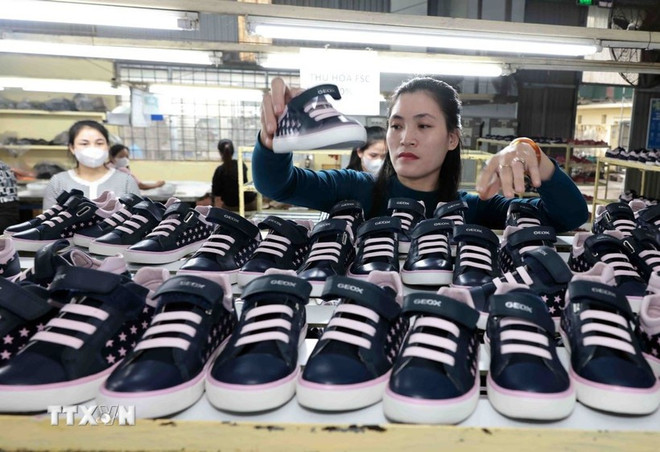
shoes-for-eu-market-vna.jpg
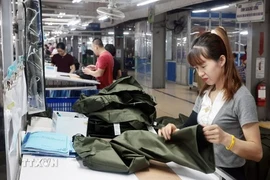
Production of footwear for export to the European market. (Photo: VNA)

Beyond economy, education and people-to-people exchanges form a softer but enduring pillar of the relationship.

Green transition is emerging as a new engine of cooperation. As the EU positions itself as a global hub for low-carbon transition and Vietnam faces severe impacts of climate change, the two sides share strongly complementary interests. Through green cooperation programmes and the 15.5-billion-USD Just Energy Transition Partnership (JETP), the bloc supports the country in offshore wind development, grid-infrastructure upgrades, the circular economy, green finance and the adoption of environmental, social and governance (ESG) standards.

The future of Vietnam-EU trade will hinge on Vietnamese businesses’ ability to meet new EU regulations such as the Carbon Border Adjustment Mechanism (CBAM), the EU Deforestation Regulation (EUDR) and the EU Taxonomy. These pose challenges but also open opportunities for Vietnam to upgrade its national value chains.

Science, technology and innovation also become new pillars. The EU’s Horizon Europe research and innovation programme, Erasmus+ education-training-youth-sports programme, and university-industry partnerships are creating new avenues for cooperation in artificial intelligence, cybersecurity, smart agriculture, energy technologies and data governance. For Vietnam, these areas offer vital opportunities to step into advanced technological fields where the bloc holds strong capabilities.

Despite notable achievements, the relations still face hurdles. Vietnam’s consistent trade surplus with the EU generates pressure at a time when Europe is emphasising fair trade and higher supply-chain standards. Meanwhile, EU investment in Vietnam remains below potential. Regulatory complexity, differing standards, and constraints relating to infrastructure, the business climate and innovation capacity have all limited a stronger surge in EU capital flows.

New EU green standards such as CBAM, EUDR and the EU Taxonomy are significant barriers for Vietnamese firms, but they also act as catalysts for the nation’s broader shift towards a greener, higher-tech economy.

Experts forecast three major trends likely to shape Vietnam-EU relations in the coming decade. First, green cooperation will become a strategic pillar, focusing on renewable energy, emissions reduction, the circular economy and environmental technologies. Second, technology and innovation will form a dominant sphere of collaboration – an area with high demand in Vietnam, strong advantages for the EU, and relatively limited exposure to geopolitical fluctuations. Finally, the EVFTA and the EU–Vietnam Investment Protection Agreement (EVIPA) will remain the backbone of economic ties. Once fully ratified, the EVIPA is expected to unlock a new wave of high-quality European FDI into Vietnam./.
VNA

See more

NA Chairman Tran Thanh Man speaks at the meeting (Photo: VNA)

NA Chairman chairs meeting on preparations for 16th NA’s first session

The 16th National Assembly’s first session will elect finalise key state leadership positions, including the State President, Prime Minister, NA Chairman, NA vice chairpersons, Deputy PMs, Cabinet members, members of the NA Standing Committee, head of the NA Council for Ethnic Affairs and heads of NA committees.

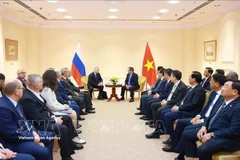
Vietnamese PM Pham Minh Chinh (standing, left) and his Russian counterpart Mikhail Mishustin (standing, right) witness the signing of the agreement between the two governments on cooperation in building a nuclear power plant on the territory of Vietnam. (Photo: VNA)

PM’s Russia visit yields substantive outcomes: Deputy FM

During Prime Minister Pham Minh Chinh’s official visit to Russia on March 22-25, Vietnam and Russia reached strong consensus on deepening political trust and mutual understanding, building on their long-standing traditional friendship.

Vietnamese mission staff and overseas Vietnamese in Australia visit Ship 016–Quang Trung (Photo: VNA)

Vietnamese naval ship completes mission at Kakadu Exercise 2026

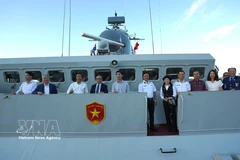
Ship 016–Quang Trung of Brigade 162 under Naval Region 4 departed Sydney Harbour on the morning of March 25 for home after successfully completing activities within the framework of the Exercise Kakadu Fleet Review 2026 marking the 125th anniversary of the Royal Australian Navy and the multilateral naval exercise Kakadu 2026.

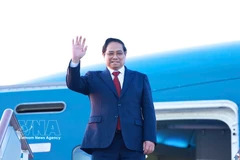
Prime Minister Pham Minh Chinh has wrapped up the official visit to Russia from March 22 to 25. (Photo: VNA)

PM arrives in Hanoi, concluding official visit to Russia

With the outcomes achieved and strong implementation efforts by both sides, the Vietnam – Russia Comprehensive Strategic Partnership is expected to grow further, contributing to socio-economic development in each country as well as to peace, friendship and cooperation in the region and the world.

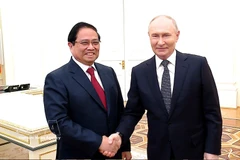
Vietnamese Prime Minister Pham Minh Chinh (left) meets with Russian President Vladimir Putin in Moscow on March 25. (Photo: VNA)

Vietnamese Prime Minister meets Russian President in Moscow

President Putin said Vietnam remains a sincere friend and an important partner of Russia in the Asia-Pacific, stressing that Russia attaches importance to further deepening the comprehensive strategic partnership between the two countries.

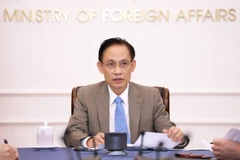
Minister of Foreign Affairs Le Hoai Trung (Source: MoFA)

Vietnamese, Philippine foreign ministers hold phone talks

They agreed to further elevate cooperation across all areas, including politics, diplomacy, defence, security, economy, and people-to-people exchanges, contributing to the celebration of the 50th anniversary of the establishment of diplomatic relations between the two countries (July 12, 1976 – 2026).

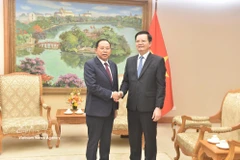
Deputy Prime Minister Mai Van Chinh (R) receives Chay Borin, Minister of Cult and Religion of Cambodia, in Hanoi on March 25 (Photo: VNA)

Deputy PM receives Cambodian Minister of Cult and Religion in Hanoi

Deputy PM Mai Van Chinh welcomed Cambodian Minister of Cult and Religion Chay Borin and his entourage on their working visit to Vietnam to implement the cooperation agreement between Vietnam’s Ministry of Ethnic and Religious Affairs and Cambodia’s Ministry of Cult and Religion for the 2026–2030 period.

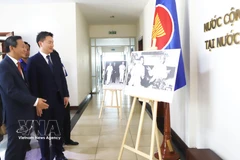
Vietnamese Ambassador to Laos Nguyen Minh Tam (R) and Thongly Sisoulith, member of the Lao Party Central Committee and Secretary of the Central Committee of the Lao People’s Revolutionary Youth Union at a photo exhibition held as part of the ceremony marking he 95th anniversary of the Ho Chi Minh Communist Youth Union in Vientiane on March 25. (Photo: VNA)

95th anniversary of Ho Chi Minh Communist Youth Union marked in Laos

Vietnamese Ambassador Nguyen Minh Tam described Vietnamese and Lao youth as the “architects” of the future of bilateral ties and called on young Vietnamese in Laos to strengthen their political awareness, pioneer digital transformation and entrepreneurship, and act as ambassadors of friendship between the two countries' people.

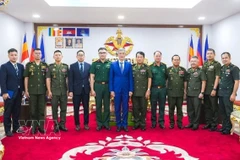
Vietnamese Ambassador to Cambodia Nguyen Minh Vu pays a New Year visit to the Royal Cambodian Armed Forces (Photo: VNA)

Vietnam, Cambodia foster friendship, solidarity

At a meeting on March 25 at the headquarters of the Royal Cambodian Armed Forces High Command, Vietnamese Ambassador to Cambodia Nguyen Minh Vu conveyed his best New Year wishes to General Vong Pisen and all officers and soldiers of the Royal Cambodian Armed Forces.

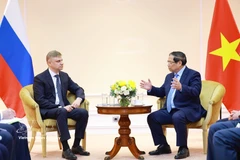
Prime Minister Pham Minh Chinh (R) meets with Russian Railways CEO Oleg Belozyorov (Photo: VNA)

PM works with leading Russian infrastructure enterprises

At the meeting with AFK Sistema Chairman Vladimir Petrovich Evtushenkov and the group’s executives, Prime Minister Pham Minh Chinh hailed the corporation’s proactive engagement with major Vietnamese enterprises to promote cooperation programmes in recent times.