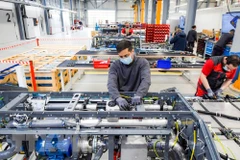
Hanoi (VNA) – As the global economy undergoes sweeping transformation, the adoption of sustainable economic models has become an inevitable trend, particularly for the manufacturing sector.
In addition to their own efforts, businesses and industries are calling for stronger policy assistance to accelerate green transition, expand market access, and boost long-term competitiveness.
Advancing circular economy
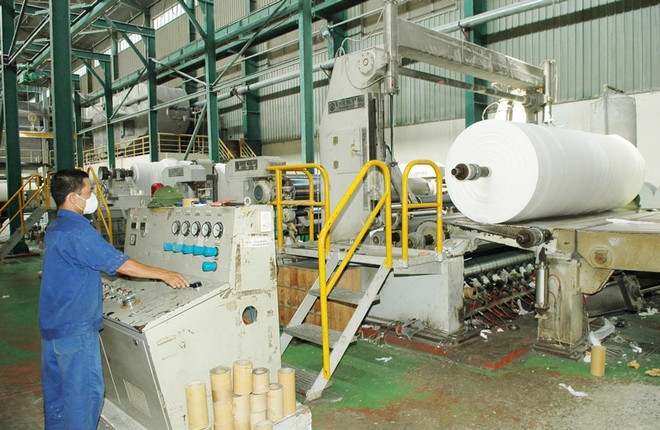
Dang Van Son, Vice Chairman and General Secretary of the Vietnam Pulp and Paper Association (VPPA), said the paper industry’s circular economy roadmap focuses on developing low-grammage and high-quality products with reduced whiteness or no bleaching; minimising the use of electricity, steam, and clean water; and cutting emissions during production.
The sector is also prioritising increased collection and recycling of used paper, wider adoption of renewable energy, especially through combined heat and power (CHP) systems, and long-term investment in environmental protection and sustainable development.
Many VPPA member companies now operate with production capacities exceeding 100,000 tonnes of paper per year, backed by modern recycling lines that help conserve water and energy while reducing emissions. Previously, it took 15–20 cubic metres of water to produce one tonne of paper; now, thanks to technological upgrades, that figure has dropped to just 3–4 cubic metres, with energy consumption also falling by 20–30%.
Furthermore, large domestic paper manufacturers are scaling up post-consumer paper collection to make use of essential secondary raw materials.
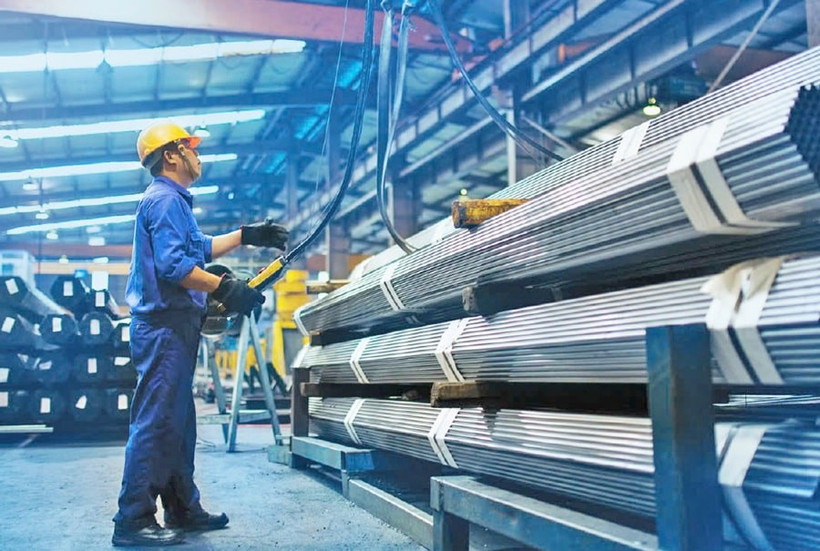
As a high-emission industry, Vietnam’s steel sector has also been working to reduce its environmental footprint. Dinh Quoc Thai, General Secretary of the Vietnam Steel Association (VSA), said steel producers have proactively applied advanced technologies to save energy, cut carbon emissions, and shift toward green production models.
Ho Duc Tho, Deputy Director of Hoa Phat Dung Quat Steel JSC – a subsidiary of Hoa Phat Group, noted that the firm has allocated 30% of its fixed investment capital in steel complexes to environmentally friendly technologies. By harnessing waste heat from steelmaking to generate electricity, Hoa Phat is now able to meet 90% of its production energy needs in-house.
To align with international market requirements, the company has conducted greenhouse gas inventories for its current product lines in compliance with international standards – ISO 14064-1:2018 and ISO 14067:2018.
Like the paper and steel sectors, other manufacturing industries in Vietnam are actively promoting green and circular production. This includes reducing input materials and energy use, minimising waste, and optimising manufacturing processes. These efforts not only cut costs and improve efficiency but also help firms comply with increasingly strict global export standards.
Policy support remains critical
While the benefits of sustainable manufacturing are well recognised, businesses continue to face significant challenges. For the paper industry, implementing the extended producer responsibility (EPR)—which covers the collection, treatment, and recycling of packaging and product waste—is proving difficult. Some companies still struggle with drafting recycling plans, submitting regular reports, or meeting minimum recycling thresholds due to limited infrastructure and technology. Waste sorting at source, a key component of EPR, also requires time to become embedded in consumer and corporate behaviour.
In the steel industry, the key priority is cutting carbon emissions. However, the current technological infrastructure remains underdeveloped, with many plants still operating high-emission systems. The scrap steel recycling network is also insufficiently mature, which hampers the wider use of recycled steel. At the same time, compliance with emissions certification adds production costs, stretching the limited resources of smaller firms.
These realities highlight the need for strong institutional support. Beyond internal efforts, businesses in paper, steel, and other industrial sectors require clear legal frameworks to underpin sustainable and green development while addressing existing challenges.
According to Thai, the VSA recommends that companies adopt long-term green transition strategies through 2050, in line with the Government’s COP26 commitments.
He said that steel enterprises expect that the Government will soon introduce a national steel industry development strategy through 2030, with a 2050 vision, which conforms to Vietnam’s green growth and sustainability goals, and includes specific mechanisms to support the sector’s green transition and sustainable production.
The Ministry of Industry and Trade has also launched a number of support initiatives such as the sustainable production and consumption programme and the environmental industry development programme. They aim to provide a legal and certification framework that helps businesses comply with regulations, develop sustainably, and integrate into global value chains more effectively./.