Hanoi targets over 11% GRDP growth in 2026 with thrift drive

Hanoi aims for average per capita income of 198 million VND (7,600 USD) a year and state budget revenue of around 546.93 trillion VND.

Visitors wearing national flag-themed conical hats at Hoan Kiem Lake, an icon of Hanoi (Photo: VNA)

Hanoi (VNA) – Hanoi is doubling down on fiscal discipline and wastefulness elimination as it chases a gross regional domestic product (GRDP) growth target of more than 11% in 2026.

Under the plan, average per capita income is set to hit 198 million VND (7,600 USD) a year, while state budget revenue is projected to stand at around 546.93 trillion VND. At the same time, the city is refining its institutional framework while preparing a capital master plan with a 100-year vision.

A key step is tighter control of state budget spending. In addition to a 10% cut in regular expenditures to create funding for salary reform, departments, agencies, and local authorities are required to save an additional 10% of regular expenditures to support social welfare policies in accordance with directions from the Government.

For public investment, Hanoi has imposed an immediate 5% cut on allocated capital outlays, redirecting those funds specifically to the strategic Lao Cai–Hanoi–Hai Phong railway project.

When it comes to natural resources, the city is raising the bar on planning standards to guarantee that land, minerals and other assets are exploited economically, efficiently and sustainably, while slashing losses, waste and environmental harm.

Officials are fast-tracking reviews of troubled land projects previously flagged in inspections, audits or court decisions, including those stalled by prolonged land use disputes, resolving issues within their authority or escalating them to higher levels in strict accordance with the law.

The entire process must be transparent and fair, balancing the state and investor interests to get land back into productive use quickly and prevent additional waste. Clear accountability will be enforced, especially for agency heads, in any cases of violations, resource mismanagement or wasteful behaviour, from illegal land use to outright abandonment.

On public asset management, Hanoi plans to wrap up thorough reviews of government offices, state-owned land and facilities, tackling underuse or inefficiency head-on and adopting a zero-tolerance policy toward any waste or loss of public property.

The capital is also accelerating the disbursement of public investment funds, giving priority to nationally critical projects, key infrastructure and inter-regional connectivity projects. Trimming bureaucracy through organisational streamlining, workforce reduction and civil service restructuring has been flagged as a top priority to boost state management efficiency.

Meanwhile, Hanoi is channeling resources toward digital transformation and sci-tech advancement, while cultivating a broad culture of thrift and anti-waste mindset throughout public agencies and urging residents to embrace savings in both production and daily consumption./.

VNA

See more

The Top 10 and Top 5 Most Reputable Companies in different sectors honoured. (Photo: VNA)

Vietnam's top 500 largest enterprises announced

This year’s rankings highlight businesses that have made significant contributions to economic recovery and the maintenance of growth momentum, demonstrating strong internal capabilities, effective governance, and pioneering spirit in a new phase of development, he said.

Prime Minister Pham Minh Chinh addresses the ceremony. (Photo: VNA)

Prime Minister Pham Minh Chinh urges May 10 to become international fashion group

Prime Minister Pham Minh Chinh has asked State-owned garment corporation May 10 to focus on accelerating green and digital transformation, moving decisively towards net-zero emissions, applying AI and big data in production, upgrading its position in global value chains by shifting from simple processing to FOB and ODM, and building a global brand representing Vietnamese intelligence and culture.

The Vietnam Exposition Centre (VEC) in Dong Anh commune, Hanoi. (Photo: VNA)

Four national fairs planned for 2026 at VEC

Four major national fairs will be held this year, including the second National Fair – Spring 2026; the third National Fair - an international specialised exhibition covering construction, building materials, transport, real estate, industrial machinery and equipment, and interior and exterior decoration; the fourth National Fair – Summer 2026; and the fifth National Fair – Autumn 2026.

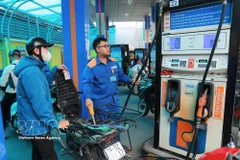
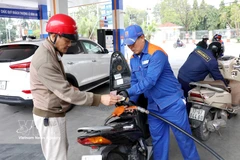
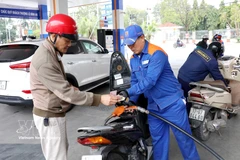
A motorcyclist has her vehicle refilled at a petrol station of Petrolimex. (Photo: VNA)

Fuel prices continue to fall on January 8

E5RON92 petrol is capped at 18,233 VND (0.69 USD) per litre, down 205 VND per litre from the baseline price, and RON95-III at 18,560 VND per litre, 357 VND lower.

Nguyen Quang Hieu, Deputy Director of the Department of Crop Production and Plant Protection under the Ministry of Agriculture and Environment, speaks at the conference. (Photo: Daibieunhandan.vn)

Vietnam pushes biopesticides to support green farming

Biological plant protection products have emerged as an important solution to gradually reduce dependence on chemical pesticides, support integrated pest management (IPM), and advance ecological and organic farming.

Harvesting Ri6 durian. ( Photo: VNA)

Vietnam’s durian exports need better management capacity

Over the past decade, the country’s durian cultivation area has expanded nearly sixfold to around 180,000 hectares, with output exceeding 1.5 million tonnes. The Central Highlands region is the largest growing region, accounting for more than 75,000 hectares.

Illustrative image (Photo: VNA)

Reference exchange rate up on January 8

With the current trading band of +/- 5%, the ceiling rate applicable for commercial banks during the day is 26,381 VND/USD, and the floor rate 23,869 VND/USD.

The first co-produced film Love in Vietnam was shot in different areas including Ba Na Hill in Da Nang city.

Vietnam–India co-production bridges cultures on screen

A sweeping cross-cultural romance set against Vietnam’s landscapes and cityscapes, the Vietnam–India co-production Love in Vietnam is positioning itself as both a cinematic crowd-pleaser and a soft-power showcase, aiming to elevate the country’s global image while sparking interest in its tourism, culture and people.

Production activities of Vinacomin at a mining site. (Photo: VNA)

Major firms face delisting risks due to shareholding concentration

Several billion-dollar companies in Vietnam are facing the imminent risk of losing public company status and being delisted from stock exchanges as highly concentrated shareholding structures squeeze out minority investors and raise fresh concerns over governance and market sustainability.

Processing pangasius for export at Caseamex Joint Stock Company, Tra Noc Industrial Park, Can Tho city. (Photo: VNA)

Seafood sector targets 11.5 billion USD in exports in 2026

In 2026, the sector aims for total seafood output of more than 10 million tonnes, up 0.6% from 2025. Of the total, capture fisheries are expected to reach about 3.75 million tonnes, down 2.1%, while aquaculture output is projected at 6.25 million tonnes, up 2.2%. Seafood export turnover is targeted at around 11.5 billion USD.

Vietnam's GDP expands by more than 8% in 2025. (Photo: VNA)

International financial institutions optimistic about Vietnam’s 2026 growth

As Vietnam enters 2026 - the first year of the 2026–2030 socio-economic development plan, international organisations stress that maintaining macroeconomic stability, improving growth quality and staying the course on fundamental reforms will be crucial in turning positive assessments into tangible outcomes and shaping a more sustainable development cycle ahead.

The application of Israeli technology in melon cultivation has delivered high economic efficiency (Photo: VNA)

VIFTA provides impetus for Vietnamese exports to Israel

The greatest benefit generated by the VIFTA lies in the immediate removal or phased deep reduction of many tariffs, significantly improving the price competitiveness of Vietnamese goods. At the same time, clearer provisions on rules of origin, customs procedures and trade remedies are helping foster long-term business partnerships.