Health ministry proposes heavier fines to curb gender-selective practices

The proposal, part of the draft Law on Administrative Sanctions in the Field of Population, aims to tighten enforcement and deter violations.

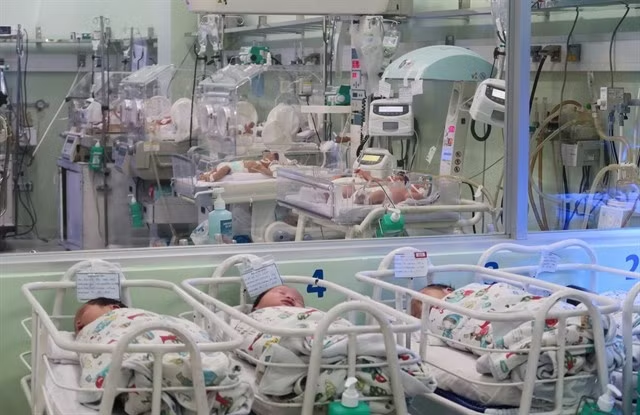
Newborns receiving care at the neonatal department of Hung Vuong Hospital in HCM City. (Photo: VNA)

Hanoi (VNS/VNA) - The Ministry of Health has proposed raising the maximum fine from 30 million VND to 100 million VND (approximately 4,000 USD) for organisations and individuals who assist in gender-selective practices during pregnancy.

The proposal, part of the draft Law on Administrative Sanctions in the Field of Population, aims to tighten enforcement and deter violations.

“This increase is necessary to ensure individuals and organisations think twice before engaging in such illegal acts,” the ministry stated.

Selecting the sex of a baby through medical intervention remains a key driver of Vietnam’s gender imbalance at birth, the ministry noted.

Current Vietnamese law strictly prohibits sex selection in all forms and prescribes administrative penalties for violations. However, the existing fine of 30 million VND is deemed "insufficient as a deterrent”, according to the policy impact assessment included in the draft Population Law now under public consultation.

Data from the Ministry of Health show that Vietnam's sex ratio at birth was already above the natural range (103–107 boys per 100 girls) in 2006, standing at 109.8 boys per 100 girls. The imbalance increased to 112.8 in 2015 and remained high at 111.4 in 2024.

“If no strong intervention is implemented, Vietnam could see a surplus of 1.5 million men aged 15–49 by 2039, rising to 2.5 million by 2059,” according to forecasts by the General Statistics Office.

Such demographic imbalance could disrupt family structures and lead to rising numbers of men marrying later or being unable to marry at all.

A review of the implementation of the ministry’s Population Ordinance, based on reports from several localities, found that: “some health workers still covertly disclose fetal sex”.

In practice, many doctors, particularly in private clinics, reveal the baby’s sex through indirect means such as coded language or slang, for instance using phrases like, 'takes after the father, 'like the mother' or 'same as the first child'.

To address the imbalance, the ministry's draft law not only upholds the ban on gender-selective practices but also suggests that the Government periodically announce a classification of provinces and cities by level of gender imbalance at birth: very high, high, or within natural range. This would help focus policy interventions where they are most needed./.
VNA

See more

The international workshop on empowering women in the care economy on October 8, 2026 (Photo: VNA)

Int’l workshop focuses on women’s empowerment in the care economy

Vietnam has built a relatively comprehensive legal and policy framework to underpin the sector, including the Labour Code, the Law on Gender Equality, the Law on Social Insurance, the Law on Population and the National Strategy on Gender Equality for 2021-2030. Together, they set goals and measures to narrow gender gaps and give women and men equal opportunities to benefit across a range of areas.

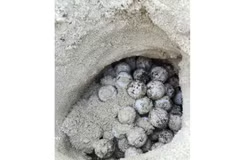
A sea turtle nest found at Mui Tau Beach on Hon Cau Island after a night of rain. (Photo: VNA)

Sea turtle nests on Lam Dong's Hon Cau island for sixth time this year

Since the beginning of 2026, sea turtles have nested six times at three beaches on Hon Cau island, namely Nhat, Mui Tau and Ba Hon. Three nests were left undisturbed at safe locations, while another three were relocated to the incubation area for protection, involving a total of 246 eggs.

The “Colours of the Five Continents” street festival tales place at the Hoan Kiem Lake pedestrian zone, attracting large crowds of locals and international visitors (Photo: VNA)

Vietnam tourism gains appeal from safety, diverse experiences

According to international reports referenced by the WEF, Vietnam has a high level of safety awareness, a low crime rate and a terrorism impact score of zero. These factors helped place the country’s Safety and Security indicator among the world’s highest in the TTDI 2026 rankings.

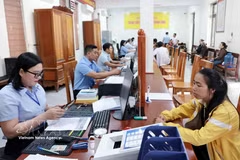
At Phong Nha communal Public Administration Service Centre in Quang Tri province (Photo: VNA)

Administrative reform shifts focus to practical results

Agencies largely kept the receipt, processing and return of administrative results running continuously, openly and transparently, with citizens and firms at the centre of public service delivery. They also kept upgrading, linking and using the databases serving administrative processing, carried out tasks under the 100-day Action Plan for the Politburo's Resolution 57-NQ/TW, and rolled out new initiatives and models to lift service quality.

Rendering of the APEC Phu Quoc Convention and Exhibition Centre and multipurpose performance venue (Photo: Sun Group)

Inside Phu Quoc’s APEC landmarks: Features ‘never seen before’

Nicolas Medrano, Design Principle and SOM’s Asia-Pacific Practice Leader, said from the outset, the project was designed to fit Phu Quoc's terrain, coastline, elevation and geography. It includes extensive outdoor public spaces that connect people directly with nature, providing a foundation built to adapt, withstand challenges and develop sustainably over the next century.

An architectural rendering of the VIP terminal at Phu Quoc International Airport

Phu Quoc int’l airport planning adjusted to serve APEC 2027

Under the adjusted plan, several sections of internal service roads will be added or revised to meet security, safety and operational requirements for the event. A parking area for ground service vehicles and equipment will also be added east of the VIP/general aviation terminal.

Participants in the conference on people-to-people diplomacy in Ho Chi Minh City on October 6, 2026 (Photo: VNA)

People-to-people diplomacy contributes to Ho Chi Minh City’s development

Ho Chi Minh City currently has 117 licensed foreign NGOs operating in areas including healthcare, education, social protection and community development. As of September 2026, the municipal People’s Committee had approved 30 applications to receive and implement project and non-project aid packages, with total committed funding of about 302 billion VND (11.6 million USD).