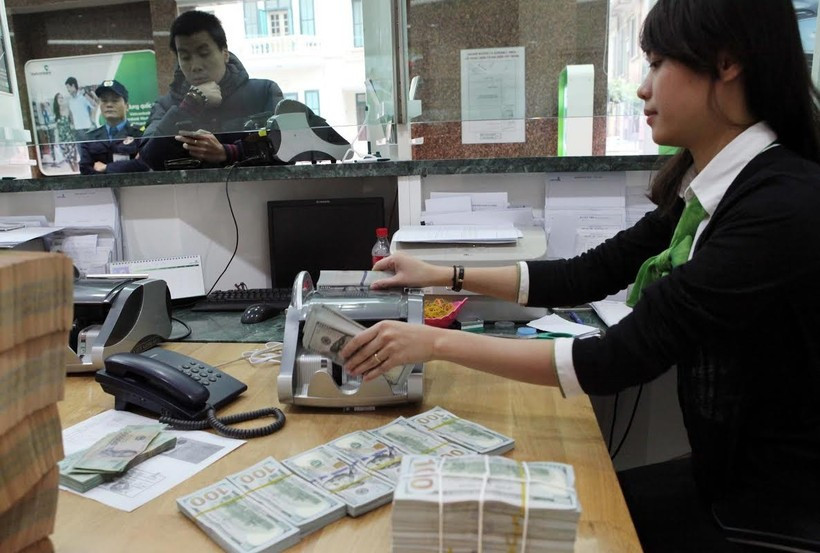
Hanoi (VNA) – As Vietnam enters a new phase of growth driven by digital transformation, green transition, and the thriving role of the private sector, effective capital mobilisation is increasingly viewed as a key factor in sustaining and accelerating this development, according to HSBC Vietnam.
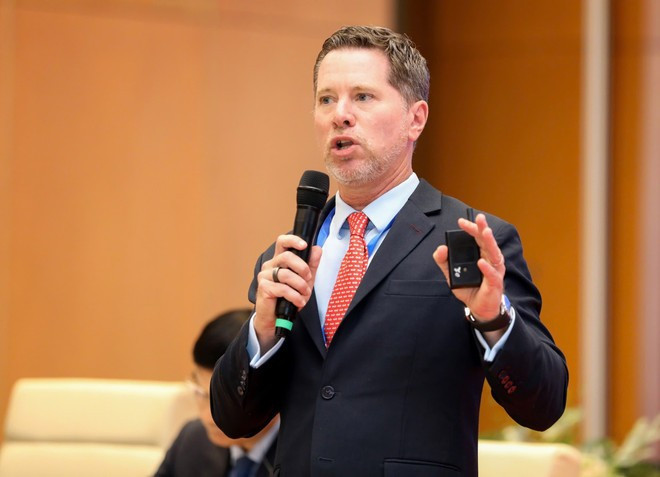
Tim Evans, CEO of HSBC Vietnam, was quoted as saying that bank credit remains the core pillar supporting the economy. However, in a context where funding needs are expanding, diversifying capital sources and tapping into international markets are becoming ever more important for Vietnamese enterprises.
Access to global capital markets, he noted, offers strategic advantages not only in terms of funding costs but also in building financial resilience. Vietnam’s successful return to the international capital market in 2014, through the issuance of 1 billion USD in 10-year USD-denominated sovereign bonds, was cited as a notable milestone. This marked the country’s first such issuance since 2010, helping establish a key benchmark interest rate while underscoring the Government’s commitment to proactive public debt management.
HSBC served as one of the joint book runners for the transaction, Evans noted.
Beyond sovereign financing, international capital markets provide opportunities for both the Government and businesses to raise funds from a wide range of regions, currencies and investor bases. This diversification helps create a more stable capital foundation, enabling enterprises and the broader economy to better withstand domestic and global economic fluctuations.
International borrowing also offers greater flexibility in the use of funds. Such financing can be deployed for various purposes, including working capital, mergers and acquisitions, and debt restructuring. In addition, procedures for international loans are often more streamlined, allowing firms to access capital more swiftly, particularly in large-scale financing deals.
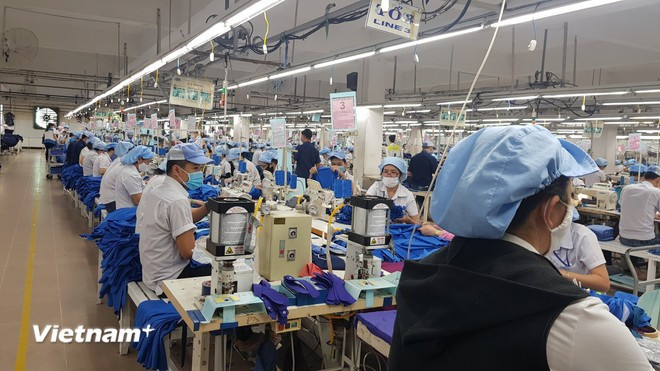
In recent years, he said, HSBC has worked with a number of Vietnamese corporations to facilitate their access to global capital. Among the most prominent examples was its role in arranging a 600 million USD syndicated loan for Masan Group and The Sherpa in 2022, a transaction that attracted participation from 37 lenders. The deal illustrated a growing appetite among Vietnamese firms to explore international funding options while reducing reliance on domestic credit.
Another example was HSBC’s support for GELEX Group and THACO AGRI in securing a 139 million USD loan guaranteed by Italy’s state-backed export credit agency SACE in 2025. Such transactions have enabled Vietnamese enterprises to broaden their financial capacity and learn global financial practices.
These cases indicate that domestic conglomerates are gradually stepping onto the global capital stage to diversify funding sources and reduce dependence on domestic credit and bond markets. This approach is considered particularly important for securing large-scale, long-term and complex financing arrangements, including green and social loans and bonds.
According to HSBC Vietnam, one of the most significant barriers is credit rating. International investors and banks rely heavily on ratings from agencies such as S&P, Moody’s and Fitch to assess borrower risk. Improving credit ratings is therefore essential for Vietnamese firms seeking to access global equity and bond markets at reasonable costs.
Differences between Vietnam’s accounting standards and international standards also pose difficulties for foreign investors in assessing and comparing Vietnamese companies with their international peers. Greater alignment with international financial reporting standards will help enhance investor confidence and reduce the uncertainty of investment decision, Evans said.
Moreover, global investors are paying increasing attention to corporate governance and environmental, social and governance (ESG) factors. Vietnamese enterprises are encouraged to strengthen governance practices and financial disclosure to meet rising international expectations.
To boost access to international capital, HSBC recommended that Vietnamese companies focus on three priorities: improving corporate governance quality, upgrading financial reporting in line with international standards, and integrating ESG considerations into core business strategies. Incorporating ESG metrics into financial reporting is expected not only to facilitate capital access but also to demonstrate a commitment to sustainable development and social responsibility.
He went on to say that global banks such as HSBC are viewed as an important bridge between Vietnamese businesses and international investors. In addition to providing capital, they offer advisory services, support compliance with global standards, and help enterprises prepare credit profiles and connect with international financial institutions.
With its long-standing presence in Vietnam, HSBC clearly understands domestic businesses’ demand and challenges facing them. It is working closely with local clients to help them access international capital while optimising global financial strategies. The bank always stand ready to accompany Vietnam on the country’s path toward sustainable growth and deeper international integration, its CEO added./.