Indonesia’s economy remains resilient amid global strains

Speaking at the launch of the Indonesia Economic Prospects June 2025 edition on June 23 in Jakarta, Turk noted that Indonesia’s gross domestic product (GDP) expanded 4.9% in the first quarter of 2025 compared to the same period last year.

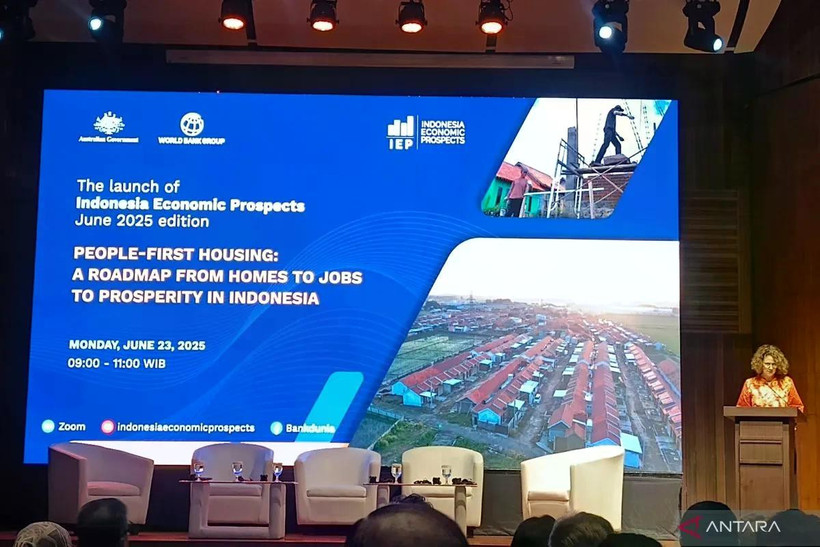
World Bank Country Director for Indonesia and Timor-Leste, Carolyn Turk speaks at the launch of the Indonesia Economic Prospects in Jakarta on June 23. (Photo: ANTARA)

Jakarta (VNA) – Indonesia’s economy remains resilient amid global uncertainties, according to World Bank Country Director for Indonesia and Timor-Leste Carolyn Turk.

Speaking at the launch of the Indonesia Economic Prospects June 2025 edition on June 23 in Jakarta, Turk noted that Indonesia’s gross domestic product (GDP) expanded 4.9% in the first quarter of 2025 compared to the same period last year.

Turk attributed this performance to Indonesia’s strong macro-economic fundamentals, such as low inflation, ample financial reserves, and consistent fiscal discipline. Indonesia’s current economic performance reflects strong foundations and prudent policy responses, she stated.

The World Bank projects Indonesia’s economy will expand at an average annual rate of 4.8% between 2025 and 2027. This growth could reach 5.5% by 2027 if reform policies continue to be effectively implemented.

The report also notes that the benefits of recent growth have been felt most by low-income groups, while consumption among the middle class has shown signs of slowing.

Turk praised the Indonesian government’s recent initiatives, such as the launch of Danantara Indonesia and its plan to build three million housing units per year. With an annual public investment of 3.8 billion USD, the housing programme is expected to generate 2.3 million jobs and attract an estimated 2.8 billion USD in private investment, while enhancing living standards nationwide.

The official cautioned that risks remain, including challenges in global trade and volatility in commodity prices. Nevertheless, she expressed her optimism that the government’s continued focus on deregulation, trade reform, and digital transformation will help Indonesia overcome challenges and maintain sustainable growth./.

VNA

See more

A healthcare worker performs a swab test on a patient during influenza symptom screening at a community health centre in Banten, on January 7, 2026. (Photo: antaranews.com)

Indonesia reports first death related to so-called super flu

Yovita Hartantri, head of the New and Re-emerging Infectious Diseases Team at Hasan Sadikin Regional Hospital in Bandung, said the hospital treated 10 patients with influenza A subclade K between September and November last year. The patients exhibited a range of symptoms, with at least three developing severe complications.

Thailand enters technical deflation: Expert

Thailand enters technical deflation: Expert

Associate Professor Thanavath Phonvichai, President of the University of the Thai Chamber of Commerce and Chairman of the Centre for Economic and Business Forecasting, attributed the current bout mainly to lower production costs, particularly cheaper fuel and persistently low agricultural prices.

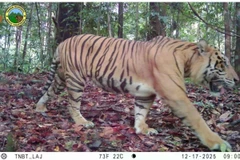
Indonesia spots four Sumatran tigers at national park

Indonesia spots four Sumatran tigers at national park

Camera traps installed in Bukit Tigapuluh National Park of Indonesia have recorded four individual Sumatran tigers (Panthera tigris sumatrae), providing strong evidence that the conservation area's ecosystem remains well preserved.

Deputy Prime Minister and Agriculture Minister of Thailand Thammanat Prompao (Photo: The Nation)

Agricultural envoys ordered to boost Thai crop exports

Deputy Prime Minister and Agriculture Minister of Thailand Thammanat Prompao said that the ministry is prioritising a “market-led, innovation-supported, higher income” strategy, built on three key pillars: strengthening confidence in core, established markets to protect Thailand’s market share; targeting high-potential products to open new opportunities, including dried seahorses, dried geckos, live crocodiles for consumption, and breeding crocodile parent stock for farming; and expanding networks by deepening cooperation with key trading partners, including China, and widening sales channels, such as digital platforms, so Thai products can reach consumers more directly.

Illustrative image (Photo: Internet)

Thailand maps out national semiconductor strategy

Under the strategy, Thailand will prioritise power, sensor, photonics, discrete and analog semiconductors, which are closely linked to the country’s established electronics manufacturing base and supply chains serving the automotive, energy, data centre and industrial sectors.

MDEC headquarters (Photo: nabalunews.com)

Malaysia’s digital exports surge

Malaysia's digital exports recorded 6.8 billion RM (1.67 billion USD) between 2024 and the first half of 2025, marking a milestone in the country’s development journey of digital economy.