
Hanoi (VNA) - In the context of globalisation and the Fourth Industrial Revolution reshaping the world economy, digital technology has become a core factor in determining a nation’s sustainable development and prosperity.
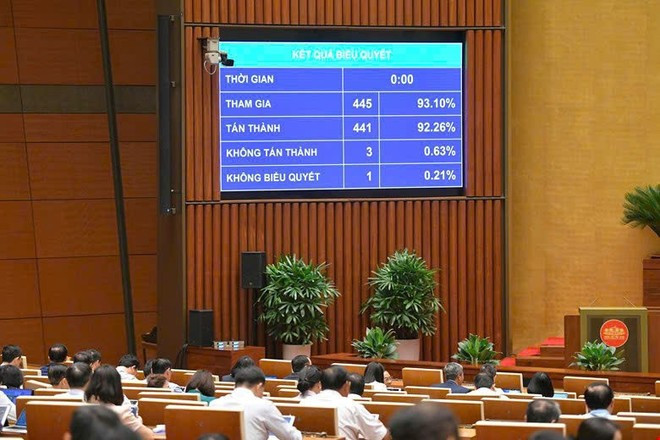
Vietnam, with the aspiration to become a pioneering country in the digital era, made a historic move as the 15th National Assembly passed the Law on Digital Technology Industry at its recent 9th session on June 14.
This is not only a specialised law but also an institutional lever that opens up a 'golden opportunity' for Vietnam to build a solid legal foundation, promote the strong development of domestic technology enterprises, and better position Vietnam within the global technology value chain.
The law is expected to become a lodestar for addressing major challenges in the digital technology sector, from driving economic growth and enhancing national competitiveness to improving the quality of life for citizens.
As the first country in the world to enact a dedicated law on the digital technology industry, Vietnam has affirmed its pioneering position and readiness to lead global technology trends. This law not only supports digital technology enterprises but also lays the foundation for Vietnam to compete fairly with the world’s leading digital economies.
With the goal of reaching 150,000 digital technology enterprises by 2035, the law will implement comprehensive support policies. Small- and medium-sized enterprises (SMEs) will receive assistance with infrastructure investment costs, workforce training, and be given priority in bidding for public projects. The State will provide investment capital for special projects and funding for technological innovation, enabling businesses to enhance their creativity and competitiveness. Digital technology industrial zones, supported by attractive incentive policies, will create a favourable environment for startups and sustainable development.
The law institutionalises key contents from the Politburo’s Resolution No. 57-NQ/TW and Resolution No. 68-NQ/TW, including promoting the development of digital technology enterprises, especially in the private sector, building a high-quality workforce, developing essential digital infrastructure, supporting innovative startups, and establishing a controlled regulatory sandbox mechanism. These policies are designed to make digital technology a primary engine for economic growth, with the ambitious goal of achieving a growth rate two to three times higher than that of the national GDP.
To realise this ambitious goal, the law introduces a series of preferential policies and breakthrough solutions. Major investment projects in this sector will benefit from corporate income tax reductions for multiple years, financial support from the Development Investment Fund, and R&D expenses that can be counted at double or even triple rates for small- and medium-sized enterprises. Administrative procedures are simplified through a decentralised mechanism that authorises provincial-level People’s committees to establish digital technology industrial zones. Additionally, a “green lane” customs priority scheme is in place to facilitate businesses’ activities.
One of the key focuses of the law is to increase the proportion of domestically developed digital technology products. Therefore, foreign direct investment (FDI) enterprises are encouraged to transfer technology and cooperate with local companies through preferential corporate income tax incentives.

The Law on Digital Technology Industry also sets the goal of bringing Vietnamese digital technology enterprises to the international market, increasing revenue, and establishing a global brand presence.
The “Made in Vietnam” programme has been codified, with trade promotion activities and support for businesses to expand into foreign markets actively implemented. The State is also building a network of digital technology industry representatives in key markets and implementing international cooperation programmes to help Vietnamese companies gradually become multinational enterprises capable of competing with global tech giants.
As human capital is a core pillar in developing the industry, the law also introduces comprehensive policies to cultivate a high-quality talent pool. Skilled digital technology professionals are exempt from personal income tax for their first five years of employment in Vietnam, while foreign experts are granted five-year visas and are exempted from work permit requirements, thus facilitating international talent transfer and knowledge sharing./.