Vietnam, Australia launch strategic technology centre to shape digital future

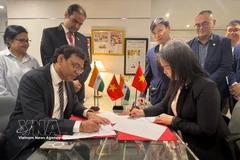
The centre is a joint initiative between Australia’s Department of Foreign Affairs and Trade and Vietnam’s Ministry of Science and Technology, with PTIT and the University of Technology Sydney (UTS) serving as co-leads, and global telecommunications giant Nokia as founding industry partner.

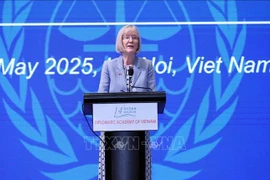
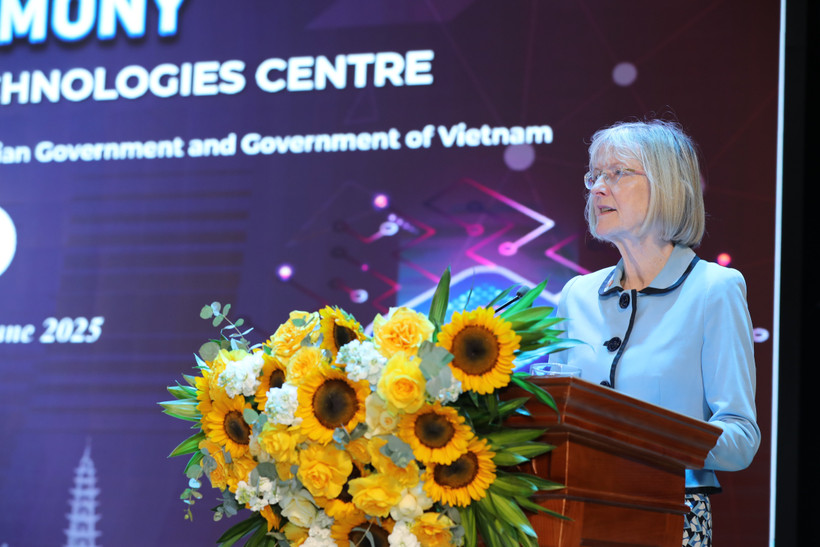
Australian Ambassador to Vietnam Gillian Bird speaks at the event (Photo: Australian Embassy in Vietnam)

Hanoi (VNA) – The Australia–Vietnam Strategic Technology Centre (AVSTC) was officially launched on June 11 at the Posts and Telecommunications Institute of Technology (PTIT) in Hanoi, marking a significant step in deepening bilateral cooperation in strategic technologies, digital transformation, innovation, and cyber security.

A platform for innovation and knowledge exchange

The centre is a joint initiative between Australia’s Department of Foreign Affairs and Trade and Vietnam’s Ministry of Science and Technology, with PTIT and the University of Technology Sydney (UTS) serving as co-leads, and global telecommunications giant Nokia as founding industry partner. Australia has committed an initial 2.1 million AUD (1.4 million USD) to support the centre, while Nokia is providing technical equipment.

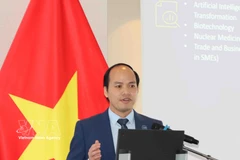
Speaking at the launching ceremony, Vietnamese Deputy Minister of Science and Technology Bui The Duy highlighted the centre’s role in supporting the Australia–Vietnam Development Partnership Plan (2025–2030), which builds on over five decades of bilateral development cooperation.

He praised Australia’s sustained support through expert exchanges, technical assistance, and policy dialogue, calling the centre a crucial milestone in boosting digital transformation, advancing technological and industrial innovation, and strengthening international cyber stability, Duy said.

Vietnam is currently recognised as one of Southeast Asia’s five most advanced scientific nations. According to Duy, this progress is partly due to close cooperation with Australia in science, technology and innovation. He called the new centre a reflection of the two countries’ shared vision for a knowledge-based future.

Building sustainable digital infrastructure

Australian Ambassador to Vietnam Gillian Bird reaffirmed Australia’s commitment to partnering with Vietnam to drive innovation and digital transformation, which are key to Vietnam’s economic growth. She described the new centre as a practical demonstration of Australia’s commitment to supporting science and innovation under the Vietnam-Australia Comprehensive Strategic Partnership.

By fostering research and partnerships on strategic technologies, and by connecting Vietnamese institutions with Australia’s top education and innovation networks, Australia is supporting Vietnam to translate Resolution No. 57-NQ/TW into real, measurable outcomes, the Ambassador said.

At the launching ceremony, eight "seed" projects valued at over 400,000 AUD were announced, supporting collaboration between Vietnamese and Australian scientists in artificial intelligence, cyber security, satellites, and quantum technologies.

These projects involve joint research teams from universities, research institutes, and private sector partners from both countries.

The AVSTC also partnered with the Vietnam Women Entrepreneurs Council to present the “Women in Tech and Innovation” prizes to 19 female scientists, engineers, and students.

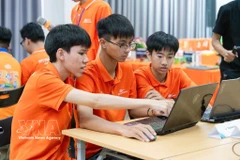
Nearly 100 “Australia–Vietnam Strategic Technology” scholarships were also presented to young engineers, managers, and researchers across Vietnam to inspire future generations to pursue careers in technology and innovation.

Following the launch, the centre hosted the inaugural Australia–Vietnam Strategic Technology Forum, with the attendance of domestic and international experts./.
VNA

See more

An expert speaks at the International Conference on Semiconductors (ICOS) 2026 (Photo: VNA)

ICOS 2026 highlights pathways for Vietnam’s semiconductor development

This was the first international, specialised semiconductor conference held in central Vietnam and the first time the country hosted a large-scale academic forum dedicated exclusively to this sector. Organised in line with international standards, it featured plenary sessions, technical presentations and industry forums, reflecting major research trends shaping the semiconductor sector.

Resolution No.57: People should be put at centre of AI governance

Resolution No.57: People should be put at centre of AI governance

Assessing the role of AI, Minister of Science and Technology Nguyen Manh Hung emphasised that it is an “intellectual infrastructure.” More than an applied technology, AI is increasingly becoming a form of national infrastructure, comparable to electricity, telecommunications or the Internet.

In Vietnam, 5G technology infrastructure has begun to be widely deployed by domestic network operators (Photo: VNA)

5G technology expansion expected to boost Vietnam’s digital economy

The Ministry of Science and Technology reported that by 2025, 5G had been commercialised nationwide, covering more than 90% of the population. Viettel alone has deployed 30,000 5G base stations, achieving 90% outdoor coverage and 70% indoor coverage, exceeding its commitments to the Government.

At a display of UAVs (Photo: VNA)

HCM City pilots UAVs for delivery services

HCM City aims to promote UAV use in urban delivery - a promising field contributing to smart logistics and postal services for e-commerce, smart cities and high-tech public services, while fostering UAVs as a strategic technology sector underpinning the innovation ecosystem.

Viettel's virtual assistant for searching administrative units helps shorten time and simplify searches for people. (Photo: Viettel)

Viettel’s virtual assistant among Top 10 technology products

The accolade recognises the mastery of core technologies by the Viettel Artificial Intelligence and Data Services Centre (Viettel AI), while reaffirming the group’s capacity to successfully deploy “Make in Vietnam” artificial intelligence solutions in international markets.

Workers are operating a robotic wafer conveyor assembly line in the semiconductor industry. (Illustrative image. Photo VNA)

Innovation – Driver for new development phase

The draft action programme of the Party Central Committee to implement the Resolution of the 14th National Party Congress identifies the shift to a new growth model, economic restructuring, and accelerated industrialisation and modernisation, with science, technology, innovation and digital transformation as the core engines, as key tasks.

Participants at the 5th ASEAN Digital Ministers Meeting (ADGMIN) in Thailand. (Photo: VNA)

Hanoi to host 6th ASEAN Digital Ministers’ Meeting in January

Held annually on a rotating basis among ASEAN member states, the meeting plays a key role in shaping strategic orientations, formulating policies and promoting digital cooperation within ASEAN, while strengthening collaboration with partners and international organisations amid rapid digital and digital-economy transformation globally.

(Illustrative photo: Viettel)

Viettel records breakthrough in first 5G Advanced trial

The achievement, marked as Vietnam’s first 5G Advanced trial, was made possible by carrier aggregation (CA) technology, enabling mobile devices to operate across multiple frequency bands simultaneously instead of a single band.

A biotechnology laboratory of the International University at Vietnam National University-Ho Chi Minh City. (Photo: VNA)

Resolution 57: Role of intellectuals in advancing science and technology research

Prof. Dr. Tran Dai Lam, Director of the Institute of Materials Science at the Vietnam Academy of Science and Technology (VAST), emphasised that intellectuals should nurture national responsibility and ambition, be ready to take on challenges, evaluate research outcomes by international standards, and engage in collaboration across different sectors.

Professor Vu Minh Khuong, of the Lee Kuan Yew School of Public Policy (right), talks to a Vietnam News Agency correspondent in Singapore. (Photo: VNA)

Resolution 57 - catalyst for scientific and technological breakthroughs

The resolution also seeks to create stronger mechanisms to mobilise social and private resources and support an innovation ecosystem; link digital transformation in the public sector with the modernisation of national governance; and prioritise the development of elite human resources and internationally-standard research infrastructure.

Workers produce electronic components (Photo: VNA)

Science, technology drive Vietnam’s rising global profile: expert

Assoc. Prof. Le Duc Anh from Tokyo University held that for fast and sustainable development, Vietnam should prioritise science – technology and innovation as the main driver of productivity, focusing on sectors with high spillover effects such as semiconductors, AI, data, new energy and materials, biomedical technology, automation – robotics, and cybersecurity.